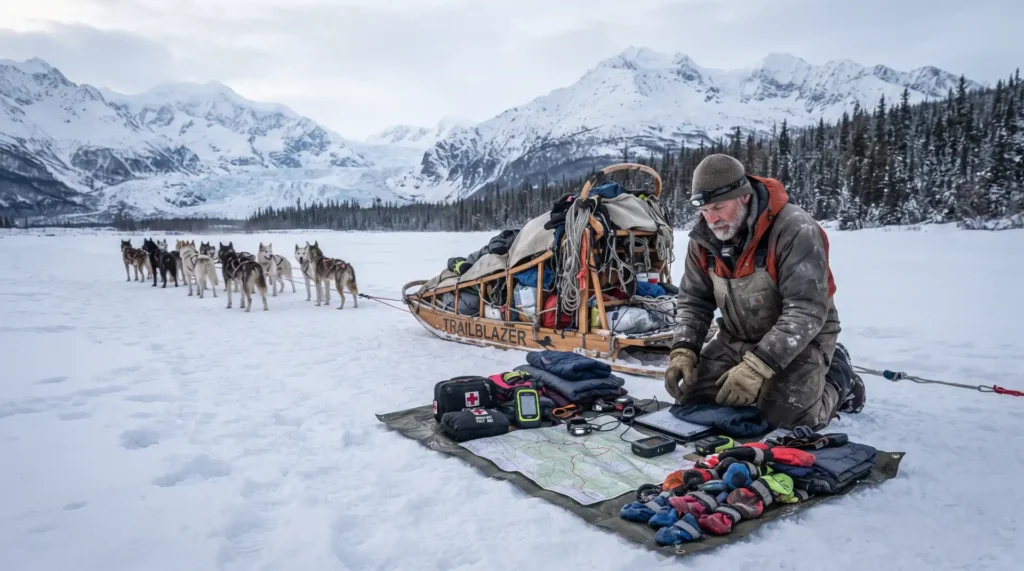
Remote mushing combines working dogs, winter travel, wilderness navigation, and unpredictable weather in an environment where outside assistance may be far away. Emergency preparedness for remote mushing trips therefore involves much more than packing extra gloves and checking the sled before departure. Mushers need to consider their dogs, equipment, route, weather, communication options, food, water, shelter, navigation, and possible delays before leaving a trailhead.
A short problem close to home can become much more serious when it happens miles from a road in freezing temperatures. A snapped line, sudden storm, injured dog, navigation error, equipment failure, or blocked trail can change a routine trip quickly.
Preparation gives a musher more options when conditions change. It also supports the welfare of the dog team, since the dogs depend on the musher for food, hydration, shelter, trail decisions, and emergency care.
The National Park Service emphasizes many of the same principles for winter backcountry travel. Its guidance advises travelers to research routes, monitor weather, prepare for emergencies, carry navigation equipment, and leave detailed trip information with someone before departing.
Mushing introduces another responsibility because every decision affects both the human traveler and the dogs pulling the sled.
Start Emergency Planning Before Leaving Home
The safest emergency may be the one avoided before the sled reaches the trail.
Remote mushing preparation starts with understanding the planned route. Distance alone does not describe the difficulty of a trip. Elevation changes, forest density, exposed terrain, river crossings, trail maintenance, snow depth, wind exposure, avalanche terrain, and access points can all affect travel time.
A route that normally takes three hours might take considerably longer after fresh snowfall. Deep snow increases resistance for the dogs and sled. Wind can cover tracks. Blowing snow can reduce visibility. Ice may create unsafe sections that require rerouting.
Study maps before departure instead of relying entirely on navigation after the trip begins. Identify alternate routes, road crossings, shelters, communities, ranger facilities, and possible evacuation points.
The National Park Service advises winter backcountry travelers to plan conservatively because fresh snow can slow travel, obscure routes, and increase hazards. It also notes that winter trails may look completely different once snow covers familiar landmarks.
Mushers exploring the sport for the first time may also benefit from reading Outlaw Ridge Sled Dogs’ The Ultimate Guide to Dog Sledding for Beginners, which covers basic equipment, training, and mushing fundamentals.
Check Weather From More Than One Perspective
A weather forecast should be viewed as part of the planning process rather than a guarantee of conditions.
Remote winter weather can vary dramatically with elevation and terrain. A sheltered trailhead may feel calm while an exposed ridge experiences strong wind and much lower apparent temperatures.
Before departure, examine expected temperature, wind speed, wind chill, precipitation, visibility, snowfall, and the timing of any approaching weather system.
Consider what conditions might look like several hours later. A team departing under clear morning skies could still be traveling when an afternoon storm reaches the area.
Recent snowfall also deserves attention because it can hide obstacles and change trail conditions. Heavy snow may cover existing tracks, increase pulling resistance, and make route finding harder.
Mushers traveling in mountainous areas should also consider avalanche conditions whenever the route enters avalanche terrain. The U.S. Forest Service encourages winter recreationists to understand local topography, check weather and avalanche forecasts, carry appropriate equipment, and avoid hazardous terrain when conditions are uncertain.
Turning around because conditions are deteriorating should be viewed as a sound trail decision rather than a failed trip.
Create a Trip Plan Someone Else Knows About
One of the simplest emergency preparations happens before leaving.
Provide a trusted person with information about the trip. Include the planned trail, departure point, expected route, estimated return time, vehicle location, number of people, number of dogs, and any alternate routes that might be used.
Also establish what that person should do if the team does not return by an agreed time.
This information becomes particularly valuable if search and rescue assistance becomes necessary. A detailed route gives responders a starting point rather than an enormous wilderness area to search.
Grand Teton National Park specifically advises winter backcountry travelers to give friends or family a detailed itinerary before traveling.
A mushing trip plan can also include identifying information about the dog team. If dogs become separated during an emergency, having recent photographs, descriptions, microchip information, and identification tags available may help.
Do Not Depend on Cell Service
Remote mushing routes often pass through forests, mountains, valleys, and sparsely populated areas where cellular service may be unreliable or completely unavailable.
A smartphone remains useful for downloaded maps, photos, notes, weather information saved before departure, and GPS functions. It should not be treated as the only emergency communication system.
Some backcountry travelers carry satellite messengers or satellite phones for remote trips. Depending on the device and subscription, satellite communicators may provide messaging, location sharing, or emergency signaling beyond cellular coverage.
Mushers should understand how their chosen device operates before relying on it in the field.
Cold temperatures can also reduce battery performance. Electronics stored directly in exposed sled compartments may lose power faster than expected.
Carry devices in protected locations and consider backup power options appropriate for winter conditions.
Yellowstone National Park cautions winter backcountry visitors not to rely on cell phones because reception can be extremely limited.
Carry More Than One Navigation Method
GPS technology has made wilderness navigation easier, but electronic navigation should have a backup.
Cold weather, impact damage, moisture, battery depletion, and device failure can leave a musher without access to a digital map.
A paper map and compass provide another navigation method when electronics stop working.
The important part is knowing how to use them before an emergency occurs.
Winter navigation also requires a different mindset from summer travel. Snow can hide trail surfaces, intersections, rocks, streams, and tracks. Heavy snowfall can erase evidence that other travelers recently used the route.
Wind may cover a trail within minutes.
The National Park Service advises winter travelers to carry a map and compass even when GPS is available because batteries can become unreliable in cold conditions.
For longer remote trips, mushers can mark major landmarks, mileage points, alternate routes, and emergency exit locations before departure.
Prepare for Equipment Failure
A dog sled is a working transportation system exposed to repeated vibration, snow, ice, moisture, and pulling forces.
Something eventually wears out.
Ganglines, snaps, harnesses, sled components, brakes, runners, bags, and attachment points should be inspected before a remote trip.
Carry repair materials suited to the equipment being used.
A small repair kit may include strong cordage, spare snaps, extra tug lines, extra necklines, tape designed for cold conditions, multitools, fasteners, and replacement hardware.
Longer expeditions may require more specialized sled repair equipment.
The goal is not to carry a complete workshop. It is to carry enough material to stabilize common failures and continue safely or return to the trailhead.
Equipment checks should also extend to dog gear.
Inspect harnesses for worn webbing, damaged stitching, twisted sections, or hardware problems. Bring spare harnesses and booties when appropriate.
A broken piece of dog equipment can become a team management problem quickly if no replacement is available.
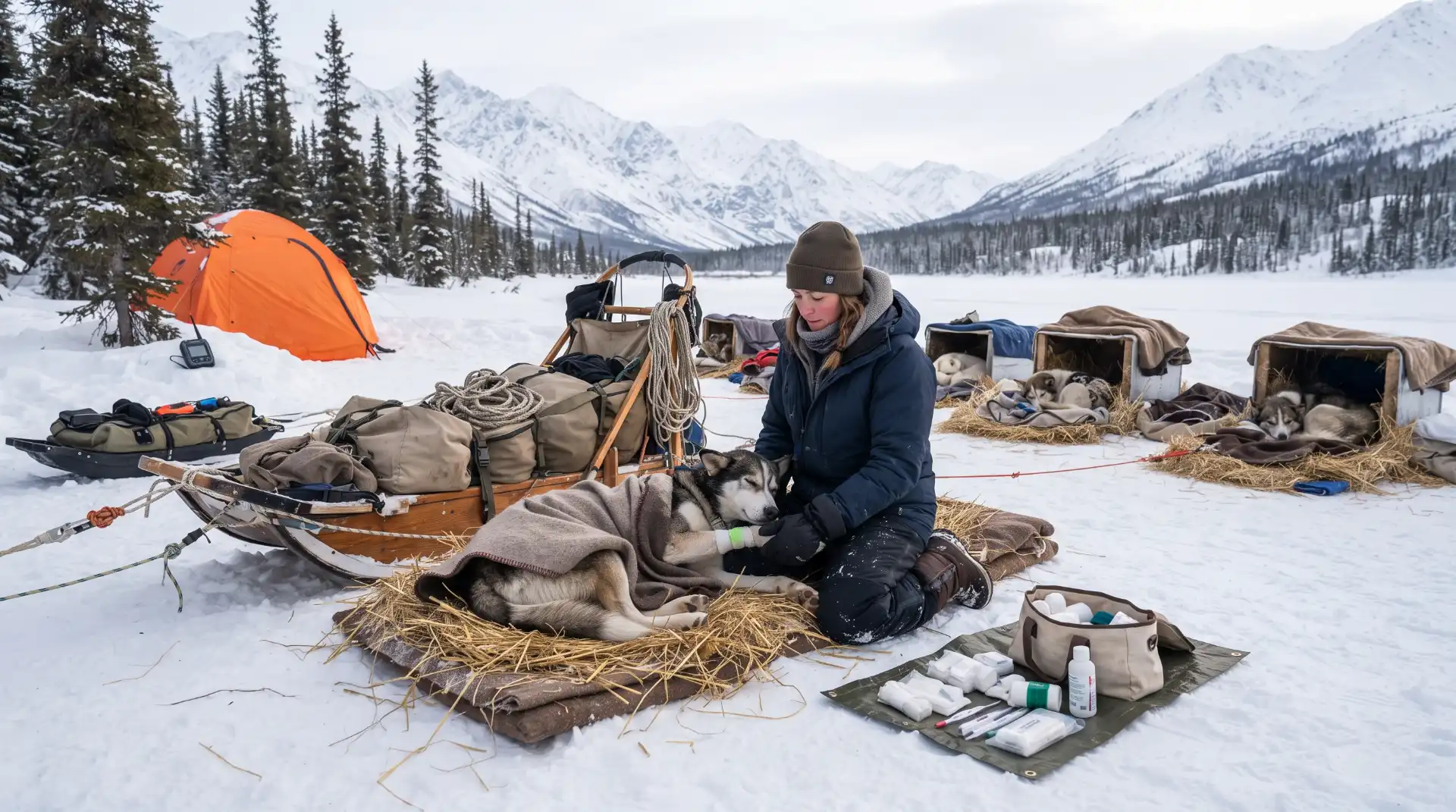
Build an Emergency Kit for the Dogs
A human survival kit alone is not enough for a sled dog team.
Dogs can experience paw injuries, cuts, muscle soreness, broken nails, harness irritation, dehydration, illness, or other problems while far from veterinary care.
Mushers can carry canine first aid supplies appropriate for the duration and remoteness of the trip.
Useful categories include wound cleaning materials, gauze, bandaging supplies, paw protection, clean water, towels, emergency insulation, and basic tools.
Medications deserve additional caution. A drug that is safe for humans may not be appropriate for dogs. Medication choices and dosing should be discussed with a veterinarian familiar with the individual dog whenever possible.
Before a major remote trip, consider discussing the route and expected conditions with a veterinarian. The conversation can cover individual health concerns, first aid priorities, medications, calorie requirements, hydration, and circumstances that should end a dog’s participation.
The dogs cannot explain exactly where they hurt, so observation remains especially valuable.
Changes in gait, appetite, attitude, breathing, coordination, or willingness to pull can provide important information.
Inspect Every Dog Before Departure
Emergency preparedness begins with a healthy team.
Each dog should be observed before harnessing.
Check paws, nails, legs, harness contact areas, appetite, hydration, attitude, and movement. Look for changes that differ from the dog’s normal behavior.
A dog that seems unusually tired or stiff at the kennel may not improve after several miles on the trail.
Remote travel is not an ideal place to discover that a minor concern has developed into a larger problem.
Mushers also benefit from knowing their individual dogs well. One dog may naturally drink less at a particular stop. Another may become quiet when tired. A third may show discomfort through subtle changes in gait.
That knowledge comes from daily care and time spent together.
Outlaw Ridge Sled Dogs explores this relationship further in Behind the Scenes: A Day in the Life of a Musher, which looks at feeding, health checks, training, and the daily responsibilities involved in managing a working dog team.
Pack Enough Dog Food for Unexpected Delays
A remote trip should be planned around more than the expected travel time.
Weather, trail conditions, equipment problems, or a dog requiring rest may keep the team away longer than expected.
Extra dog food provides flexibility.
Working sled dogs can consume considerable energy in cold conditions, particularly during demanding travel. Food also becomes part of the team’s recovery routine during longer outings.
Store dog food where it remains protected from moisture and wildlife.
Portioning food before departure can simplify feeding when conditions become difficult. A musher handling dogs during blowing snow may not want to measure meals from a large bulk container.
Hydration also deserves planning.
Snow surrounds winter travelers, but eating snow is not always an efficient substitute for drinking water. Melting snow requires time and fuel, especially when supplying an entire dog team.
Carry water when practical and bring a reliable method for melting or treating additional water during longer trips.
Yellowstone’s winter backcountry guidance advises travelers to carry a method for melting snow or collecting and treating water during extended travel.
Prepare for the Dogs to Stop Running
A sled dog team can cover impressive distances, but an emergency plan should assume that normal travel may become impossible.
One dog may need to ride in the sled.
Several dogs may need extended rest.
A broken sled may prevent normal movement.
A storm may require the team to remain sheltered for hours.
The sled should therefore have enough usable capacity for emergency situations. A musher should understand how team handling changes if one dog cannot continue pulling.
In a large team, removing one dog may be manageable. In a small recreational team, losing one pulling dog may substantially affect speed and travel time.
These scenarios are worth considering before leaving.
Emergency planning asks a simple question repeatedly.
What happens if the normal plan no longer works?
Bring Emergency Shelter for People and Dogs
Remote mushing trips can become stationary unexpectedly.
Strong wind, severe snowfall, equipment failure, injury, or navigation problems may require the team to stop.
Emergency shelter can provide protection while conditions improve or while assistance is arranged.
Shelter options vary according to trip length. An expedition team may already carry winter camping equipment. A shorter backcountry run might carry compact emergency shelter materials, insulation, blankets, bivy equipment, or other protection suited to the environment.
Dogs also need protection during an extended stop.
Sled dogs may tolerate cold remarkably well, but tolerance should not be confused with immunity to weather. Wind, moisture, exhaustion, age, health, and inactivity can change how a dog responds to cold.
Provide insulation from snow when a long stop becomes necessary. Protect dogs from strong wind when terrain or equipment allows.
Keep resting dogs as dry as practical.
Prepare the Musher for Hypothermia and Frostbite
The person driving the sled has to remain capable of making decisions.
Hypothermia can impair coordination, judgment, speech, and movement. That creates a serious problem because the musher is responsible for navigation and the dog team.
The National Park Service identifies warning signs such as uncontrollable shivering, reduced coordination, confusion, unusual speech, and exhaustion.
Clothing management should begin before someone becomes dangerously cold.
Dress in layers that can be adjusted as activity changes. Mushing can involve alternating periods of physical effort and relative inactivity. A musher might sweat while pushing a sled uphill and then cool rapidly while standing at a trail stop.
Wet clothing increases heat loss.
Carry dry backup gloves and clothing in waterproof storage. Protect hands because cold fingers can make tasks such as fastening snaps, repairing equipment, or handling lines much more difficult.
Plan for Fire and Heat Carefully
Some longer wilderness trips carry stoves or other heating equipment.
These tools can provide hot food, melt snow, and support emergency warming, but they introduce their own hazards.
Fuel should be stored appropriately. Stoves should be operated according to manufacturer instructions and kept away from dogs, harnesses, bedding, and flammable equipment.
Ventilation matters when using combustion equipment around shelters.
Yellowstone’s winter camping guidance specifically warns travelers to ventilate shelters properly because carbon monoxide can accumulate when stoves are used improperly.
Practice using winter equipment before depending on it remotely.
Freezing temperatures can make equipment behave differently than it does during a test in a warm garage.
Carry Essential Emergency Supplies
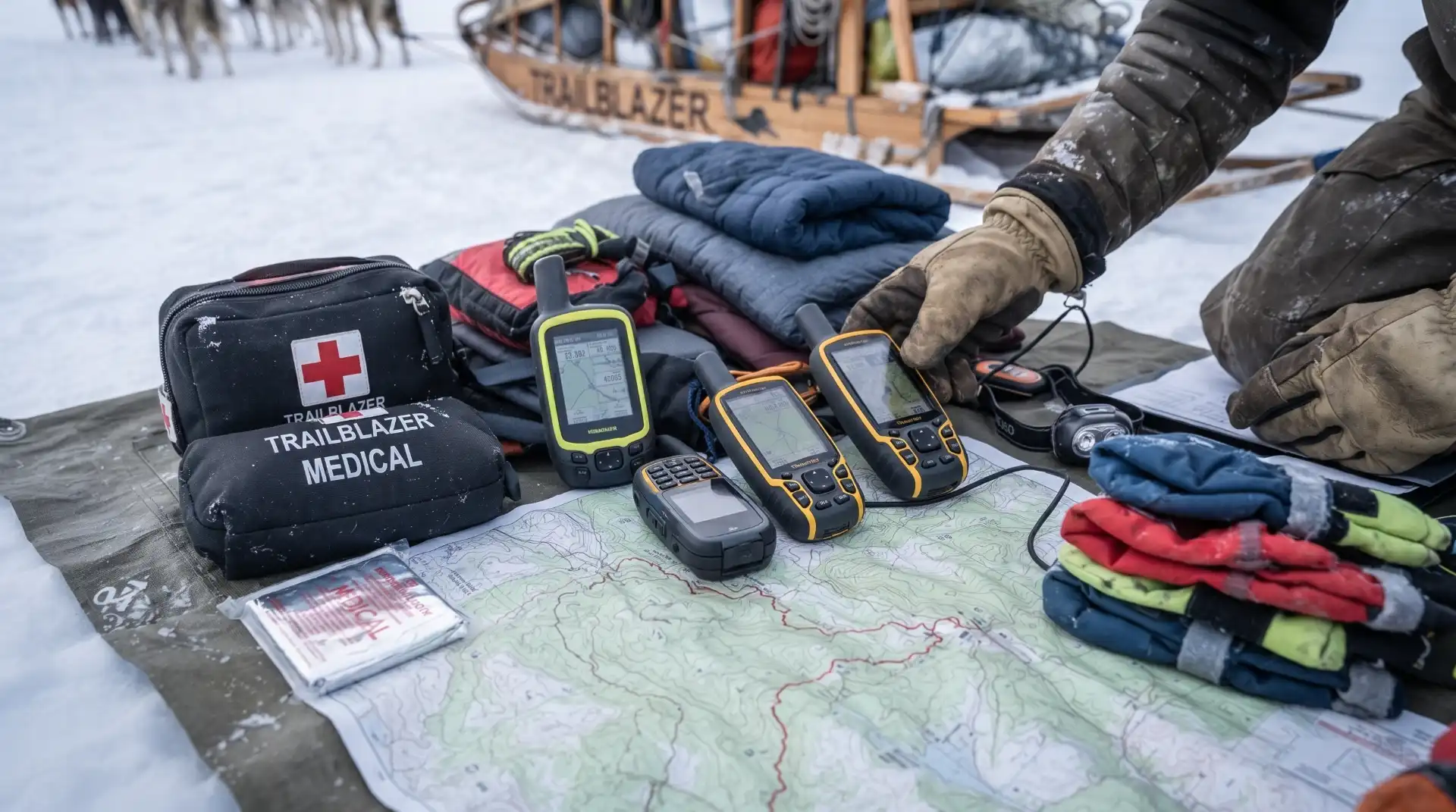
A complete packing list varies according to distance, terrain, number of dogs, and expected weather. Most remote mushing kits, however, can be organized around several core needs:
- Navigation equipment including maps, compass, GPS, and backup power
- Satellite or emergency communication equipment when appropriate
- Human and canine first aid supplies
- Extra dog food, human food, and water
- Emergency shelter and insulation
- Additional clothing, gloves, socks, and weather protection
- Headlamp and backup lighting
- Fire starting equipment suitable for local regulations and conditions
- Sled repair tools and replacement dog equipment
- Extra booties, lines, snaps, and harness equipment
- Knife or multitool
- Emergency signaling equipment
- Identification and important medical or veterinary information
The U.S. Forest Service similarly advises winter travelers to carry items such as a map and compass, tools, spare parts, extra clothing, a flashlight, first aid equipment, food, and drinking water.
Packing should remain organized.
Emergency gear buried beneath several layers of cargo has limited value when it needs to be reached quickly.
Understand Ice Before Traveling Across Water
Frozen lakes and rivers can create tempting shortcuts, but ice conditions can vary significantly.
Moving water, springs, changing temperatures, snow cover, pressure ridges, currents, and recent weather can create weak areas that may not be visible from the surface.
Do not assume that previous tracks prove a route remains safe.
Conditions can change after those tracks were made.
Voyageurs National Park warns winter travelers to take thin ice warnings seriously and notes that changing ice conditions can create open water around pressure ridges.
For mushing teams, ice failure becomes especially complicated because multiple dogs, lines, and a sled may be involved simultaneously.
When uncertainty exists, choosing another route may be the safer decision.
Consider Wildlife Encounters
Remote trails cross habitat used by wildlife.
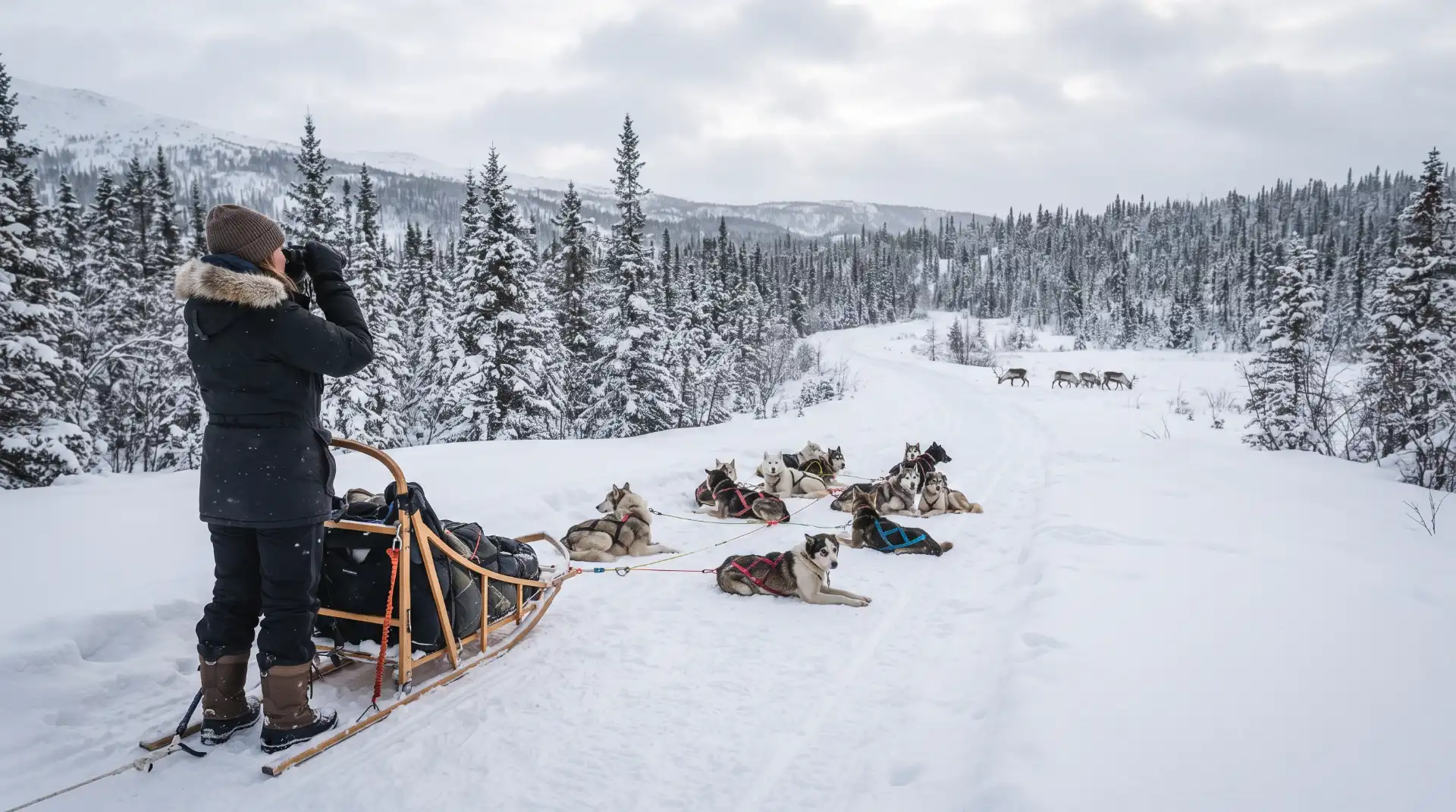
The animals present vary by region, but mushers may encounter moose, deer, wolves, coyotes, or other species during winter travel.
Wildlife can behave unpredictably, especially when surprised or when energy reserves are limited during winter.
Dogs may also become excited by wildlife, making team control more challenging.
Learn which animals are common along the route and understand local guidance for encounters.
Avoid intentionally approaching wildlife for photographs.
Give animals space and avoid forcing them to move unnecessarily through deep snow.
Winter wildlife can already be operating under significant energy stress.
Know When to Turn Around
Remote travel creates pressure to continue.
A destination may be close. The team may have traveled for hours. Weather might still appear manageable.
Good emergency preparedness includes deciding in advance what conditions should trigger a return.
Those conditions might involve deteriorating weather, poor visibility, unsafe ice, trail loss, equipment failure, injured dogs, unexpected fatigue, delayed travel, avalanche concerns, or loss of communication equipment.
Establishing these limits before the trip makes it easier to act when emotions are involved.
A shorter trip that ends safely is preferable to continuing into increasingly uncertain conditions.
This becomes even more relevant as winter weather patterns change. Outlaw Ridge Sled Dogs discusses changing trail conditions in Warmer Winters Reshaping U.S. Sled Dog Adventures, including inconsistent snow, ice, and changing access across traditional mushing areas.
Practice Emergency Scenarios Close to Home
Emergency gear has limited value if no one knows how to use it.
Practice repairs before a line breaks deep in the backcountry.
Set up emergency shelter before a storm.
Learn how the satellite communicator works before reaching an area without cellular service.
Practice navigating with the paper map and compass.
Learn how the sled behaves when carrying an additional dog.
Try lighting the stove in cold conditions.
Pack and unpack the first aid kit enough times that important supplies can be located quickly.
Training does not need to become dramatic.
Simple practice creates familiarity.
When a genuine problem occurs, familiar actions can reduce confusion and save valuable time.
Develop a Dog Evacuation Plan
Human backcountry travelers usually think about evacuating an injured person. Mushers also need to consider the possibility of evacuating a dog.
Could an injured dog ride safely in the sled?
How much additional weight can the remaining team reasonably handle?
Where is the closest road?
Can another musher reach the location?
Is there a veterinary clinic near the trail system?
Does the satellite communicator allow two way messaging?
These questions matter more as distance from the trailhead increases.
Keep veterinary contact information accessible rather than stored only on a phone that could lose power.
For particularly remote expeditions, research veterinary facilities along the broader travel corridor before departure.
Adjust the Plan to the Weakest Member of the Team
A remote mushing team travels as a unit.
The strongest dogs should not determine every decision.
Consider the youngest dog, oldest dog, least conditioned dog, recovering dog, inexperienced musher, or person struggling with the conditions.
The National Park Service advises winter groups to base decisions on the weakest member because exhaustion and cold related problems can affect an entire party.
That principle translates naturally to dog teams.
A team can slow down.
A route can be shortened.
A dog can ride.
A trip can turn around.
The objective is not simply reaching a destination. It is managing the entire team responsibly from departure through return.
Emergency Preparedness Is Part of Good Mushing
The dramatic image of remote mushing often centers on dogs running across untouched snow, mountains on the horizon, and a sled moving quietly through the wilderness.
Behind that experience sits a large amount of planning.
Mushers study trails, inspect equipment, monitor weather, feed dogs, check paws, pack supplies, review navigation, manage communication, and continuously evaluate conditions.
Preparedness does not remove every risk from wilderness travel.
It creates alternatives when the original plan stops working.
For people, that may mean having dry clothing, emergency shelter, navigation tools, extra food, and a way to request assistance.
For the dogs, it means carrying adequate food, water, paw protection, spare equipment, first aid materials, and a plan for rest or evacuation.
The combination matters.
Remote mushing is a partnership between people and dogs. Emergency planning should reflect that partnership from the first mile to the last.
Before planning a longer wilderness outing, newer participants can explore more introductory information in Outlaw Ridge Sled Dogs’ Dog Sledding 101: Dog Sledding Basics, Gear, Training & Safety and browse additional stories in the site’s Sled Dog Adventures collection.
For additional authoritative winter backcountry guidance, review the U.S. National Park Service resource on winter safety and emergency preparation. National Park Service Winter Backcountry Safety
Remote mushing rewards preparation. When mushers plan for weather changes, navigation problems, equipment failures, canine health concerns, and unexpected delays, they give themselves and their dogs more options when conditions become difficult.
That preparation helps keep the focus where it belongs: responsible dog care, sound trail decisions, teamwork, and the remarkable experience of traveling through winter wilderness behind a well prepared sled dog team.