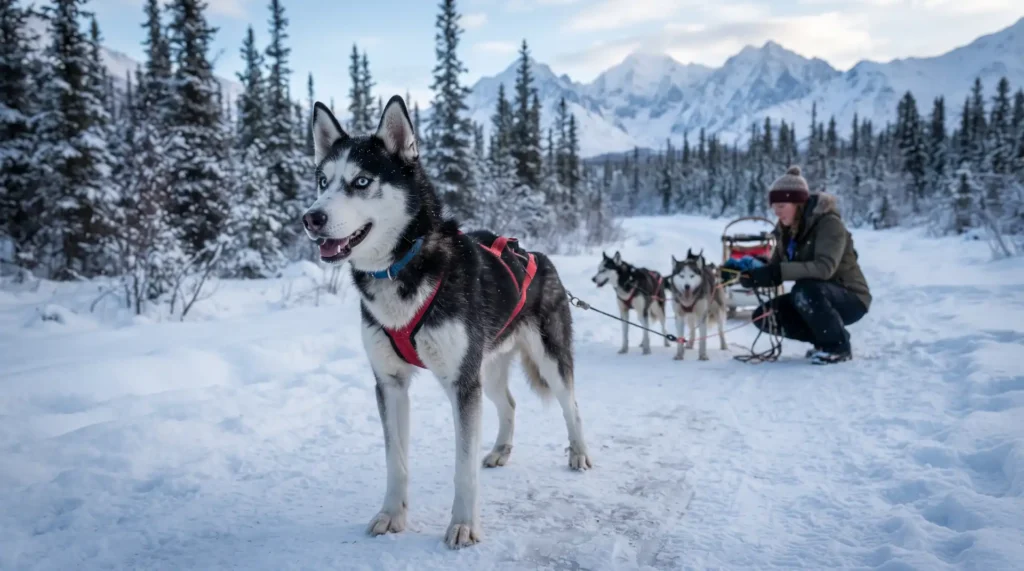
Preparing an Alaskan Husky for its first sled dog race is an exciting milestone for both the dog and the musher. The image of a powerful team charging down a snowy trail can make racing look simple, but a dependable sled dog is built through months of consistent training, conditioning, teamwork, equipment practice, recovery, and careful observation. A first race should not be treated as a single event that the dog suddenly has to conquer. It should be the natural next step after the dog has developed the physical and mental skills needed for competitive work.
Alaskan Huskies are particularly well known in modern mushing because they have been selectively developed for working performance rather than a standardized show-ring appearance. The American Kennel Club explains that many modern sled dogs are Alaskan Huskies with mixed genetic backgrounds selected for qualities such as speed, endurance, and hardiness. Their appearance can vary considerably, but successful working dogs share characteristics that allow them to perform efficiently as part of a team. The American Kennel Club’s guide to today’s sled dogs provides additional background on modern Alaskan Huskies and their role in mushing.
For a first-time racing Alaskan Husky, athletic potential is only one part of preparation. The dog also needs to understand the harness, respond to familiar commands, maintain position within a team, tolerate distractions, work around other dogs, recover appropriately after exercise, and remain comfortable in the race environment. The musher has an equally important responsibility to understand the equipment, trail conditions, race rules, weather, emergency procedures, and the individual dog’s limitations.
What Makes an Alaskan Husky Ready for Its First Race?
There is no single training schedule that works for every Alaskan Husky. Dogs differ in age, physical development, experience, body structure, temperament, conditioning history, and the type of race they are preparing to enter. A short sprint competition creates different demands from a longer-distance event, while a flat groomed trail is different from a hilly or technically difficult course.
Because of those differences, race preparation should begin by defining what the dog will actually be expected to do. The musher should learn the race distance, trail characteristics, expected weather, team size, equipment requirements, veterinary requirements, and any rules concerning inexperienced dogs. Having this information early allows training to become specific rather than simply increasing mileage without a clear purpose.
A dog that can comfortably complete a training run is not automatically ready for competition. Race environments can introduce barking dogs, crowds, unfamiliar mushers, vehicles, staging areas, equipment noise, changing trail conditions, and sudden excitement. A successful first race therefore requires preparation for both physical effort and environmental stimulation.
Begin With a Veterinary Health Assessment
Before increasing an Alaskan Husky’s workload for racing, a veterinary examination is an important part of responsible preparation. Working and racing dogs place substantial demands on their cardiovascular system, muscles, joints, tendons, paws, and overall energy reserves. A veterinarian familiar with canine athletes can help establish whether the dog is physically ready for the planned level of activity.
A pre-season examination can also provide a useful baseline. The veterinarian may assess body condition, gait, musculoskeletal health, heart and respiratory function, feet, and other areas relevant to athletic performance. If a problem is identified early, the training plan can be adjusted before the dog is exposed to the demands of competition.
Age and physical maturity should also be considered. An energetic young Alaskan Husky may appear ready to run long distances because it is enthusiastic, but enthusiasm does not necessarily mean the dog’s body is prepared for sustained competitive work. Training decisions should therefore take the dog’s development into account rather than relying on excitement or breed reputation alone.
The purpose of veterinary involvement is not simply to obtain approval for racing. It is to understand the individual dog and create a safer foundation for conditioning, nutrition, recovery, and competition.
Build Fitness Before Increasing Speed
One of the most important principles of preparing an Alaskan Husky for a first sled dog race is to develop fitness gradually. New mushers can sometimes become focused on speed because racing naturally creates a desire to see how fast a team can travel. However, a strong endurance foundation is more useful than repeatedly pushing an inexperienced dog at maximum effort.
Early conditioning should emphasize consistency, efficient movement, controlled pulling, and recovery. The dog should become comfortable working in harness and maintaining a steady rhythm before training becomes increasingly demanding. Gradually increasing workload gives the body an opportunity to adapt to the physical stress associated with running and pulling.
Training should also include variation. Some sessions can emphasize steady endurance, while others can focus on commands, starts, teamwork, or shorter controlled efforts. The exact balance depends on the race and the dog’s development, but variety can help prevent every training session from becoming the same repetitive workout.
Recovery is part of conditioning. An Alaskan Husky does not become a better athlete simply because every training day is difficult. Rest and lighter sessions allow the body to adapt to previous work. Watching how the dog moves and behaves after training can provide valuable information about whether the workload is appropriate.
Use Dryland Training When Snow Is Unavailable
U.S. mushers cannot always depend on consistent snow. Some regions experience late snowfall, temporary thaws, short winters, or changing trail conditions that make traditional sled training difficult. That makes year-round conditioning increasingly important for teams preparing for winter competition.
Outlaw Ridge Sled Dogs has already explored this issue in Dryland Training for Sled Dogs: How Warmer Winters Are Changing Mushing in 2026. The article provides a natural companion to this race-preparation guide because conditioning does not necessarily have to stop when usable snow is unavailable.
Dryland activities can help maintain the dog’s working habits and provide opportunities to practice commands, controlled pulling, and endurance. Depending on the individual dog and conditions, activities such as canicross, bikejoring, or scooter work can become part of a broader conditioning program.
Warm-weather training requires additional caution. Temperature, humidity, trail surface, hydration, and time of day can change how much exercise is appropriate. A training distance that is comfortable during a cold winter morning may be unsuitable during a warm afternoon. The dog should always be evaluated based on the actual conditions rather than a fixed mileage target.
Teach the Alaskan Husky to Enjoy the Harness
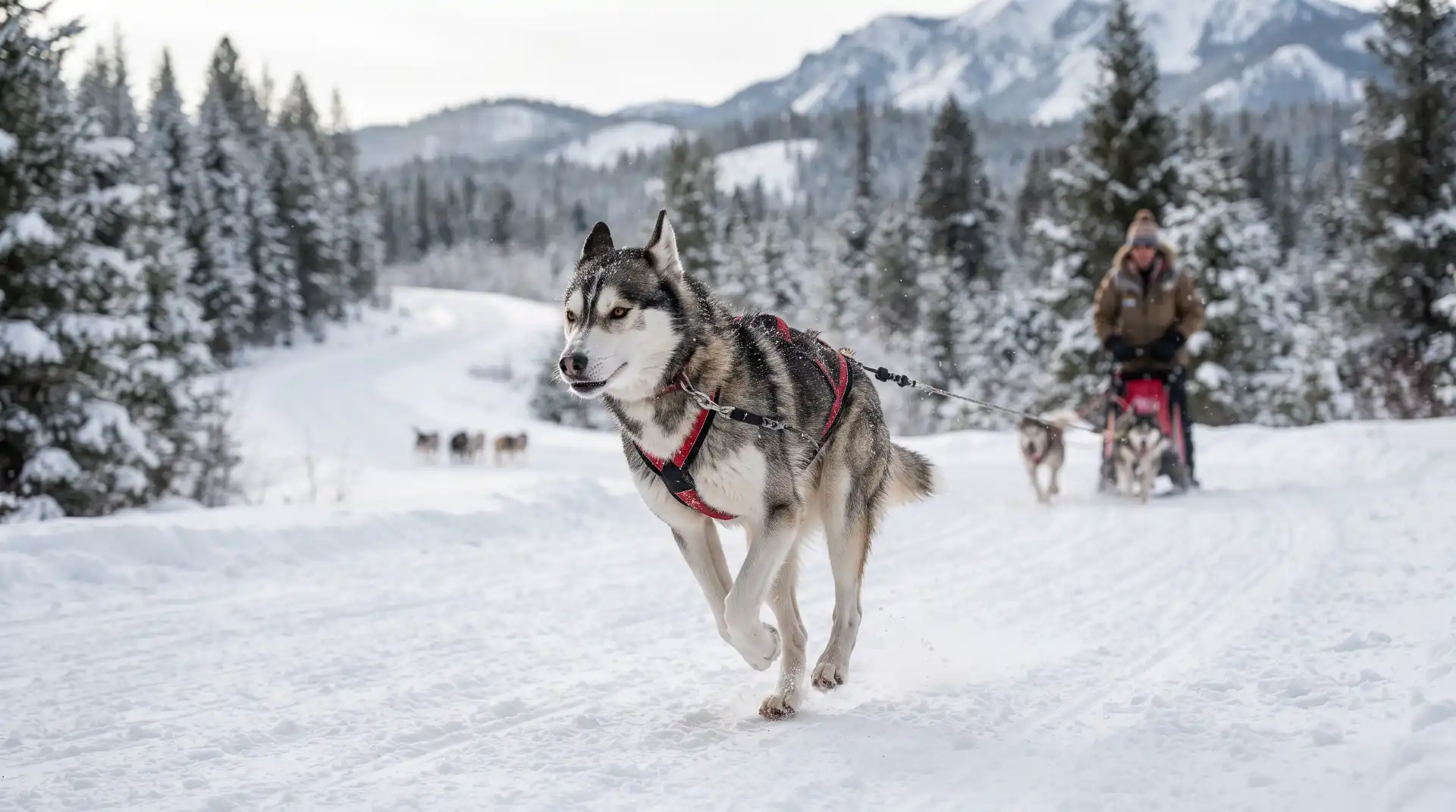
A sled dog harness should become familiar long before race day. An inexperienced dog should not be expected to put on a harness for the first time and immediately understand that it is supposed to pull a sled.
Start by allowing the dog to investigate the harness. The equipment should be introduced calmly, and the dog should have opportunities to move while wearing it before significant resistance is added. Short sessions can help the dog learn that harness work is a normal part of its routine.
Harness fit is especially important. A harness that rubs, restricts movement, or creates pressure in the wrong area can cause discomfort and interfere with the dog’s willingness to work. The correct harness should be appropriate for the dog’s body and the type of pulling activity being performed.
As the dog becomes comfortable, the musher can gradually introduce pulling. The objective is to create a clear association between wearing the harness and moving forward with purpose. The dog should learn to pull willingly rather than being forced to understand the equipment through excessive resistance or pressure.
Teach Reliable Mushing Commands
Communication between musher and dog team is one of the foundations of safe and effective mushing. Commands should be introduced gradually and practiced consistently so that the dog understands what the musher expects.
Many mushers use traditional directional commands such as “gee” for right and “haw” for left, along with commands for starting and stopping. Individual kennels may use variations, and the exact vocabulary is less important than consistency. If the same sound or word always has the same meaning, the dog has a better opportunity to understand it.
Directional commands should first be practiced in controlled environments. Once the dog understands them, they can be incorporated into ordinary training runs. The difficulty can then increase gradually as the dog learns to respond while moving at speed, working around other dogs, and navigating changing trail conditions.
A reliable stopping command is particularly important. The dog needs to understand that work can begin with excitement and still end with a controlled stop. A musher who can communicate clearly with the team has more options when an unexpected situation develops on the trail.
Let an Experienced Sled Dog Teach the Beginner
A new racing Alaskan Husky does not have to learn everything from the musher alone. Experienced sled dogs can provide valuable examples for younger or less experienced teammates. Dogs learn by observing one another, and a veteran team member can demonstrate the rhythm, focus, and behavior expected during a run.
Outlaw Ridge Sled Dogs recently covered this subject in Training Beside an Experienced Leader. This is a particularly relevant internal resource for readers who want to understand why experienced dogs can play such an important role in developing a new team member.
An experienced dog can show a newcomer how to stand during harnessing, wait for the start, maintain forward movement, respond to the musher, and continue working when distractions appear. This can be especially useful for dogs that understand basic commands but have never experienced the rhythm of an established sled team.
Team placement should still be individualized. Not every experienced dog is appropriate for every inexperienced dog. Temperament, physical ability, confidence, position within the team, and behavior all matter. The goal is to create a learning environment in which the new dog can gain confidence rather than becoming overwhelmed.
Gradually Increase Running Distance
Once the dog is comfortable in harness and understands basic team expectations, distance can gradually become part of the conditioning program. Increasing distance should be a controlled process rather than a race against the calendar.
The dog should demonstrate that it can complete current training workloads comfortably before the workload is increased. Watch movement throughout the session rather than focusing only on whether the dog reaches the planned distance. Changes in stride, reluctance to pull, repeated slowing, unusual behavior, or excessive fatigue can indicate that the session needs to end or that future training needs to be adjusted.
After the run, continue observing the dog. Recovery provides useful information. A dog that consistently returns to normal behavior, appetite, hydration, and movement after appropriate rest is giving different information from a dog that remains unusually tired or uncomfortable.
There is no benefit to completing a particular training distance simply because it was written into a schedule. Training plans should be flexible enough to respond to the dog.
Train on Different Trail Conditions
A first race may expose an Alaskan Husky to trail conditions that are different from those encountered during regular training. Preparing for a range of reasonable conditions can make the experience less surprising.
When safe and appropriate, training can include packed snow, gentle hills, different trail widths, gradual turns, and changes in surface conditions. The objective is not to make every workout difficult. Instead, the dog gradually learns that the trail may change while the basic expectations remain the same: move forward, stay focused, respond to commands, and work with the team.
Terrain can also influence energy expenditure. A team moving uphill may work considerably harder than it does on a flat section, while deep or loose snow can change the amount of effort required to maintain speed. Training should account for these differences rather than treating every mile as physically identical.
Make Paw Care Part of the Daily Routine
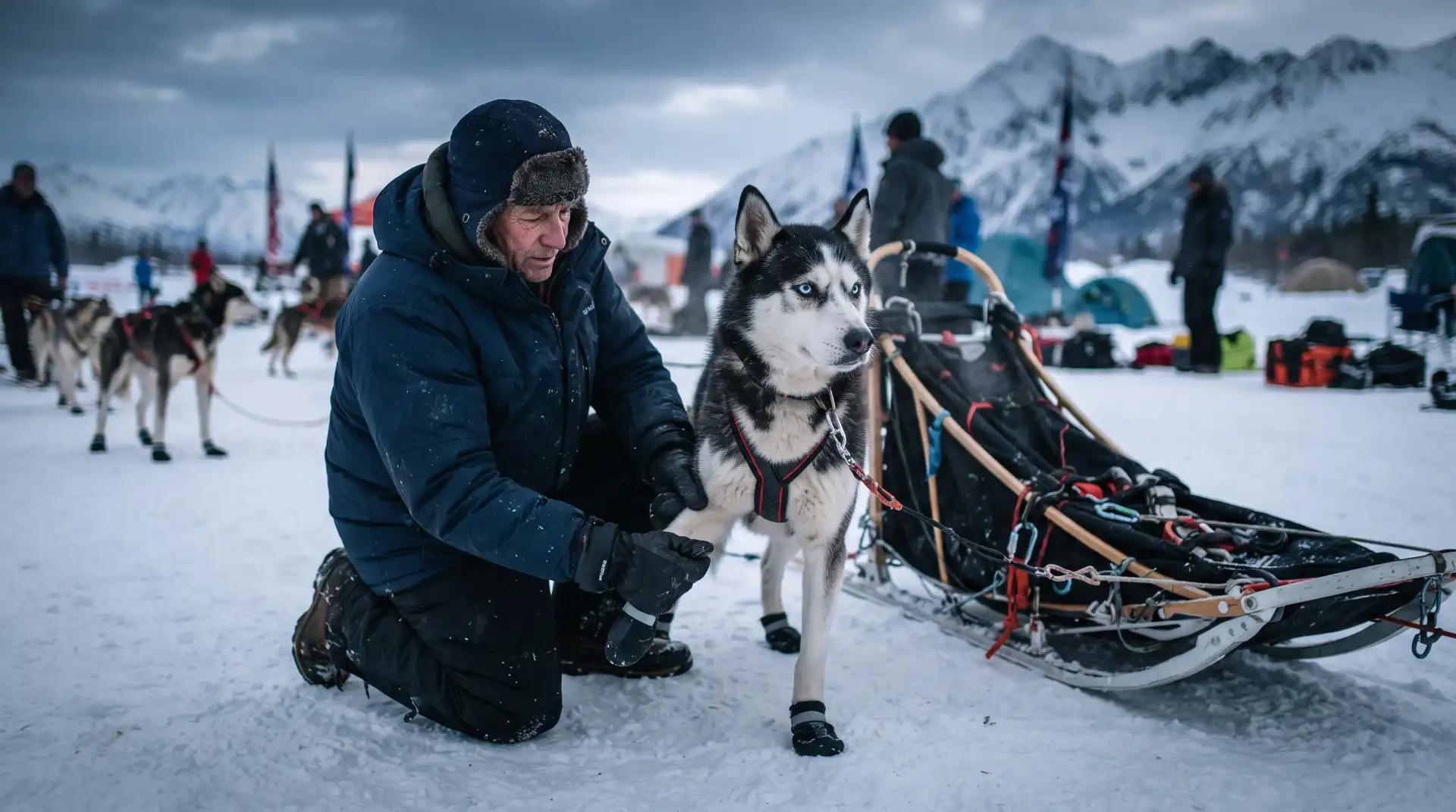
An Alaskan Husky’s feet deserve close attention during race preparation. The paws absorb repeated contact with snow, ice, packed trails, and other surfaces, and even a small problem can interfere with a dog’s ability to run comfortably.
Inspect the paws regularly, particularly after longer training sessions. Look for cuts, abrasions, cracks, swelling, foreign material, or unusual licking. Also pay attention to whether the dog begins favoring a foot or changing its stride.
Booties may be appropriate for some dogs and trail conditions, but they should be introduced during training rather than for the first time on race day. A dog needs to learn how to move comfortably while wearing them, and the musher needs to make sure they stay properly positioned.
Paw care should never be separated from conditioning. Gradual exposure to appropriate surfaces can help the dog develop experience, but visible injury or persistent discomfort should be taken seriously.
Develop a Nutrition Plan Before Race Day
Nutrition is another important part of preparing an Alaskan Husky for competition. A working dog’s nutritional needs can change as training volume increases, but there is no universal diet that should be applied to every racing dog.
The appropriate feeding plan depends on factors such as the dog’s age, body condition, workload, individual metabolism, health, and the distance and intensity of the planned competition. A veterinarian or qualified canine nutrition professional can help develop a program appropriate for the individual dog.
Feeding routines should be established during training. Race week is not the time to introduce a completely unfamiliar food, supplement, or feeding schedule. The dog should already be comfortable with the routine that will be used around competition.
Hydration also deserves attention. Cold weather can make water consumption less obvious to the handler, but working dogs still require appropriate access to fluids. The musher should know the dog’s normal drinking habits and watch for changes.
Maintain an Athletic but Healthy Body Condition
There is no single ideal racing weight for every Alaskan Husky. These working dogs vary in size and build, and individual body condition should be considered alongside performance and health.
The goal is not simply to make a dog as lean as possible. An athletic sled dog needs sufficient energy reserves and muscle condition to perform its work. At the same time, excessive body weight can increase physical demands during running and pulling.
Regular body-condition monitoring is therefore more useful than focusing on a single number on a scale. Changes in appetite, workload, muscle condition, coat quality, energy, and recovery can all provide useful information.
Prepare the Dog for Other Sled Teams
A race environment can be significantly more stimulating than an ordinary training run. Other teams may be nearby, dogs may bark continuously, people may move around the staging area, and the general atmosphere may create intense excitement.
Dogs should gradually learn that these distractions do not change the job. When working, the dog should remain focused on moving with its team rather than trying to interact with every unfamiliar dog.
Group training can help when performed safely. The dog can gain experience seeing other teams start, stop, pass, and move nearby. This experience can make race day less unfamiliar.
Social behavior still matters, of course, but race preparation requires the dog to understand when it is appropriate to interact and when it is time to work.
Practice Race Starts
The start of a sled dog race can be one of the most intense moments for an inexperienced dog. The atmosphere may include barking, cheering, equipment movement, handlers running between teams, and multiple dogs eager to move forward.
Controlled start practice can help the Alaskan Husky learn what is expected. The dog should be able to remain connected to the team, maintain its position, listen to the musher, and begin working when the appropriate command is given.
Start practice should not attempt to recreate the full chaos of a major race every time. Instead, the difficulty can be increased gradually. The dog can first practice with familiar teammates and then gain experience in busier environments.
The objective is controlled enthusiasm. A racing dog should be eager to run, but the musher still needs to be able to manage that excitement.
Use Bikejoring and Canicross as Complementary Training
Dryland sports can be valuable tools for maintaining working habits when snow is unavailable. They can also provide variety during the training year when used appropriately.
Outlaw Ridge Sled Dogs has a dedicated article on bikejoring as an off-season sled dog sport. Bikejoring involves a dog running ahead of a bicycle while connected through appropriate pulling equipment. Because it combines forward movement, pulling, commands, and teamwork, it can provide a useful dryland activity for appropriately conditioned dogs.
Canicross offers another option. In canicross, the dog pulls a running handler, creating another opportunity to practice forward focus and controlled pulling without snow. Outlaw Ridge Sled Dogs also covers canicross training for sled dogs during warmer months.
These activities should complement rather than replace appropriate race-specific training. They also require careful consideration of temperature and surface conditions. A dog that is perfectly comfortable working in winter may face a very different physiological challenge during warm-weather exercise.
Teach the Dog How to Recover
Recovery is one of the most overlooked aspects of preparing a racing dog. Mushers naturally pay attention to how far a team runs and how fast it moves, but what happens after the run can be equally informative.
Watch the dog’s movement after exercise. Pay attention to appetite, hydration, behavior, willingness to interact, and general comfort. A healthy training response should not be confused with persistent exhaustion or pain.
Rest days can help the dog adapt to increasing workload. The exact recovery schedule depends on the individual dog and training program, but recovery should be deliberately planned rather than treated as an afterthought.
If the dog repeatedly shows signs of discomfort, lameness, unusual fatigue, or changes in behavior, training should be reassessed and professional veterinary guidance should be sought.
Do Not Try to Build Fitness at the Last Minute
A common mistake in first-race preparation is attempting to make up for insufficient conditioning during the final days before competition. Suddenly increasing distance or intensity does not create instant fitness. It can instead create unnecessary fatigue and increase the likelihood of problems.
Fitness should be developed progressively over the training season. As race day approaches, the focus can shift toward maintaining conditioning, practicing race-specific skills, checking equipment, and allowing the dog to recover.
A well-prepared dog should arrive at the starting line ready to work rather than exhausted from a last-minute training push.
Inspect the Harness and Sled Equipment
Equipment checks should become routine well before race day. Harnesses, ganglines, clips, sled components, brakes, runners, and other equipment should be inspected for wear and damage.
The harness deserves particular attention because it is the point where the dog’s pulling effort is transferred to the line. The equipment should fit correctly and should not create obvious rubbing or pressure points.
New equipment should be tested during training. Race day is a poor time to discover that a harness fits differently than expected, a line is damaged, or another piece of equipment does not function correctly.
Experienced mushers often develop a personal pre-run equipment checklist. Even a simple routine can help prevent small problems from becoming race-day complications.
Prepare for the Race Environment
Training should gradually expose the Alaskan Husky to some of the situations it may encounter at a competition. This can include traveling to unfamiliar trailheads, working around other teams, waiting before a run, and hearing unfamiliar sounds.
The dog should also learn that not every moment at a race is running time. There may be periods of waiting, harnessing, checking equipment, standing near other dogs, and moving between different areas.
Teaching the dog to settle when appropriate can be just as valuable as teaching it to run. A dog that can transition between excitement and calm behavior is easier for the musher to manage.
Create a Race-Week Checklist
The final week should focus on organization rather than panic. Race rules should be reviewed, equipment should be inspected, transportation should be confirmed, food and water supplies should be organized, and the dog’s normal routine should be maintained.
The musher should also review the weather forecast and expected trail conditions. Winter weather can change quickly, particularly in Alaska and other northern U.S. regions. Conditions should be evaluated close to race time rather than relying exclusively on a forecast made several days earlier.
Emergency supplies should also be available. The appropriate equipment depends on the race, location, distance, and rules, but preparation should include thinking through what could happen if a dog becomes injured, equipment fails, weather changes, or the team is delayed.
Prepare the Musher as Carefully as the Dog
The dog is only one half of a racing partnership. The musher needs to be prepared as well.
A musher preparing for a first race should understand the sled, brake, lines, harnesses, commands, trail etiquette, race procedures, and emergency plans. Practicing equipment handling before race day can reduce stress when something unexpected happens.
The musher should also be physically prepared for the conditions. Standing, running beside the sled, controlling the sled, handling dogs, and managing equipment can all become demanding in cold weather.
Good preparation allows the musher to focus on the dogs instead of trying to remember basic procedures during a stressful race.
Keep a Detailed Training Journal
A training journal can help turn individual runs into useful information. Record the date, distance, weather, trail conditions, team composition, general performance, and recovery observations.
Over several weeks, patterns can emerge. A dog may perform particularly well in certain temperatures, require more recovery after hill work, or become distracted when unfamiliar teams are present. These observations can guide future training decisions.
A journal also helps prevent memory from becoming the only source of information. A run that seemed difficult several weeks earlier may have been difficult because of deep snow or unusual weather rather than because the dog lacked fitness.
Modern mushing can also incorporate GPS and other technology, but technology should support observation rather than replace it. A device can record distance and speed, but the musher still needs to pay attention to the individual dog’s behavior and condition.
Watch for Signs That Training Needs to Change
Good race preparation requires flexibility. If an Alaskan Husky begins showing persistent reluctance to run, unusual gait changes, repeated paw problems, significant changes in appetite, prolonged recovery, or other concerning behavior, the training schedule should not simply continue unchanged.
Sometimes the answer is a lighter training period. In other situations, veterinary evaluation may be appropriate. The important point is that a race schedule should never be allowed to dictate ignoring the dog’s condition.
Responsible racing means recognizing that individual dogs do not always progress according to a predetermined calendar.
Make the First Race a Learning Experience
The first race should be viewed as part of the dog’s education. Finishing the course is one outcome, but the experience provides much more information.
The musher can observe how the dog responds to the starting area, unfamiliar teams, trail conditions, distance, commands, and post-race recovery. Those observations can be used to improve future training.
A dog might demonstrate excellent endurance but need more experience around crowded starts. Another dog might remain calm around other teams but require more conditioning for hills. Another might excel during training but become distracted by a particular race environment.
These are not necessarily failures. They are information.
The first competition can help the musher understand what the dog needs next. Over time, those experiences can produce a more confident and reliable team.
Weather and Trail Safety Matter in U.S. Mushing
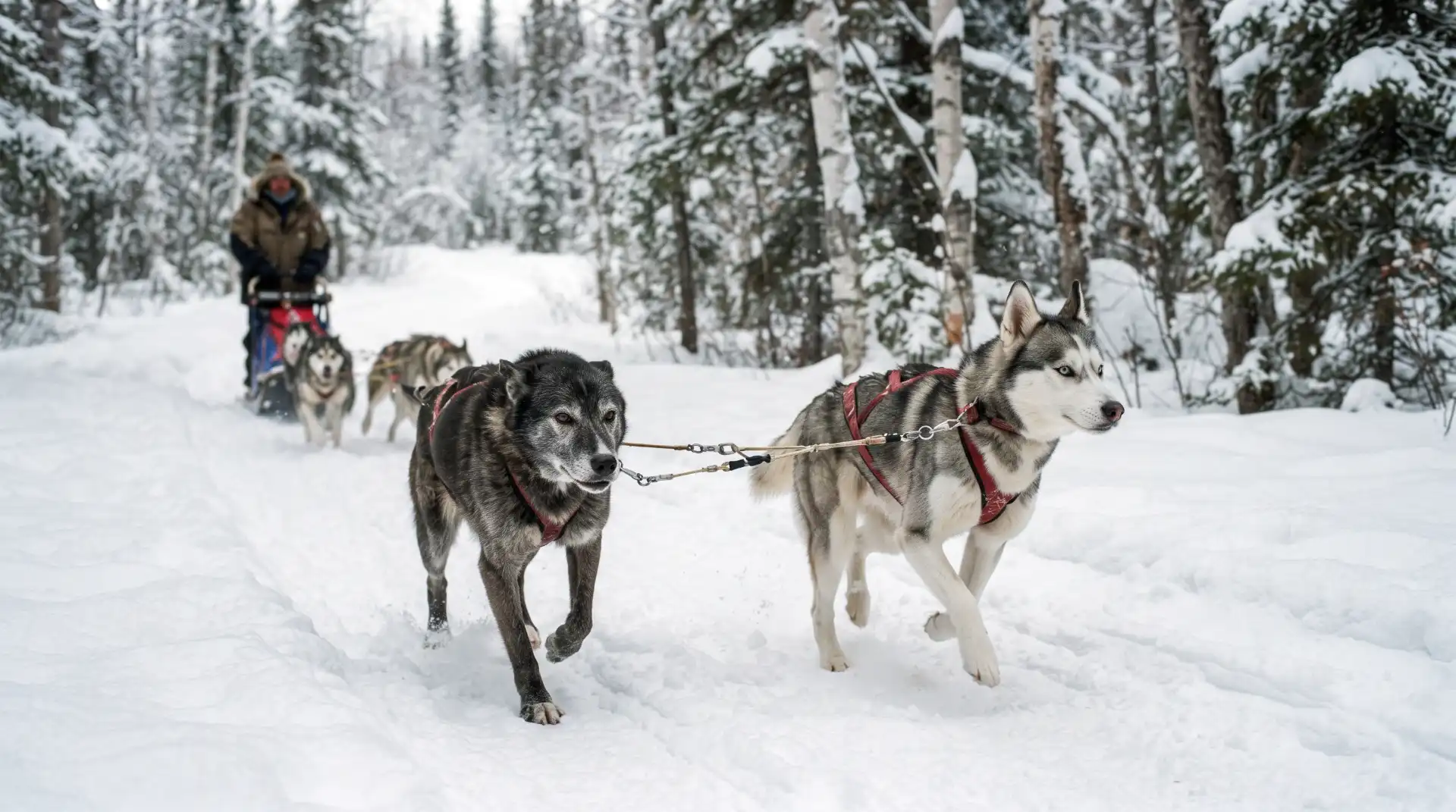
Race preparation must account for the environment in which the team will work. Alaska is famous for extreme winter conditions, but other parts of the United States also offer challenging mushing environments, from the mountains of the West to northern Minnesota, Wisconsin, Michigan, New England, and other snow-producing regions.
Cold temperatures are not the only concern. Wind, poor visibility, changing snow conditions, ice, rough trails, warming temperatures, and unfamiliar terrain can all affect a team.
Backcountry races and remote training sessions require additional planning because help may not be immediately available. Mushers should understand the area, carry appropriate emergency equipment, and have a plan for communication and unexpected delays.
The race itself may have specific safety requirements, but responsible preparation should go beyond the minimum rules.
Know When the Dog Should Not Race
Perhaps the most important part of first-race preparation is understanding that not every prepared dog should start every race.
If an Alaskan Husky is sick, injured, excessively fatigued, or otherwise showing signs that it is not ready for competition, the musher should reassess the decision to race. A race entry, registration fee, training investment, or personal goal should never become more important than the dog’s welfare.
Responsible mushers learn to distinguish normal pre-race excitement from genuine health or performance concerns. When there is uncertainty, veterinary advice can help determine the appropriate course of action.
Building Confidence Before Building Speed
Confidence is an important component of first-race preparation. A dog that understands its job and trusts the routine is more likely to approach unfamiliar situations with focus.
Confidence comes from repetition. The dog learns that the harness is familiar, the gangline is familiar, the commands are predictable, the team is dependable, and the musher provides consistent direction.
This is why rushing the preparation process can be counterproductive. Every additional experience should ideally make the dog’s working world more understandable rather than more chaotic.
What Race Day Should Look Like
On race day, the objective is to follow the routine that the dog already knows. Allow adequate time for travel, preparation, bathroom breaks, equipment checks, and settling into the environment. Avoid creating unnecessary last-minute changes.
Check the harness and lines before connecting the team. Observe the dogs individually. Make sure each dog appears comfortable and ready to work.
Once the team is prepared, the musher should rely on the commands and routines established during training. The race environment may be more exciting than anything the dog has experienced before, but familiar communication gives the dog something consistent to follow.
After the race, the job is not finished. The musher should continue observing the dog’s condition, provide appropriate recovery, inspect the paws and equipment, and record observations for future training.
After the First Race: Evaluate, Do Not Just Celebrate
Finishing a first race can be exciting, but the post-race evaluation is one of the most useful parts of the experience. The musher should consider what worked and what needs additional attention.
How did the dog behave at the start? Did it maintain focus? How did it respond to other teams? Did it maintain an appropriate pace? How did it handle the terrain? Did the harness remain comfortable? How quickly did the dog recover afterward?
These questions provide a roadmap for future training.
A first race should not necessarily be judged solely by speed or finishing position. For a developing Alaskan Husky, learning how to function in a competitive environment can be a major accomplishment.
Preparing an Alaskan Husky Is a Long-Term Process
Preparing an Alaskan Husky for its first sled dog race takes patience because racing is the result of many small skills coming together. Conditioning develops physical capacity, harness training creates familiarity, commands establish communication, experienced teammates teach team behavior, and controlled exposure helps the dog become comfortable around the distractions of competition.
Nutrition and recovery support the physical demands of training, while paw care and equipment inspections help identify problems before they interfere with performance. Dryland activities can help maintain conditioning when snow is unavailable, while winter training gradually introduces the dog to the specific demands of sled work.
Outlaw Ridge Sled Dogs’ existing articles on training beside an experienced leader, dryland training, and bikejoring provide additional reading for owners and mushers interested in developing sled dogs throughout the year.
Modern mushing also benefits from a better understanding of canine athletic conditioning and welfare. The American Kennel Club notes that today’s sled dogs continue to participate in racing and other working activities, with Alaskan Huskies playing an important role in modern competitive mushing. Readers can learn more about modern sled dogs through the American Kennel Club.
Final Thoughts
An Alaskan Husky’s first sled dog race should be the beginning of a learning journey rather than a single test of speed. The strongest foundation comes from consistent preparation that respects the dog’s physical development, individual temperament, training history, and recovery needs.
Start with health and conditioning. Introduce the harness gradually. Teach clear commands. Let experienced dogs demonstrate good team behavior. Increase distance carefully. Practice starts and distractions. Inspect paws regularly. Establish nutrition and recovery routines before race day. Keep equipment familiar and reliable. Prepare for changing U.S. winter conditions and use appropriate dryland activities when snow is unavailable.
Most importantly, learn to listen to the dog.
A successful sled dog partnership depends on communication in both directions. The musher gives commands and direction, but the dog’s movement, behavior, energy, appetite, recovery, and willingness to work also provide important information. Learning to recognize those signals is part of becoming a better musher.
When the first race finally arrives, the goal is not simply to have an Alaskan Husky that can run fast. The goal is to have a dog that understands its job, trusts its team, responds to its musher, and has the physical and mental foundation to experience competition safely.
That foundation is what turns the first race from an intimidating new experience into the next chapter in the development of a working sled dog.