Dog sledding offers one of the most authentic ways to experience the wilderness of Alaska and other northern regions of the United States. Unlike snowmobiles or other motorized vehicles, sled dog teams travel quietly through forests, frozen rivers, mountain passes, and open tundra. This peaceful mode of travel allows mushers and visitors to experience nature up close, including the possibility of seeing native wildlife in its natural habitat.
While spotting wildlife is often a highlight of any dog sledding adventure, it also requires awareness, preparation, and respect. Alaska is home to some of North America’s most iconic animals, including moose, caribou, wolves, foxes, lynx, and bears. Although most encounters are brief and uneventful, understanding how to react can help protect both your sled dog team and the wildlife you encounter.
This guide explains the animals you are most likely to see while dog sledding, how experienced mushers handle unexpected encounters, and why respecting wildlife is an important part of responsible winter travel.
Why Wildlife Encounters Are Common During Dog Sledding
Sled dogs travel through remote areas that many wild animals call home. Trails often cross forests, frozen lakes, river valleys, and alpine terrain where wildlife remains active throughout the winter. Because dog sled teams move quietly compared to snowmachines, animals sometimes remain nearby long enough to be observed before moving away.
Unlike summer hiking, winter landscapes also make animal tracks easier to spot. Mushers frequently notice fresh footprints, feeding areas, bedding sites, and travel corridors long before they see the animals themselves.
Wildlife sightings are never guaranteed, but experienced guides often recognize signs that indicate recent animal activity.
Moose Are the Most Common Large Animal Encounter
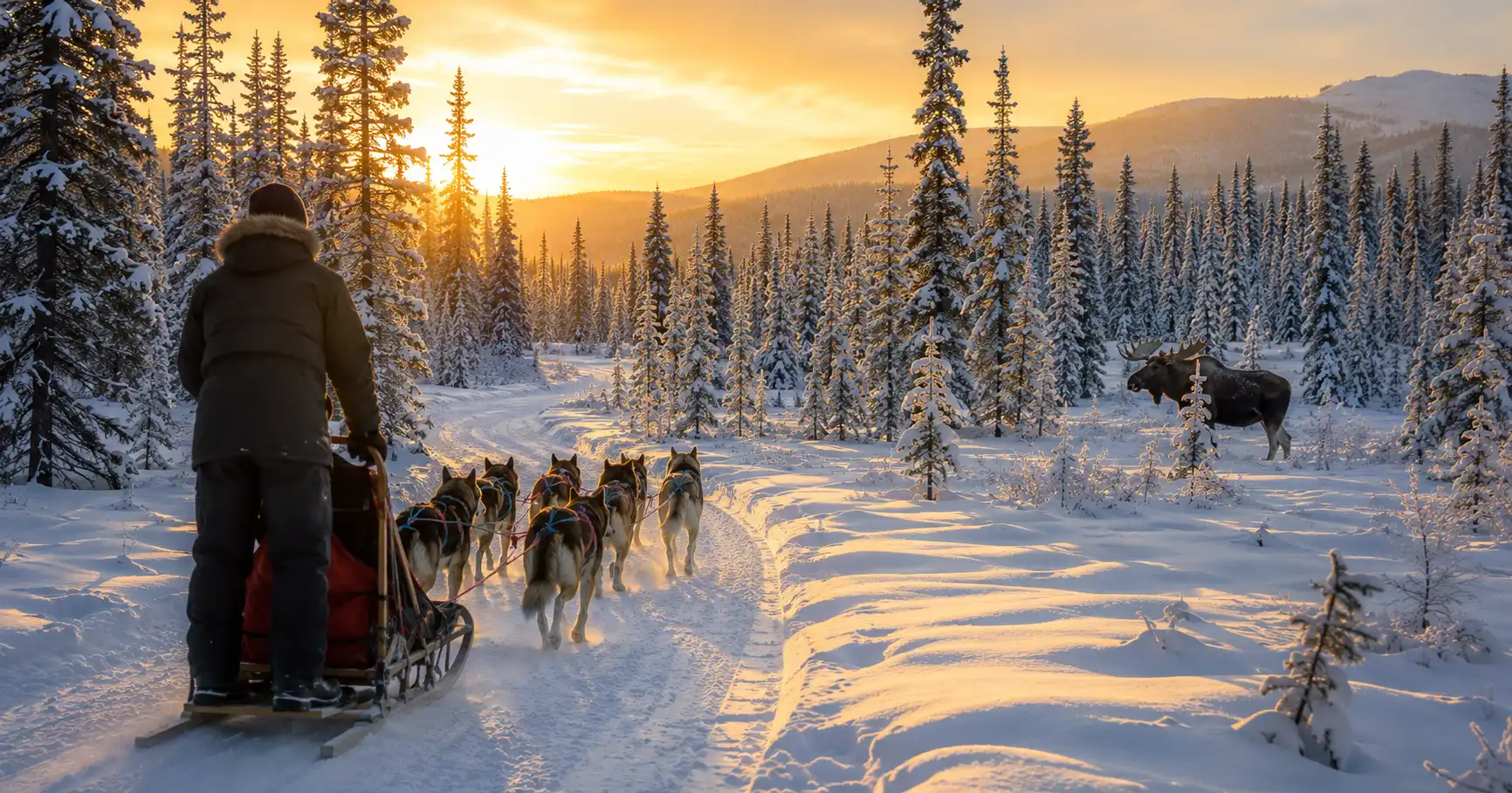
Many visitors expect bears to be the greatest concern while dog sledding, but experienced Alaska mushers often consider moose the animal that requires the most caution during winter. Moose remain active throughout the season and frequently use packed trails because they provide easier travel through deep snow.
Although moose generally avoid people, they may become defensive if surprised or if they feel trapped. Cows protecting calves and bulls during certain times of the year can be especially unpredictable.
If a moose is standing on the trail, experienced mushers usually stop at a safe distance and wait for the animal to move naturally rather than attempting to force it off the trail.
Seeing Caribou Is a Memorable Experience
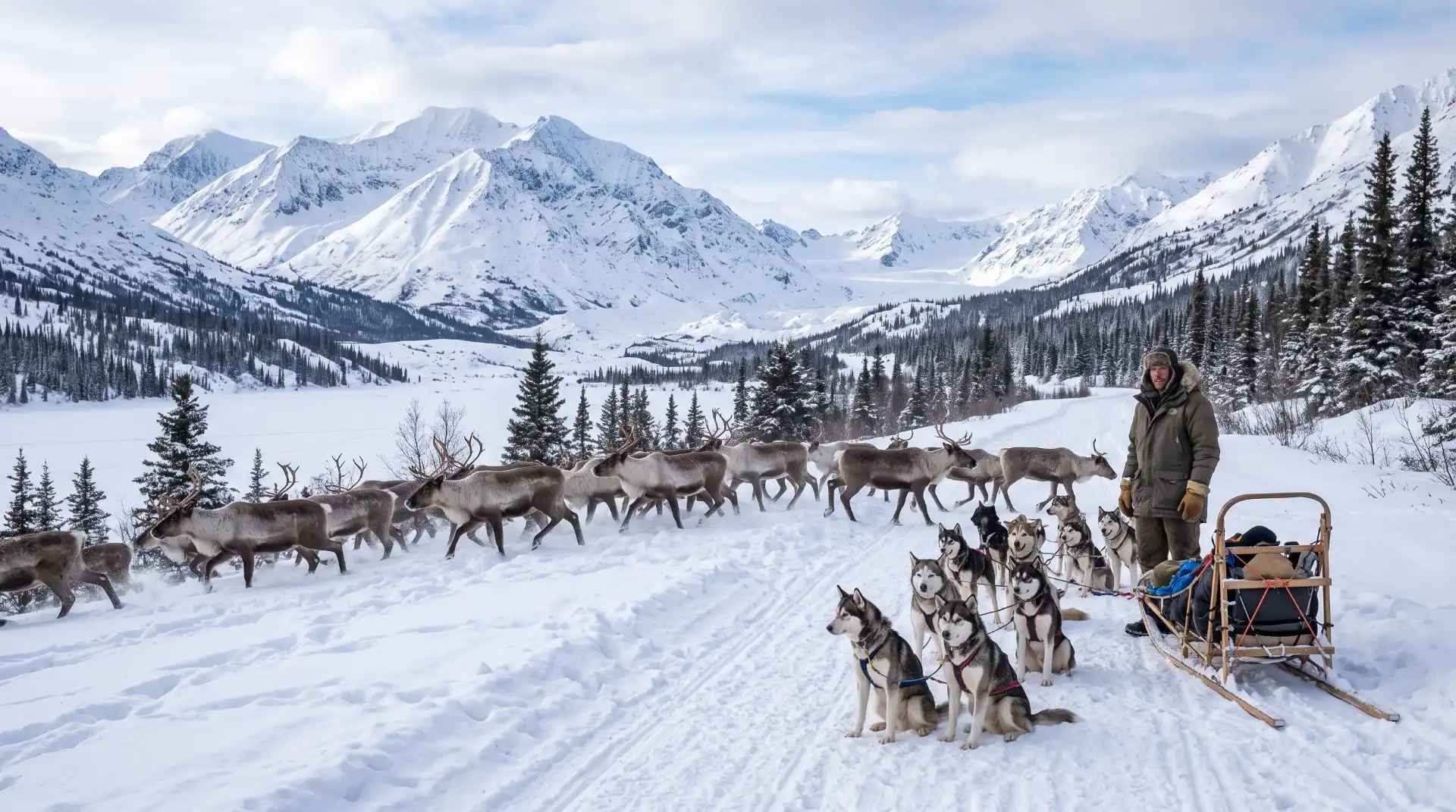
In parts of Alaska, sled dog teams may encounter migrating caribou herds crossing frozen landscapes. These graceful animals are typically cautious and continue moving if left undisturbed.
Maintaining distance is important because sudden movements or loud noises can disrupt natural migration patterns. Responsible mushers simply allow the animals to cross before continuing their journey.
Watching a herd move across the snow is often one of the most unforgettable moments of a winter expedition.
Wolves and Sled Dogs
Wild wolves capture the imagination of many visitors, but actual encounters remain relatively uncommon. Wolves usually avoid humans and working sled dog teams. However, mushers occasionally observe wolf tracks, hear distant howls, or briefly see wolves crossing open terrain.
Dogs may notice wolves before people do. A sudden change in the behavior of the team—such as increased alertness or attention toward the surrounding forest—may indicate wildlife nearby.
Experienced guides keep teams calm and continue traveling without attempting to approach or follow wolves.
Foxes Along Winter Trails
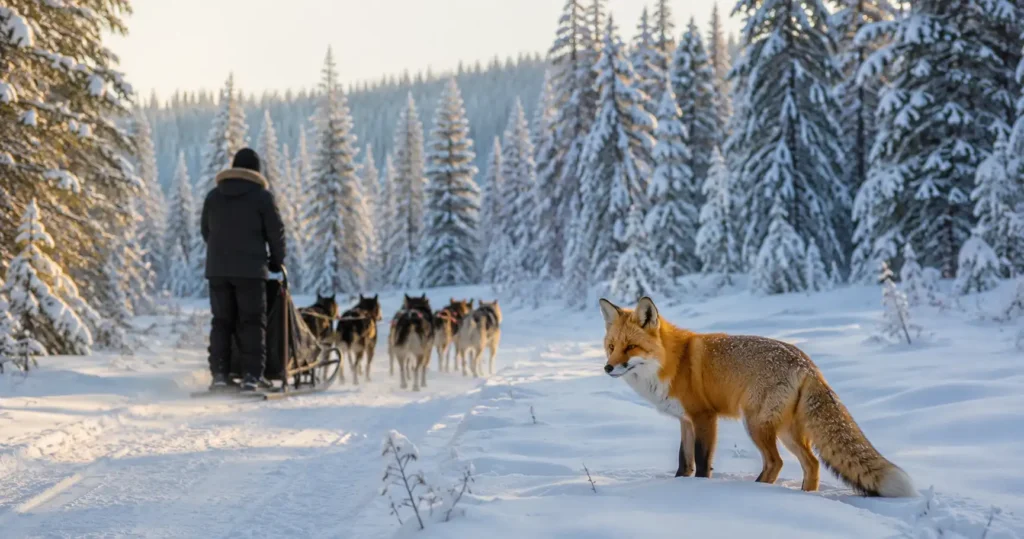
Red foxes and Arctic foxes are among the most commonly photographed animals during winter adventures. These curious animals often hunt small rodents beneath the snow and may briefly appear near trails before disappearing into nearby brush.
Because foxes are naturally cautious, the best approach is simply to observe quietly and continue traveling without interruption.
Never attempt to feed foxes or encourage them to approach. Human food can alter their natural behavior and create unnecessary risks for both wildlife and future visitors.
Lynx and Other Elusive Predators
Canada lynx inhabit many forested areas of Alaska, although sightings remain rare. These secretive cats are perfectly adapted for snowy environments, using their large paws to travel efficiently across deep snow.
Most mushers are more likely to discover lynx tracks than the animal itself. Other elusive wildlife, including wolverines, martens, and river otters, may also leave tracks that experienced guides can identify.
Observing these signs provides insight into the diversity of Alaska’s winter ecosystem.
What About Bears?
Most Alaska brown bears and black bears spend much of the winter in dens, making encounters during the peak dog sledding season uncommon. However, mild winters, changing weather patterns, or unusually warm conditions may occasionally result in bears remaining active longer than expected.
Should a bear be encountered, mushers maintain distance, avoid sudden movements, and follow guidance from experienced wildlife professionals. Tour operators carefully monitor local conditions and adjust routes when necessary.
Reading Animal Tracks
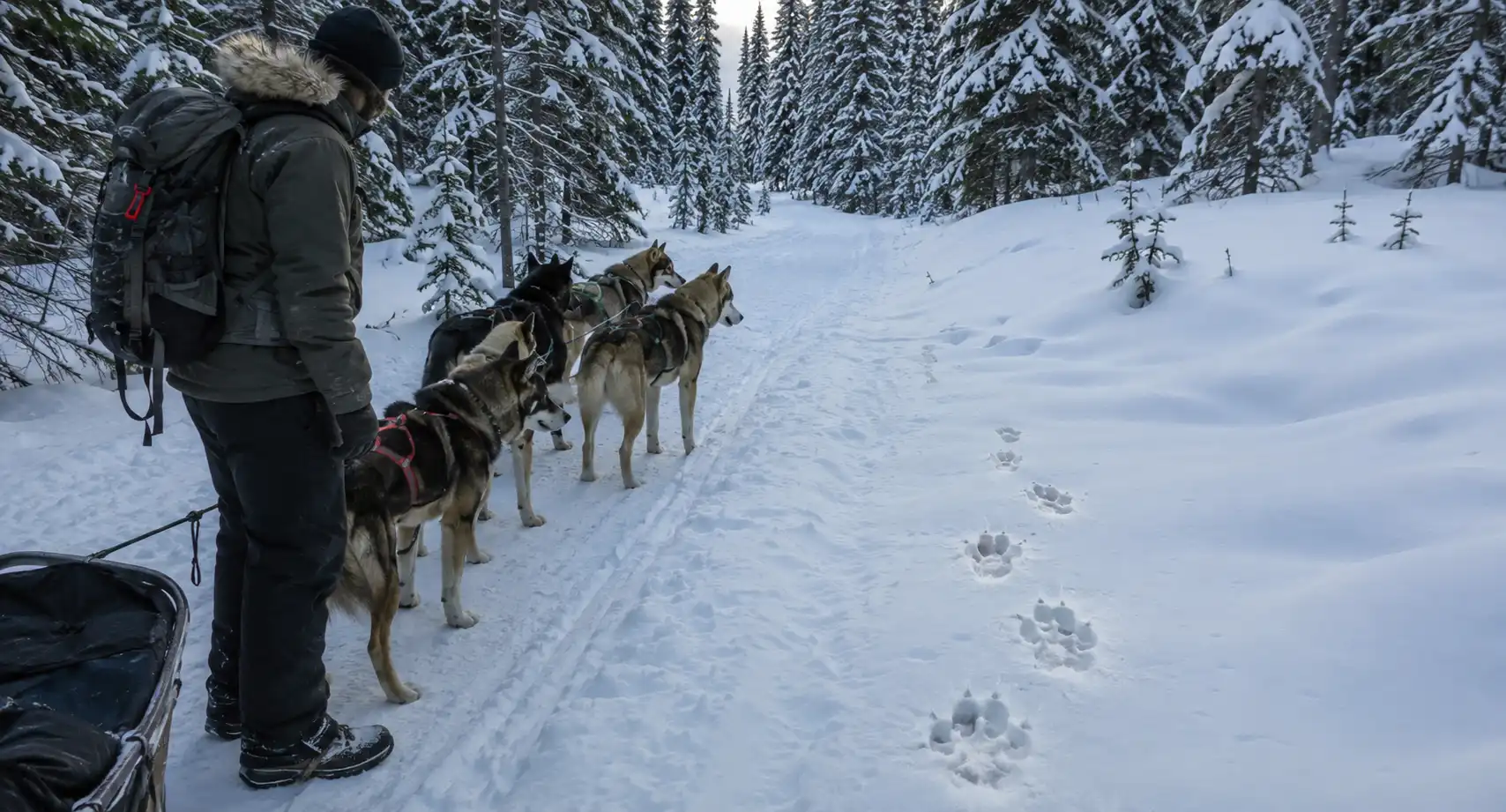
One of the fascinating aspects of dog sledding is learning how to recognize wildlife without directly seeing animals. Fresh tracks often reveal which species recently passed through an area.
Moose tracks appear large and heart-shaped, while wolf tracks resemble oversized dog prints. Fox tracks are smaller and often travel in nearly straight lines. Caribou tracks show distinctive split hooves, and snowshoe hare tracks frequently weave through dense vegetation.
Many guided tours include discussions about track identification, adding an educational element to the experience.
How Sled Dogs Respond to Wildlife
Well-trained sled dogs are taught to stay focused on commands rather than chasing wildlife. Although many working dogs naturally notice nearby animals, experienced teams learn to ignore distractions and continue traveling safely.
Consistent training, proper leadership, and clear communication help prevent unnecessary excitement during wildlife encounters. Lead dogs play a particularly important role by responding immediately to musher commands.
This discipline protects both the dog team and surrounding wildlife.
Safety Tips During Wildlife Encounters
The safest response to wildlife is patience. Maintain a respectful distance, avoid loud noises, and never attempt to approach or feed wild animals. Allow them to choose their own direction of travel before continuing along the trail.
Visitors should always follow the instructions of professional guides, who understand local wildlife behavior and seasonal movement patterns. Staying alert, remaining calm, and respecting natural habitats greatly reduce the likelihood of negative interactions.
Responsible Wildlife Viewing
Dog sledding offers unique opportunities to witness Alaska’s incredible wildlife, but these experiences come with responsibility. Ethical wildlife viewing minimizes stress on animals while protecting fragile ecosystems.
Using binoculars or a camera with a zoom lens allows visitors to appreciate wildlife from a safe distance. Flash photography should be avoided when animals are nearby, especially during low-light winter conditions.
Respecting wildlife helps preserve these remarkable encounters for future generations of mushers and outdoor enthusiasts.
The Connection Between Mushing and Conservation
Many professional mushers have a deep understanding of the landscapes they travel. Years spent navigating wilderness trails provide valuable knowledge about wildlife populations, migration routes, changing snow conditions, and seasonal habitat use.
This close connection often encourages strong conservation values. Responsible mushers recognize that protecting healthy ecosystems also supports the long-term future of sled dog adventures.
Organizations such as the Alaska Department of Fish and Game provide valuable information about wildlife conservation, safety, and responsible outdoor recreation throughout the state.
Final Thoughts
Wildlife encounters are one of the most rewarding aspects of dog sledding in Alaska. Whether you spot a towering moose, hear wolves in the distance, watch a fox cross the trail, or simply discover fresh tracks in untouched snow, every encounter offers a deeper appreciation for the state’s remarkable wilderness.
By respecting wildlife, following experienced guides, and practicing responsible outdoor ethics, visitors can safely enjoy these unforgettable moments while helping preserve Alaska’s natural heritage.
If you’re interested in learning more about dog sledding, be sure to explore our guides on Alaska Native mushing traditions, beginner dog sledding tips, dryland mushing, and sled dog breeds to expand your knowledge before your next winter adventure.