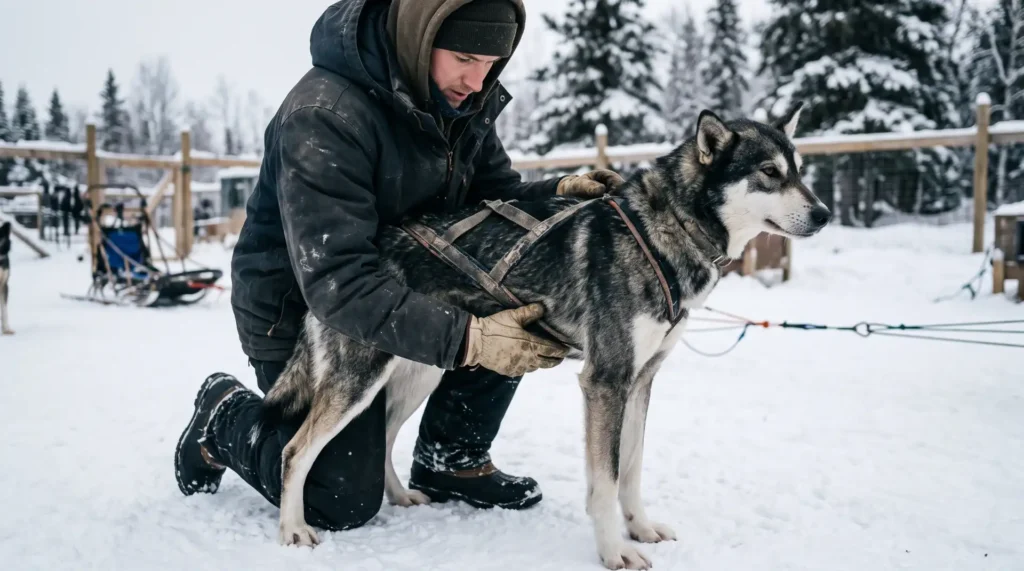
Choosing the right sled dog harness is one of the most important decisions a musher can make before the winter racing season begins. A well-designed, properly fitted harness helps distribute pulling forces, supports natural movement, and allows a dog to work comfortably during training, recreational mushing, and competition. The wrong harness, however, can rub against the skin, interfere with shoulder movement, create pressure points, or make an otherwise enthusiastic dog reluctant to work.
For mushers across the United States, selecting the right harness involves more than checking a size chart or purchasing the same model used by another team. Alaskan Huskies and other sled dogs vary in body shape, chest depth, back length, coat thickness, and working style. A harness that fits one dog perfectly may not provide the same comfort or performance for another, even when both dogs have similar weights.
The best approach is to evaluate the dog, the intended activity, the harness design, and the conditions in which the equipment will be used. Whether you are preparing for winter trails in Alaska, training in Minnesota, participating in a recreational mushing program, or maintaining a team for the upcoming 2026–2027 season, understanding harness fit will help you make a more informed decision.
This guide explains how to choose the right sled dog harness, measure your dog accurately, recognize signs of poor fit, compare common harness designs, and maintain equipment throughout the season. Most importantly, it puts canine comfort and safety ahead of speed or appearance.
Why Choosing the Right Sled Dog Harness Matters
A sled dog harness is not simply a strap system that connects an animal to a gangline. It is the primary piece of equipment through which pulling forces are transferred from the working dog to the line system. Its shape, construction, and position influence how that force interacts with the dog’s body during movement.
When a harness fits correctly, the dog can lean into the work without unnecessary rubbing or restriction. The harness should remain appropriately positioned while the dog runs, turns, slows down, and changes its stride. It should also allow normal breathing and avoid creating excessive pressure around sensitive areas.
An unsuitable harness may cause irritation around the neck, shoulders, armpits, rib cage, or sides of the body. If the harness is too short, its straps may move into areas where they interfere with the front legs. If it is too large, it may shift unpredictably, distribute pressure unevenly, or become unstable when the dog pulls.
These problems are not always obvious when a dog is standing still. A harness can appear comfortable in the kennel but behave differently once the tugline becomes tight. This is why experienced mushers evaluate equipment both at rest and under carefully controlled pulling conditions.
A harness also affects confidence. Dogs learn to associate equipment with their working routine, and repeated discomfort can make a dog hesitant during harnessing or training. By selecting an appropriate design and checking its fit regularly, handlers can help maintain a positive working experience.
Before purchasing equipment for the new season, review the recommendations in the Sled Dog Racing Gear Checklist for 2026–2027. It provides a broader overview of harnesses, lines, booties, sled maintenance, and other equipment that supports safer mushing.
Understanding the Main Types of Sled Dog Harnesses
Harness designs differ in their structure, length, attachment points, and intended applications. Understanding these differences makes it easier to identify which models are worth considering for a particular dog and activity.
X-Back Harnesses for Traditional Sled Dog Racing
The X-back harness is one of the most recognizable designs in sled dog racing. Its straps extend along the dog’s body and cross over the back, forming an X-shaped arrangement. The design is commonly used in racing and other pulling activities when the harness length and geometry suit the individual dog.
An X-back harness typically relies on a close relationship between the dog’s body proportions and the harness dimensions. The neck opening, chest section, side straps, and rear connection all need to align appropriately. If the harness is too short, it may move toward the armpits or create uncomfortable pressure. If it is too long, the rear section may extend beyond the intended position and affect stability.
This design can work well for many athletic sled dogs, but it should not be selected automatically simply because it is traditional or widely used. Body shape matters more than popularity.
Short-Back and Other Specialized Designs
Some dogs have body proportions that make a conventional X-back difficult to fit. A shorter-backed dog, for example, may benefit from a design specifically developed to accommodate a different body length or attachment arrangement.
Specialized harnesses may also be designed around particular sports, working styles, or manufacturer-specific fitting systems. Their performance depends on how well the structure suits the dog and the pulling task.
Do not assume that two harnesses labeled for the same activity will fit identically. Different manufacturers may use different measurements, strap placement, and sizing conventions. Always check the product’s own instructions before ordering.
Harnesses for Skijoring and Other Dog-Powered Sports
Some sled dog owners also participate in skijoring, canicross, or bikejoring. These activities involve different connections between the dog and the human participant, so the equipment needs to match the activity.
A harness designed for a skier being pulled on a trail may differ from one intended for a dog attached to a sled team. A product suitable for recreational running should not automatically be treated as appropriate for every sled configuration.
For readers exploring other dog-powered activities, Outlaw Ridge Sled Dogs also explains the differences in Skijoring vs. Sledding: Which Winter Sport Fits You?. Use the harness manufacturer’s recommendations and seek advice from an experienced musher when you are uncertain whether a particular design suits your setup.
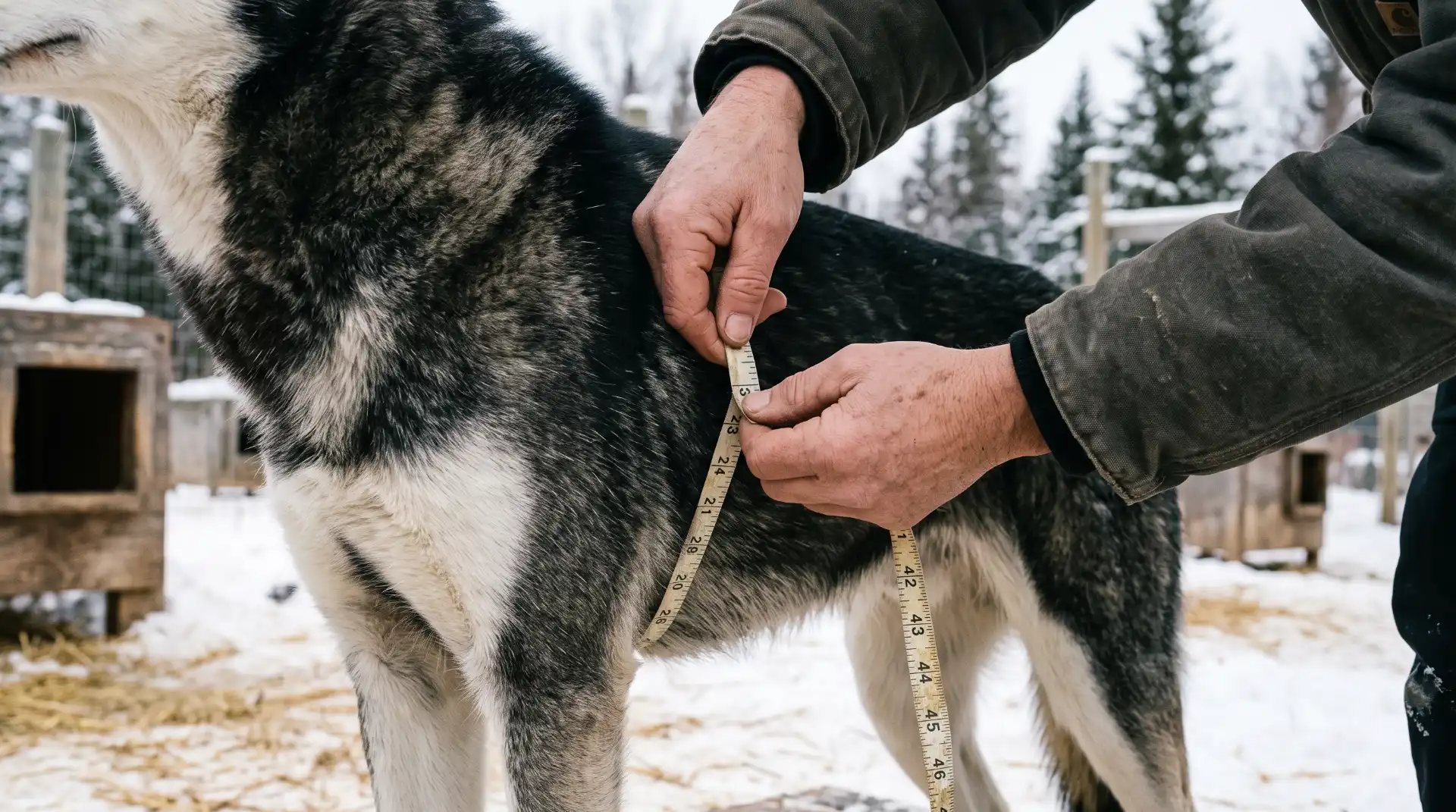
Accurate measurements provide a much better starting point than guessing based on breed, age, or body weight. Even dogs from the same litter can have different proportions, and athletic conditioning can change how a harness sits on the body over time.
Before measuring, allow the dog to stand naturally on a level surface. Use a flexible measuring tape, keep it in contact with the coat without compressing the body, and record the results in inches or centimeters. If the dog is restless, take the measurements more than once and compare them.
Measure the Neck at the Correct Position
The neck measurement is important because it helps determine whether the harness opening can fit comfortably over the dog’s head and settle in the intended position around the base of the neck and upper chest.
Follow the manufacturer’s specific instructions for locating the measurement line. Measuring too high or too low can produce a number that does not correspond to the harness’s intended fit.
A neck opening that is too small may make the harness difficult to put on or place pressure where it should not be. An excessively large opening may allow the harness to move out of position or interfere with the way pulling force is transferred.
Remember that the neck measurement is only one part of the process. A harness can fit around the neck and still be unsuitable because the chest or body length is incorrect.
Measure the Chest and Rib Cage
Chest circumference is another important measurement. The precise location varies with the harness design and the manufacturer’s instructions, so do not assume every brand uses the same measuring point.
Some harness systems emphasize chest circumference at the deepest part of the rib cage, while others provide instructions for measurements around the chest near the front legs. Follow the sizing guide supplied with the particular model you are considering.
A harness that is too tight around the chest can create discomfort and restrict movement. A harness that is too loose may shift when the dog leans forward into the tugline.
Pay particular attention to the area behind the front legs. The straps should not dig into the armpits or repeatedly rub against the skin. A dog should be able to extend its front legs naturally without the harness interfering with its stride.
Check Back Length and Body Proportions
Back length is especially important when comparing X-back harnesses and specialized designs. A harness must match the dog’s proportions so that the rear section and pulling attachment sit in the intended location.
Use the manufacturer’s stated starting and ending points when measuring. These may differ between designs, which makes it risky to compare measurements from unrelated sizing charts without understanding how each measurement was taken.
If you are uncertain about the result, send the manufacturer your dog’s measurements and photographs of the dog standing naturally from the side and front. A reputable specialist may be able to explain whether the model is suitable or recommend another design.
Use the Manufacturer’s Sizing Chart
Once the measurements are complete, compare them with the exact chart for the harness you intend to buy. Do not assume that a medium harness from one manufacturer will have the same dimensions as a medium from another.
Weight can be useful as supporting information, but it should not replace measurements. Two dogs weighing 45 pounds may have very different chest depths, neck proportions, and back lengths.
If the measurements fall between sizes, ask the manufacturer for advice instead of automatically choosing a larger or smaller option. Some harnesses require a close fit in particular areas, while others have different fitting principles. The correct choice depends on the design rather than a universal sizing rule.
For general guidance on measuring dog equipment and understanding size charts, consult the American Kennel Club’s guide to measuring dog gear.
How to Tell Whether a Sled Dog Harness Fits Correctly
Measurements help you select a candidate harness, but the actual fitting process determines whether it is suitable for your dog. Inspect the harness carefully before the first training session, and allow enough time to make adjustments or exchange the product if necessary.
Check the Neck and Breastbone Position
The harness should sit in the position intended by its design. With many traditional pulling harnesses, the front section needs to align with the dog’s breastbone and upper chest rather than placing inappropriate pressure on the throat.
Look at how the straps meet around the neck and chest. The harness should not press sharply against soft tissue, interfere with breathing, or sit so high that it restricts normal shoulder movement.
Do not rely solely on a photograph of a dog wearing a harness. Dogs have different proportions, and the same model can appear different on two animals. Examine the fit on your own dog and follow the product’s fitting instructions.
Examine the Shoulders and Armpits
Shoulder freedom is essential for a working dog. During each stride, the front legs need to move through their normal range without the harness pulling tightly across the shoulder area or rubbing repeatedly behind the legs.
Ask the dog to walk naturally while you observe it from the side and front. Look for a shortened stride, unusual movement, or repeated rubbing of the straps against the skin.
A harness that appears secure when the dog is standing may move once tension is applied. If the straps migrate toward the armpits, twist, or create a pressure point, stop the fitting process and reassess the size or design.
Check the Rib Cage and Side Straps
The side straps should follow the body in the manner intended by the manufacturer. They should not dig into the soft abdomen, squeeze the rib cage, or create narrow pressure points.
At the same time, a harness should not be so loose that it repeatedly slides into an unsuitable position. The correct balance depends on the harness structure, so avoid applying a universal two-finger rule to every type of sled dog harness.
Instead, follow the product-specific instructions and assess the harness while the dog moves naturally. If the manufacturer’s guidance is unclear, contact the maker or an experienced sled dog equipment specialist.
Evaluate the Rear Section
The rear of an X-back harness should finish in the intended location for that model and the dog’s body proportions. If the harness extends too far, hangs loosely, or pulls awkwardly against the rear of the body, its length may be unsuitable.
When the dog leans into a line, observe whether the harness maintains a stable position. It should not repeatedly slide from side to side or shift in a way that creates discomfort.
The goal is not to force every dog into an identical visual fit. It is to make sure the harness is functioning as designed on that individual animal.
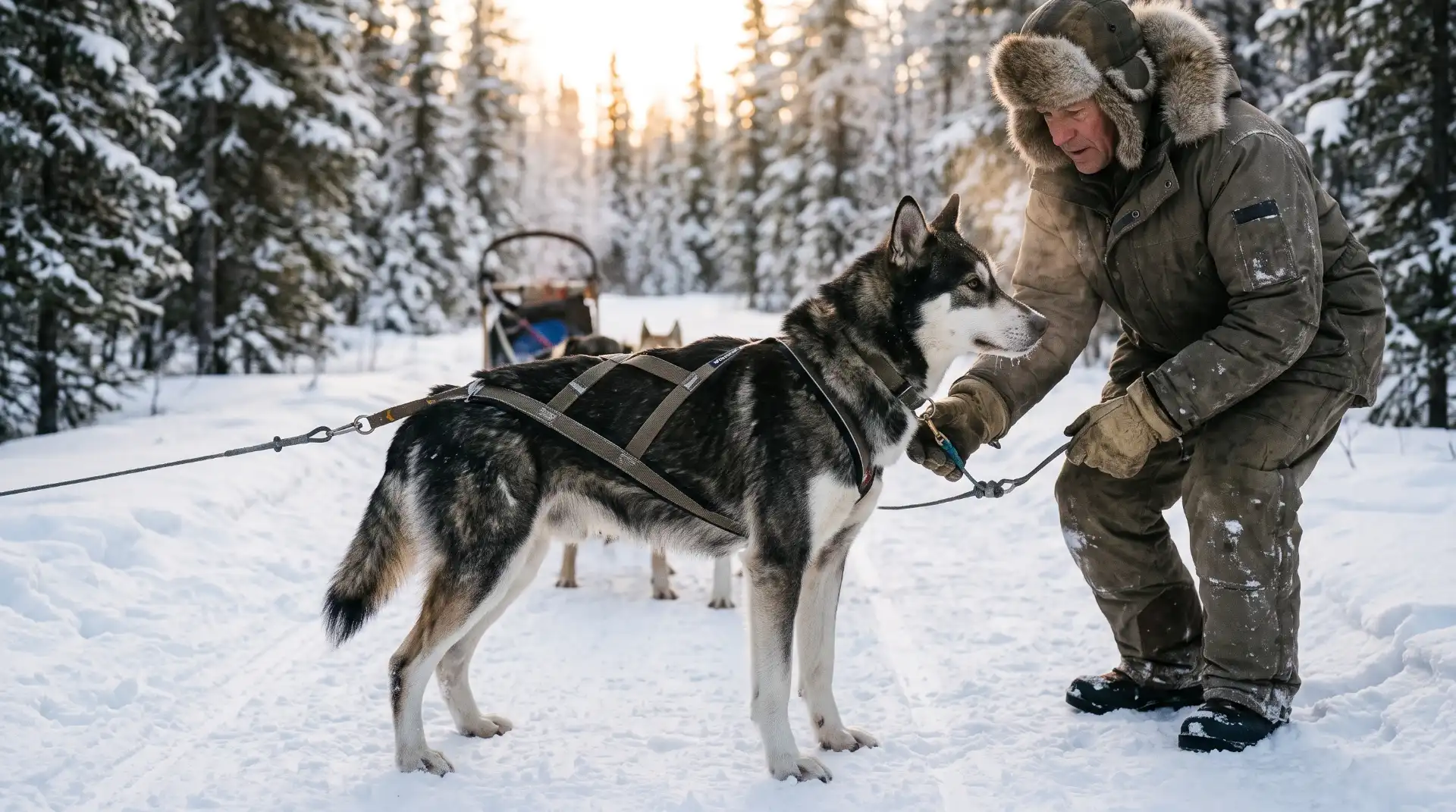
Fit the Harness Under Controlled Pulling Conditions
A static fitting is only the first stage of the process. Harnesses are designed to work during movement, and the way they respond under tension can reveal problems that are difficult to see when the dog is standing still.
Begin with a calm, familiar environment. Put the harness on according to the manufacturer’s instructions and check that the dog can move comfortably. If the harness is unfamiliar, allow the dog time to become accustomed to wearing it without immediately attaching a heavy load.
Next, conduct a short, controlled movement session appropriate to the dog’s training level. If the harness is intended for pulling, have an experienced handler evaluate its position under suitable, gradual tension. Never use a heavy load or an uncontrolled run merely to test whether the harness fits.
Watch the neck opening, side straps, shoulder area, and rear connection as the dog moves. The harness should not twist, slide into sensitive areas, or create visible rubbing.
Stop immediately if the dog shows discomfort, limps, struggles to move normally, or repeatedly tries to escape the equipment. Remove the harness and inspect the skin and coat. If there is an injury or persistent movement abnormality, consult a veterinarian before resuming training.
After the first short session, examine the harness and the dog’s body again. Small areas of redness, hair disruption, or tenderness can provide early warnings that the fit needs attention.
Choosing Harness Materials for Comfort and Durability
Harness materials affect comfort, longevity, maintenance, and performance in different weather conditions. The most expensive material is not necessarily the best option for every dog or every climate.
Webbing Strength and Construction
Webbing should be strong enough for the intended pulling activity and well constructed at stress points. Examine the stitching, reinforcement, attachment loop, and areas where straps join together.
Poor stitching can become a serious problem when a harness is subjected to repeated tension. Look for uneven seams, loose threads, damaged edges, and signs that the material is beginning to separate.
A good harness should also be reasonably easy to inspect. If an important load-bearing section is hidden or difficult to evaluate, ask the manufacturer how the equipment should be maintained and when it should be replaced.
Padding and Skin Contact
Padding can improve comfort when it is positioned appropriately and made from material suitable for the conditions. However, padding alone does not guarantee a good fit.
A heavily padded harness can still rub if its geometry is wrong. Similarly, a lightly padded design may work comfortably for a particular dog when the straps distribute pressure appropriately and remain in the correct position.
Check whether the padding stays in place when wet, whether it dries properly, and whether it traps debris that could irritate the skin. Inspect areas that come into contact with the neck, chest, and armpits after each demanding session.
Cold, Wet, and Changing Conditions
U.S. mushers work in a wide range of environments. A team in interior Alaska may encounter prolonged freezing conditions, while a team in the Upper Midwest may experience alternating snow, wet trails, and warmer periods.
Materials that perform well in dry cold may behave differently when exposed to moisture or repeated freeze-thaw cycles. Follow the manufacturer’s cleaning and drying instructions, and avoid storing wet harnesses in a way that encourages mildew or material deterioration.
Do not assume that adding thicker padding will solve a fitting problem. If a harness rubs, first determine whether the cause is incorrect sizing, unsuitable geometry, poor positioning, or a damaged component.
Matching a Harness to Your Dog’s Workload
A harness should be selected for the activity the dog will perform, not merely for its appearance or popularity among competitors.
Sprint Racing and Short Training Runs
Sprint-oriented training places demands on equipment because dogs may accelerate rapidly and work at a high pace. The harness needs to remain stable, distribute the pulling load appropriately, and allow a natural stride.
A lightweight design may appeal to racers, but low weight should never come at the expense of sound construction or suitable fit. Inspect the attachment points and seams carefully, especially when the equipment is used frequently.
For short training sessions, introduce a new harness gradually. This gives the musher an opportunity to evaluate comfort before using the equipment during a more demanding workout or competition.
Distance Racing and Extended Work
Distance-oriented work requires careful attention to equipment condition over time. A harness may remain comfortable during a short run but begin causing irritation after many hours of repeated movement.
Mushers preparing for longer outings should evaluate the dog’s comfort during training, after exercise, and during recovery. Check the harness for moisture, debris, wear, and changes in its fit.
A harness that worked well earlier in the season may require reassessment if the dog loses or gains weight, develops a different coat, or changes body condition as training progresses.
Recreational Mushing and Beginner Teams
Recreational dog sledding still requires properly fitted equipment, even when the goal is enjoyment rather than competition. A comfortable harness can help a dog participate in a controlled activity without unnecessary pressure or restriction.
Beginners should seek guidance from a knowledgeable musher before purchasing specialized equipment. An experienced handler can demonstrate how the harness should sit, how the dog should be connected to the line, and what to inspect before a run.
Never assume that a harness used for casual walking is suitable for pulling a sled. The demands and attachment systems can be different, and equipment should be selected for the actual activity.
Common Sled Dog Harness Mistakes to Avoid
One of the most common mistakes is choosing a harness based on weight alone. Weight does not reveal the dog’s exact proportions, and a product that matches the weight recommendation may still be unsuitable around the chest or back.
Another mistake is buying equipment simply because another musher recommends it. Recommendations are useful starting points, but individual dogs vary. Ask why a design works for that dog and whether its measurements resemble those of your own animal.
Some handlers also overlook the importance of inspecting the harness under movement. A static fit cannot reveal every problem, especially when straps shift under tension. A controlled test and a post-session skin check should be part of the fitting process.
Do not ignore small signs of irritation. Repeated rubbing can worsen over time, and a dog may continue working despite discomfort. A dog that becomes reluctant during harnessing, changes its stride, or repeatedly turns toward a particular strap may be communicating that something is wrong.
Finally, avoid waiting until race day to test a new harness. Introduce equipment during ordinary training, when there is time to make adjustments and allow the dog to become comfortable with the new setup.
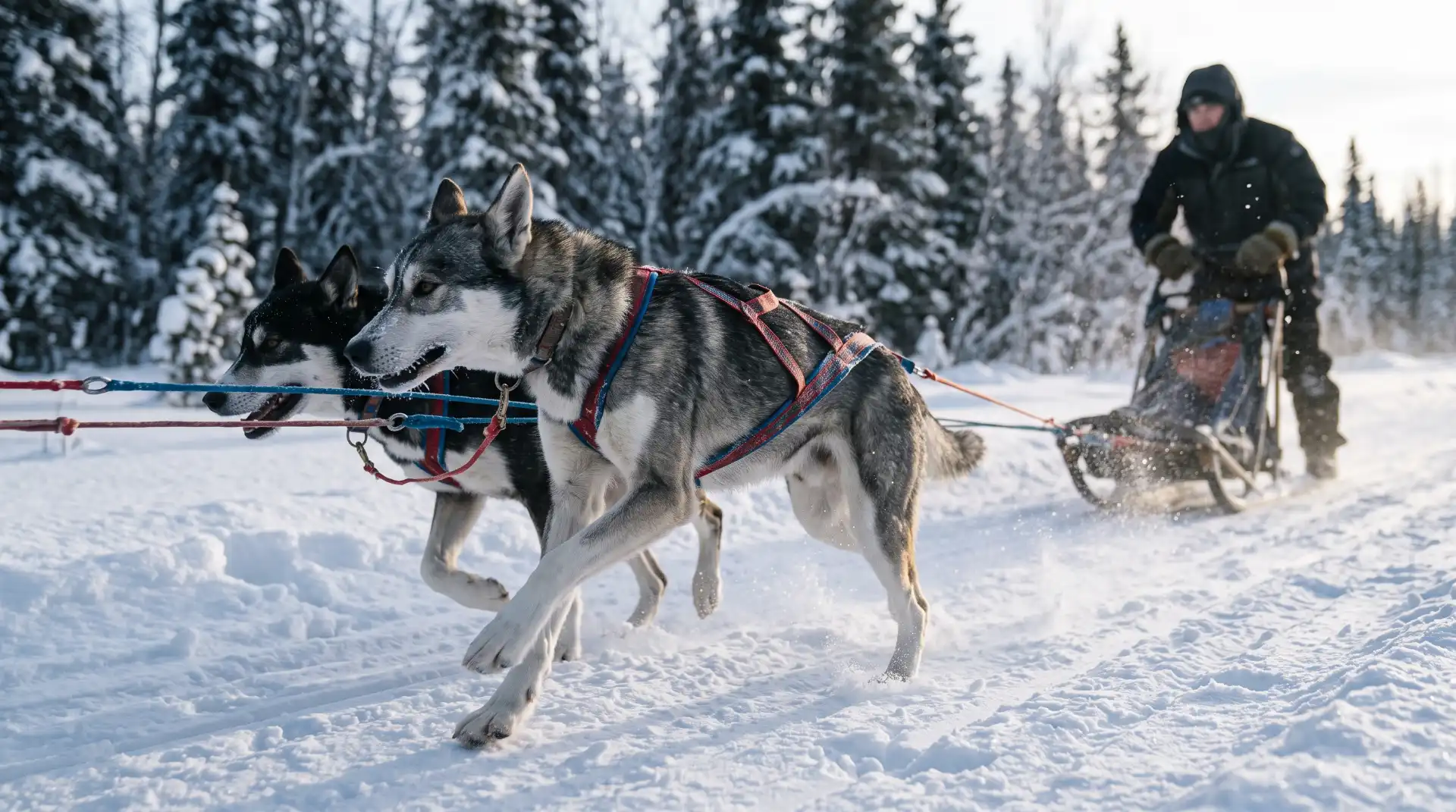
How to Maintain a Sled Dog Harness Throughout the Season
Regular maintenance helps identify problems before they become equipment failures. Before every run, inspect the harness for frayed webbing, loose stitching, stretched sections, damaged loops, and worn hardware.
Pay particular attention to the attachment point that connects the harness to the tugline. This area may experience repeated pulling forces, so any uncertainty about its integrity should be treated seriously.
After muddy or wet training, clean the harness according to the manufacturer’s directions. Remove debris, allow the material to dry thoroughly, and store it in a clean place away from unnecessary heat or direct sunlight.
Keep equipment organized so each dog’s harness can be identified easily. In a larger team, labeling harnesses by dog can reduce confusion and help the musher monitor changes in fit over the season.
Recheck the fit periodically, especially after changes in weight, conditioning, coat, age, or training workload. Dogs do not remain physically identical throughout the year, and equipment should be reassessed when their bodies change.
Carry a suitable spare harness when the length and nature of the outing make equipment failure difficult to manage. A spare should be in good condition and correctly sized for the dog that may need it. A backup is only useful when it fits and functions properly.
Building Harness Checks Into Your Pre-Run Routine
A simple routine makes it easier to maintain consistent equipment standards across a team. Start by examining each dog’s harness before attaching the tugline. Confirm that the correct harness is being used, that the straps are positioned properly, and that the stitching and attachment points appear sound.
Once the harness is fitted, observe the dog standing and walking. Check for rubbing, restriction, twisting, or signs of discomfort. If the equipment is new or has recently been adjusted, use a short and controlled test before progressing to more demanding work.
After the run, inspect the dog’s skin and coat, particularly around the neck, shoulders, armpits, rib cage, and rear section of the harness. Record any concerns so that recurring problems can be identified instead of treated as isolated incidents.
This routine is especially valuable when preparing a team for the 2026–2027 winter season. Reviewing equipment before snow arrives gives mushers time to replace worn items, consult manufacturers, and make thoughtful adjustments before competition or longer recreational outings begin.
Harness fit is also part of a broader training program. For more information about keeping dogs prepared when snow is limited, read Dryland Training for Sled Dogs: How Warmer Winters Are Changing Mushing in 2026. Appropriate equipment, gradual conditioning, suitable temperatures, and recovery all contribute to a responsible approach to year-round mushing.
Frequently Asked Questions About Sled Dog Harnesses
What type of harness is best for a sled dog?
There is no single best design for every sled dog. X-back harnesses are common in traditional sled dog racing, but short-back and other specialized designs may suit dogs with different proportions or working requirements. The best choice is the one that fits the individual dog, supports the intended pulling activity, and allows comfortable movement.
How tight should a sled dog harness be?
The correct fit depends on the harness design and the manufacturer’s instructions. It should remain appropriately positioned without squeezing the dog, restricting breathing, or rubbing against sensitive areas. Do not rely on a universal finger-width rule for every pulling harness; evaluate the actual design and seek specialist advice when uncertain.
Can I choose a harness based only on my dog’s weight?
No. Weight is useful supporting information, but neck circumference, chest measurements, body length, and overall proportions are important too. Measure your dog carefully and compare the results with the exact manufacturer’s sizing chart.
How often should I check my sled dog’s harness?
Inspect it before every run and examine the dog afterward for signs of rubbing or irritation. Conduct a more detailed inspection regularly and whenever the dog changes in weight, coat, condition, or workload. Replace equipment when its strength or integrity is uncertain.
Should I buy a more expensive harness for better performance?
Price alone does not guarantee a better fit or improved performance. A well-made harness from a reputable manufacturer can be a worthwhile investment, but the design must suit the dog and the activity. Prioritize fit, construction, durability, and reliable guidance over marketing claims.
Can the same harness be used for sledding and skijoring?
Some harnesses are suitable for more than one dog-powered sport, but not every model is appropriate for every activity. Check the manufacturer’s intended use and ensure the attachment arrangement works safely with the equipment involved. When in doubt, consult an experienced musher or specialist.
What should I do if my dog seems uncomfortable in its harness?
Stop the activity and inspect the harness and the areas where it contacts the body. Look for rubbing, redness, damaged material, incorrect positioning, or restricted movement. Do not force the dog to continue working in equipment that appears uncomfortable. If pain, lameness, skin injury, or an abnormal gait persists, seek veterinary advice.
Final Thoughts: The Right Harness Starts With the Individual Dog
Choosing the right sled dog harness requires careful measurement, an understanding of harness designs, attention to materials, and regular observation of the dog during use. A harness that fits properly can support comfortable pulling and allow a dog to move naturally, while an unsuitable design may create avoidable discomfort and interfere with training.
For U.S. mushers preparing for the 2026–2027 winter season, the best time to assess harnesses is before demanding training sessions and races begin. Measure each dog individually, compare the results with the manufacturer’s sizing information, test new equipment gradually, and inspect both the harness and the dog’s body after use.
Remember that equipment selection should never be separated from the dog’s overall well-being. Conditioning, recovery, trail conditions, appropriate workload, and veterinary care all contribute to a safe and productive working routine.
A successful sled dog team is not built by purchasing the most expensive equipment or copying another musher’s setup. It is built by understanding each dog’s needs, maintaining reliable gear, and making careful decisions that support comfort, confidence, and teamwork throughout the season.