
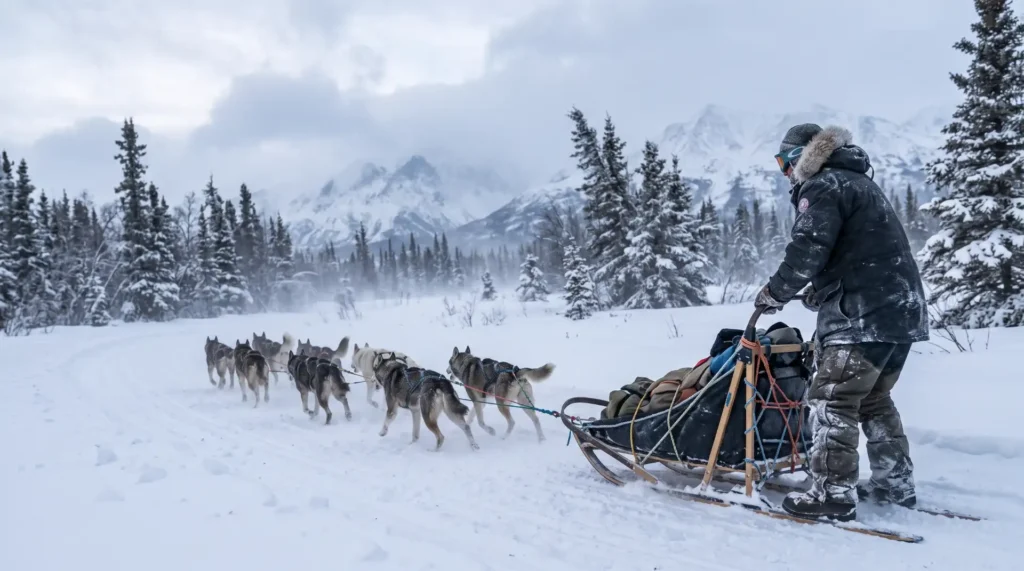
Sled dog racing is one of the most recognizable winter sports in Alaska and other northern parts of the United States. It combines athletic dogs, experienced mushers, specialized equipment, and carefully prepared trails into a sport that depends heavily on the natural environment. From sprint races held on local snow-covered courses to demanding long-distance competitions across remote wilderness, successful racing requires preparation, teamwork, and an understanding of winter conditions.
For generations, mushers have developed their training schedules around seasonal patterns. They prepare equipment before winter, build their dogs’ fitness through progressive conditioning, monitor snowfall, and work with local trail managers to determine when courses will be ready. Although weather has always been unpredictable to some extent, established seasonal expectations have traditionally helped communities organize races and prepare teams for competition.
Those expectations can become difficult to maintain when winter conditions fluctuate dramatically. Snow may arrive late, rain may fall on an established snowpack, and an extended thaw may expose bare ground just as teams reach the most important part of their training season. A trail that was firm and well packed one week may become slushy, icy, or unsuitable for racing the next.
The consequences extend beyond whether a race has enough snow. Weather affects training opportunities, dog welfare, transportation, equipment performance, event budgets, volunteer availability, and the decisions organizers must make when conditions deteriorate.
The National Oceanic and Atmospheric Administration (NOAA) provides historical temperature and precipitation information through its Temperature and Precipitation Trends Graphing Tool. These records help illustrate why winter conditions should be evaluated regionally rather than assuming that every part of the country experiences the same seasonal changes.
For American sled dog racing, the challenge is not simply adapting to warmer weather. It is preparing for a broader range of conditions while preserving the safety, athletic development, and welfare of the dogs.
Why Sled Dog Racing Depends on Predictable Winter Conditions
Sled dog racing is closely connected to the physical characteristics of the winter landscape. Snow depth, surface firmness, temperature, wind, visibility, and trail maintenance all influence how a team moves and how safely a race can take place.
Snow provides the surface over which the sled runners travel. When the trail is appropriately packed, the sled can move efficiently, and the musher can concentrate on controlling the team. Fresh, deep snow may increase resistance, while uneven or icy sections can make steering and braking more difficult.
Temperature changes the character of the snow as well. Near-freezing conditions can produce wet, heavy surfaces, while refreezing may create a hard crust or irregular patches of ice. The same trail can behave differently depending on when it is used, how much sunlight it receives, and whether rain or fresh snowfall has recently occurred.
For sprint racing, these differences can affect acceleration, cornering, and the consistency of performance across heats. In distance racing, changing surfaces can influence a team’s energy expenditure over many miles. Mushers must consider whether the trail will remain manageable throughout the event rather than evaluating only its appearance at the starting line.
Weather also affects race logistics. Organizers need suitable conditions to prepare courses, maintain access roads, position checkpoints, and arrange veterinary and emergency support. Volunteers and equipment operators may be unable to reach certain areas if roads become muddy, icy, or blocked by snow.
When the weather changes unexpectedly, these responsibilities become more complicated. Organizers may need to groom trails repeatedly, shorten courses, change event schedules, or cancel a competition that cannot be made safe.
Reliable winter conditions have never been guaranteed, but unpredictable weather makes flexibility an increasingly important part of race preparation.
Warmer Winters and the Problem of Inconsistent Snowfall
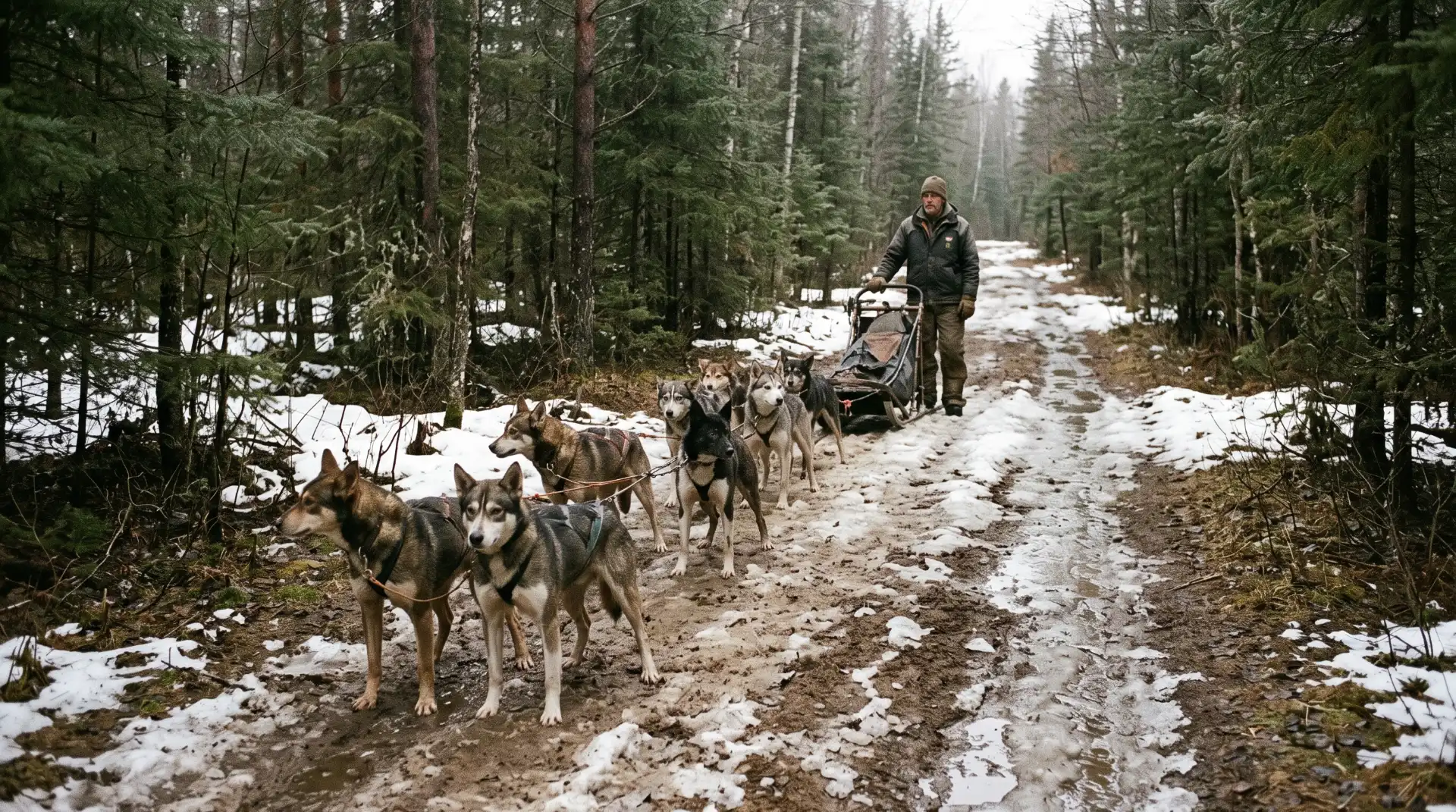
One of the most important challenges facing some sled dog racing communities is the inconsistent availability of snow during the traditional training season.
A region may still receive substantial snowfall over an entire winter but experience longer gaps between storms. Snow may arrive later than expected, melt during an extended warm period, or fail to remain on the ground long enough to support a regular training schedule.
NOAA’s U.S. Climate Normals information provides temperature and precipitation statistics from thousands of weather stations. The data show why local conditions matter: climate patterns vary considerably across the United States, and regional differences can be significant even when broader national trends are apparent.
For mushers, the timing of snowfall can be just as important as the seasonal total. If snow arrives late, teams may have fewer opportunities to practice with their racing sleds before competition begins. If a prolonged thaw occurs in the middle of winter, they may lose access to trails they have used for weeks.
These interruptions can force mushers to change their training plans at short notice. A team that has been developing endurance on snow may need to switch to suitable dryland conditioning, reduce its workload, or travel to a different location.
Why the Length of the Snow Season Matters
The snow season determines how much time a team has to become comfortable with the equipment and conditions it will encounter during competition. Early-season training allows dogs to develop familiarity with harnesses, lines, sleds, commands, and team movement before workouts become more demanding.
When usable snow becomes available for a shorter period, the training calendar can become compressed. Mushers may feel pressure to accomplish the same amount of preparation in less time, but increasing training intensity too quickly can create unnecessary fatigue and injury risks.
A better approach is to prioritize the most important training objectives. Teams can maintain general fitness through appropriate conditioning while waiting for safe snow conditions, then gradually introduce more race-specific work when the trail becomes suitable.
This approach requires patience. The return of snow does not automatically mean a team is ready to resume its previous workload. Trail quality, temperature, individual dog condition, and recent training history should all influence the decision.
Rain, Slush, and Freeze-Thaw Cycles Are Changing Trail Management
Snowfall is only one part of winter trail preparation. Rain, melting snow, and repeated freezing can create difficult conditions even when a region receives enough precipitation to establish a winter trail.
Rain falling on snow can weaken the surface, expose underlying ground, and create areas of wet or compacted snow. If temperatures subsequently drop, moisture can freeze and leave an irregular surface that is harder to manage.
Slush creates another challenge. Wet, heavy snow can increase resistance against the sled runners and make travel more physically demanding. Trail edges may become soft, and areas with poor drainage can deteriorate quickly.
For a racing team, these conditions affect both speed and control. A musher may need to approach corners more cautiously, adjust pace, or avoid sections where the surface is unsuitable. In more severe cases, the trail may no longer be appropriate for competition.
Why Trail Grooming Requires More Flexibility
Trail grooming involves more than packing snow into a smooth path. Operators need to understand the underlying terrain, snow depth, moisture content, temperature, drainage, and expected weather.
A trail groomed before a warm spell may require substantial additional work afterward. If rain softens the snowpack or exposes ground, grooming equipment may not be able to restore the route immediately. Access roads can also become difficult to use when melting snow creates mud or unstable surfaces.
Repeated freeze-thaw cycles can increase maintenance costs because a trail may need attention after every significant weather change. Volunteer organizations may not have the personnel or equipment to respond whenever conditions deteriorate.
Organizers should therefore evaluate the course as a complete system. Important considerations include braking areas, downhill sections, corners, exposed obstacles, narrow passages, and locations where surface conditions may differ from the rest of the trail.
A trail that looks acceptable from the starting area may still contain unsafe sections farther along the route. Local observations and inspections are essential before a decision is made to race.
Extreme Cold and Sudden Weather Changes Remain Important
Although warmer winter periods create challenges for many racing communities, severe cold remains a major consideration for sled dog racing in the United States.
Alaska and other northern regions can experience intense cold, strong winds, blowing snow, and limited visibility. Sudden cold snaps can also affect teams in areas where temperatures had recently been mild.
These changes create practical challenges for dogs and people alike. Equipment may become difficult to handle, travel can be disrupted, and exposed trail sections can become hazardous. Musher clothing, emergency supplies, communication equipment, and shelter arrangements must be appropriate for the actual conditions.
Dogs also require careful monitoring. Their ability to tolerate cold depends on factors such as coat condition, acclimatization, health, body condition, wind exposure, moisture, and activity level. Working sled dogs may be well adapted to winter exercise, but they still require suitable protection and recovery arrangements.
The Risk of Changing Conditions During a Race
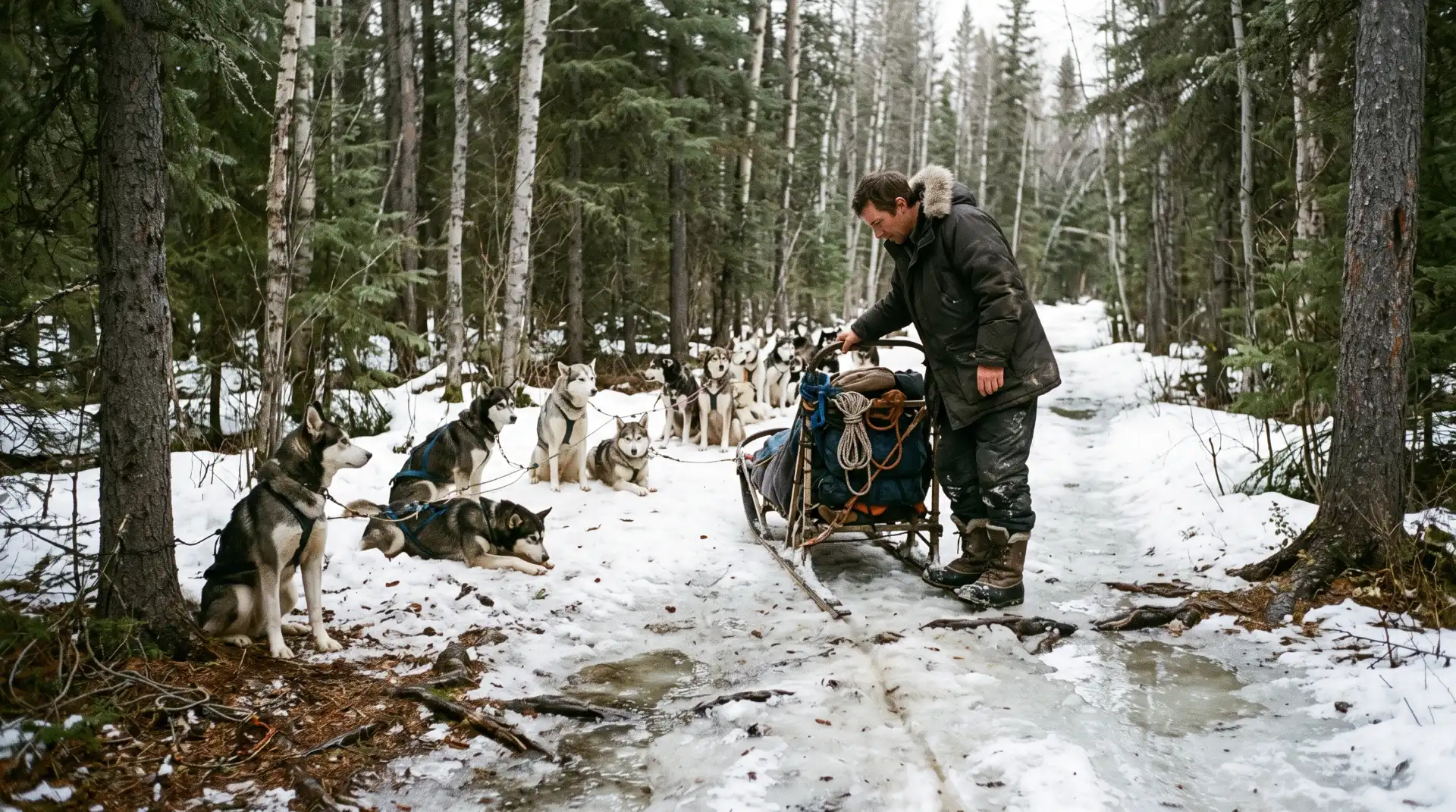
Weather conditions at the starting point may not represent those along the entire course. A route that passes through forests, open fields, hills, or remote terrain can expose teams to different wind patterns, snow conditions, and temperatures.
In long-distance events, those differences can become especially important because teams may remain on the trail for extended periods. A weather system that develops after the start can change the demands of the race before competitors reach the next checkpoint.
Mushers should monitor official race communications and make decisions based on actual conditions as well as forecasts. Organizers need procedures for notifying participants about closures, delays, route changes, and emergency situations.
No single temperature threshold can determine whether every dog and every trail is safe. Decisions should account for the individual team, the intensity and duration of the activity, wind, humidity, surface conditions, and the availability of support.
Dog Welfare Must Come Before Race Schedules
The welfare of the dogs should remain the central consideration whenever weather conditions change. A competition should never continue simply because organizers have already invested money, participants have traveled long distances, or spectators have gathered.
Sled dogs are athletes that require conditioning, nutrition, hydration, appropriate equipment, rest, and veterinary attention. Their needs do not disappear because a race is important or a training schedule is behind.
Temperature is one important consideration, but it is not the only one. Wind, humidity, surface conditions, workload, health, acclimatization, and the individual dog’s response to exercise all influence whether a session is appropriate.
Warm weather deserves particular caution. Strenuous exercise can increase the risk of overheating when environmental conditions are unsuitable. Mushers may need to reduce intensity, shorten sessions, move training to cooler periods, or cancel activities entirely.
Recognizing When a Dog Needs Attention
Handlers should observe dogs before, during, and after exercise. Unusual fatigue, changes in gait, poor coordination, abnormal breathing, reluctance to continue, or significant changes in behavior may indicate that a dog needs to stop and be assessed.
Paw inspections are also important. Ice, rough surfaces, and repeated contact with the trail can cause irritation or injury. Booties may be useful in appropriate circumstances, but they should fit correctly and be introduced during training rather than for the first time on race day.
Recovery should be treated as part of the training process. Dogs need appropriate rest, nutrition, hydration, and shelter after exercise, and the next session should reflect how well they have recovered.
Mushers should seek veterinary advice when health concerns arise. A dog that is injured, ill, or unusually fatigued should not be pushed to continue simply to meet a planned distance.
For new mushers, a structured preparation process can help establish good habits before competition. The guide on preparing an Alaskan Husky for its first sled dog race offers a useful companion resource on conditioning, equipment familiarity, teamwork, and responsible race preparation.
How Unpredictable Weather Changes Training Programs
Training schedules traditionally follow a progression from general conditioning to increasingly race-specific work. When winter conditions become less predictable, mushers need to make that progression more flexible.
A team may begin the season with dryland exercise, transition to snow training when conditions permit, and return to alternative conditioning if a thaw interrupts the winter. This approach can help maintain fitness without forcing dogs to work on unsuitable surfaces.
However, dryland training is not a complete replacement for sled work. Dogs still need opportunities to become comfortable pulling a sled, responding to commands, working in formation, and navigating the terrain associated with their event.
Building a Flexible Training Calendar
Rather than setting a rigid calendar based on an expected snowfall date, mushers can plan around several possible conditions. The training program might include a primary snow-based schedule and alternative sessions for periods when trails are unavailable.
The important consideration is the dog’s current fitness and the demands of the planned activity. A team returning to snow after several weeks of reduced training may need a gradual adjustment rather than immediately resuming its previous mileage.
Training logs can make these decisions easier. Recording temperature, trail conditions, exercise duration, team composition, and recovery observations helps mushers understand how their dogs respond to different environments.
These records can also reveal whether a particular training plan is too demanding. If a dog repeatedly shows unusual fatigue after certain sessions, the musher can reassess the workload and seek professional advice when necessary.
Why Dryland Conditioning Needs Careful Planning
Dryland conditioning can include suitable pulling activities and other exercises that develop fitness and reinforce teamwork. Depending on the dog, equipment, and conditions, some mushers may use canicross, bikejoring, or scooter-based training.
These activities must be adapted to the environment. Warm temperatures, rough ground, slippery surfaces, traffic, and unsuitable equipment can introduce risks that do not exist on a properly prepared snow trail.
The objective is to maintain fitness and useful skills without creating new problems. Mushers should consider the dog’s health, experience, workload, and recovery rather than assuming that a particular distance or speed is appropriate throughout the year.
When suitable snow returns, teams can gradually reintroduce sled work and build toward the demands of their upcoming race.
Sprint and Distance Races Face Different Weather Challenges
Unpredictable winter conditions do not affect every type of sled dog competition in the same way. Sprint, mid-distance, and long-distance events differ in course length, intensity, support requirements, and the amount of time teams spend exposed to changing weather.
Sprint Racing and Surface Consistency
Sprint races emphasize speed and efficiency over relatively short courses. Teams need suitable traction, predictable corners, and a surface that allows mushers to control the sled.
Ice can affect braking and turning, while deep or wet snow can increase resistance. When races involve multiple heats or consecutive days, the trail may change between competitors or between rounds.
Organizers should monitor these differences and consider whether the course remains safe and reasonably consistent. A short race is not automatically a low-risk race when the trail surface is unsuitable.
Mid-Distance Racing and Changing Terrain
Mid-distance events require a combination of speed, endurance, and preparation for changing conditions. Teams may travel through forests, hills, open areas, and different snow surfaces during the same event.
Mushers must consider how terrain affects workload and whether weather change
s may make later sections more difficult than earlier ones. A team that performs well on a firm, packed trail may need a different pace when fresh snow increases resistance.
Long-Distance Racing and Extended Exposure
Long-distance events create additional logistical demands because weather can change substantially while teams are already on the trail.
Mushers must manage feeding, hydration, rest, equipment, and dog condition while responding to terrain and weather over an extended period. Emergency planning becomes especially important when a route passes through remote areas where assistance may take time to reach.
The differences between these formats are explained further in Sprint Mushing vs. Distance Mushing: What Is the Difference?. Understanding the demands of each discipline helps explain why weather policies and preparation strategies should be tailored to the event rather than applied identically across the sport.
Race Organizers Face Higher Uncertainty and Financial Pressure
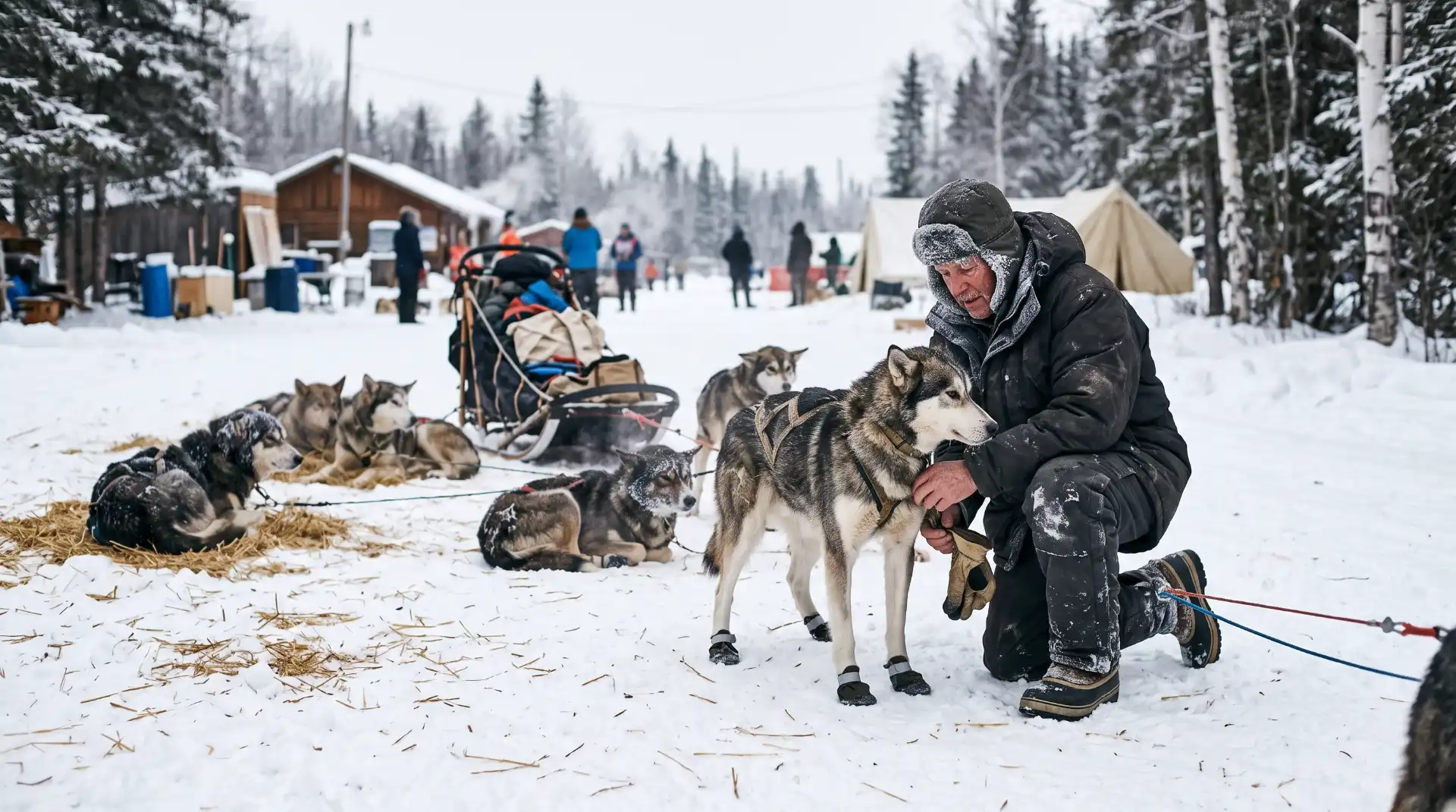
A sled dog race requires considerable planning before the first team reaches the starting line. Organizers may arrange trail access, permits, insurance, veterinary coverage, volunteers, transportation, lodging, sponsorships, and promotional activities months in advance.
When weather disrupts the course, those arrangements may need to change quickly. A postponed race can conflict with another event, reduce volunteer availability, or make travel difficult for teams coming from other states.
Small clubs may be particularly vulnerable because they often rely on entry fees, donations, sponsorships, and volunteer labor. Weather-related cancellations can leave organizers responsible for expenses that cannot be recovered.
Mushers also face financial uncertainty. Travel, accommodation, dog food, equipment, and time away from work represent substantial investments. A late cancellation may create significant costs even when the team has prepared responsibly.
Local businesses can be affected as well. Hotels, restaurants, retailers, and other businesses may lose expected customers when an event is shortened or canceled.
Developing Better Contingency Plans
Race organizers can reduce uncertainty by establishing clear weather policies before registration opens. Participants should understand who evaluates conditions, which factors may trigger a postponement, how decisions will be communicated, and what happens to entry fees if the event cannot proceed.
Alternative dates and routes can provide flexibility when practical, but backup options need to be evaluated for safety, access, permits, and trail suitability.
Organizers can also coordinate with nearby clubs to share information about trail conditions, grooming resources, and emergency support. Collaboration can help communities respond more effectively when several events are affected by the same weather system.
The most important principle is that flexibility should not become pressure to race under unsuitable conditions. A well-organized event must be prepared to postpone or cancel when the course cannot be made safe.
Technology Is Improving Weather Awareness and Trail Planning
Modern forecasting and communication tools can help mushers and organizers respond to unpredictable winter weather. Forecast applications, radar, satellite imagery, digital maps, weather stations, and trail reports provide information that can support better decisions.
However, a regional forecast cannot always describe conditions on a specific trail. A forested route may receive different snowfall from an exposed ridge, while shaded areas may retain ice after other sections have softened.
Mushers should therefore combine forecasts with local observations and official race updates. Conditions should be checked repeatedly as the event approaches, especially when precipitation, temperature swings, or strong winds are expected.
Using Trail Maps and Communication Systems
Digital mapping can help organizers identify alternate routes, locate checkpoints, and communicate closures or hazards. Reliable communication allows participants to receive updates about schedule changes, route adjustments, and emergency instructions.
Remote locations may have limited cellular service, so communication planning should account for the actual geography. Organizers may need backup systems and clearly defined procedures for reporting an incident or requesting assistance.
Weather stations and observations at several points along a route can provide additional information. One reading at the starting line may not represent the conditions several miles away.
Technology remains a supporting tool rather than a substitute for judgment. A forecast cannot determine whether an individual dog is fit to continue, and a GPS track cannot establish whether a patch of ice is safe. Direct observation and responsible decision-making remain essential.
Equipment Must Adapt to Changing Trail Conditions
Equipment selection becomes more important when winter conditions vary. Harnesses, ganglines, sled runners, brakes, paw protection, clothing, and emergency supplies must be appropriate for the dog, event, terrain, and expected weather.
A well-fitted harness supports comfortable movement and helps distribute pulling forces appropriately. Damaged lines or poorly maintained connections can create problems even when trail conditions are excellent.
Sled components also require inspection. Braking systems, runners, and other moving parts should be checked before training and competition. Equipment that works well on a familiar trail may need additional attention before an event involving different terrain or snow conditions.
Paw Protection and Foot Inspections
Paw care is especially important when trails alternate between wet snow, hard crust, ice, and rough surfaces. Mushers should check for cuts, irritation, swelling, and other signs of discomfort after exercise.
Booties may be appropriate for some dogs and conditions, but fit matters. They should not restrict movement or create rubbing, and dogs should have opportunities to become accustomed to them before competition.
Paw protection is not a substitute for appropriate trail selection. If a surface is unsuitable for safe exercise, equipment should not be used as a reason to continue regardless.
Packing for Uncertain Weather
Mushers should consider what they might need if a run takes longer than expected or conditions change. Supplies will vary according to the distance and location, but preparation may include appropriate clothing, dog care supplies, communication equipment, repair items, and emergency provisions.
The correct list depends on race rules and the specific environment. Remote long-distance events may require more extensive preparation than a short local sprint.
What Mushers Can Do to Prepare for Unpredictable Winters
Mushers cannot control snowfall or temperature, but they can prepare for several possible outcomes. A flexible training plan, regular equipment inspections, and a willingness to adjust the schedule can help reduce avoidable problems.
The first step is to monitor conditions throughout the season. Weather forecasts should be reviewed alongside actual trail reports, and training decisions should reflect the surface the dogs will encounter rather than the surface the musher expected to find.
The second step is to avoid rushing conditioning. If a thaw interrupts training, the return of snow does not mean that the team should immediately resume its previous workload. Fitness, recovery, and recent exercise history should guide the progression.
Third, establish clear criteria for changing or stopping an activity. Dogs should not be pushed through unusual fatigue, injury, or environmental hazards simply to complete a planned distance.
Finally, maintain communication with veterinarians, race organizers, and other experienced mushers. Local knowledge can reveal trail problems that may not appear in a general forecast, while shared information can help teams prepare for changing conditions.
How Sled Dog Racing May Evolve in the United States
The future of sled dog racing will depend partly on how individual communities adapt to their local winter conditions. Alaska, the Great Lakes region, the northern Rockies, and New England have different climates, terrain, and racing traditions. Some locations will continue to experience reliable periods of deep snow and severe cold, while others may face more frequent interruptions to their traditional winter schedules.
Communities may respond by adjusting race dates, improving trail monitoring, developing backup routes, or changing how they organize training. Some teams may travel farther to access reliable snow, potentially increasing transportation and accommodation costs.
These changes could make participation more difficult for smaller clubs and individual mushers. At the same time, more flexible planning may encourage stronger cooperation between racing organizations and better attention to animal welfare.
It is important not to assume that every future winter will be snow-poor or that all regions will experience the same trend. Natural variability will remain part of winter weather, and individual seasons can differ significantly from long-term averages.
The practical goal is to build a sport that can respond responsibly to a wider range of conditions. That means making decisions based on current trail safety, local weather information, the dogs’ condition, and the actual requirements of the event.
Conclusion: Adaptability Will Shape the Future of Sled Dog Racing
Unpredictable winter weather is changing how sled dog racing is planned and practiced across the United States. Inconsistent snowfall, rain-on-snow events, freeze-thaw cycles, severe storms, and sudden temperature changes can disrupt training, complicate trail maintenance, increase costs, and force organizers to reconsider established schedules.
These challenges affect sprint and distance races differently, but both require careful planning and a willingness to adapt. Mushers need flexible training programs, appropriate equipment, reliable weather information, and a clear understanding of their dogs’ physical needs. Organizers need contingency plans, effective communication, and safety policies that allow them to postpone or cancel events when conditions are unsuitable.
Technology can improve awareness, and dryland conditioning can help teams maintain fitness when snow is unavailable. Neither eliminates the need for practical judgment, veterinary guidance, and direct observation of the dogs.
Ultimately, the future of American sled dog racing will depend on more than the amount of snow that falls each winter. It will depend on the ability of mushers and communities to adapt without compromising the welfare of the animals that make the sport possible.
By combining preparation, flexibility, cooperation, and responsible decision-making, the sled dog racing community can continue to preserve its traditions while responding to changing winter conditions. The strongest teams will be those that understand not only how to race, but also when to adjust their plans and put safety first.