
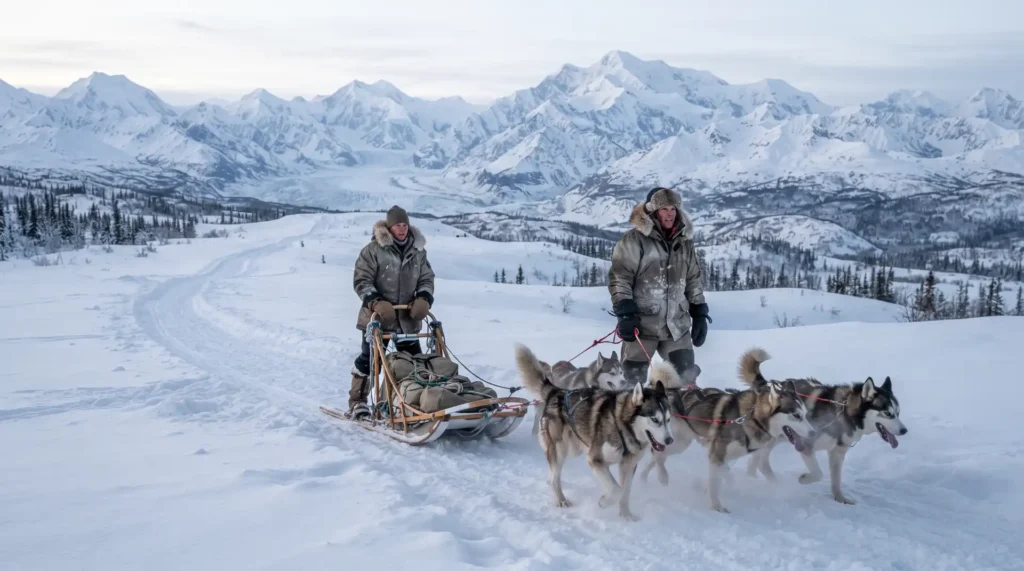
For generations, the Iditarod has represented one of the most demanding forms of long-distance dog mushing in the United States. The journey across Alaska asks sled dogs and mushers to manage extreme cold, remote terrain, changing trail conditions, fatigue, nutrition, rest, and countless decisions made far from ordinary conveniences.
In 2026, however, something new appeared on the trail.
The Iditarod Expedition Class debuted as a separate, non-competitive way for designated participants to travel the official Iditarod race trail while operating under a different structure from championship competitors. It did not create another division competing for the Iditarod title. Instead, it introduced an expedition-focused approach built around completing the journey, experiencing the trail, caring for the dogs, and remaining separate from the competitive field.
Three mushers participated in the inaugural class: Kjell Inge Røkke, Thomas Wærner, and Steve Curtis. According to the Iditarod Trail Committee, Expedition participants were excluded from official competitive standings and were not eligible for prize money or special awards. They operated under race-official oversight while following specific dog-care and non-interference requirements.
The distinction matters. The competitive Iditarod is still the competitive Iditarod. But the Expedition Class raises an interesting question for American sled-dog enthusiasts: can long-distance mushing also develop meaningful formats in which the journey itself matters more than finishing position?
The answer could influence how people think about expedition mushing for years to come.
What Is the Iditarod Expedition Class?
The Expedition Class was introduced during the 54th running of the Iditarod in 2026. Unlike traditional Iditarod racers, Expedition mushers were not competing to become champion.
The official Iditarod explanation describes the program as a separate, non-competitive designation. Expedition participants travel the official trail under race-official jurisdiction, but they do so according to protocols created specifically for their class. Official Iditarod Expedition Class explanation
That difference changes the purpose of the journey.
Competitive mushers constantly make decisions with the clock and standings in mind. Every rest period, feeding schedule, speed adjustment, checkpoint stay, and strategic move can influence where a team finishes.
An expedition musher can look at many of those same decisions through another lens. Instead of asking, “Will this cost us a place in the standings?” the priority can become, “What is the best way to continue this journey safely and responsibly?”
That does not mean expedition mushing is easy.
Traveling hundreds of miles by dog team through Alaska remains an enormous undertaking. Cold, wind, snow, trail deterioration, isolation, equipment problems, sleep deprivation, and the daily responsibility of caring for a team of canine athletes remain very real.
The change is not that the wilderness becomes less demanding. The change is that competitive pressure is removed from the equation.
For readers unfamiliar with how differently long-distance teams operate compared with shorter racing disciplines, our guide to sprint mushing vs. distance mushing provides useful background.
Why the 2026 Debut Was Significant
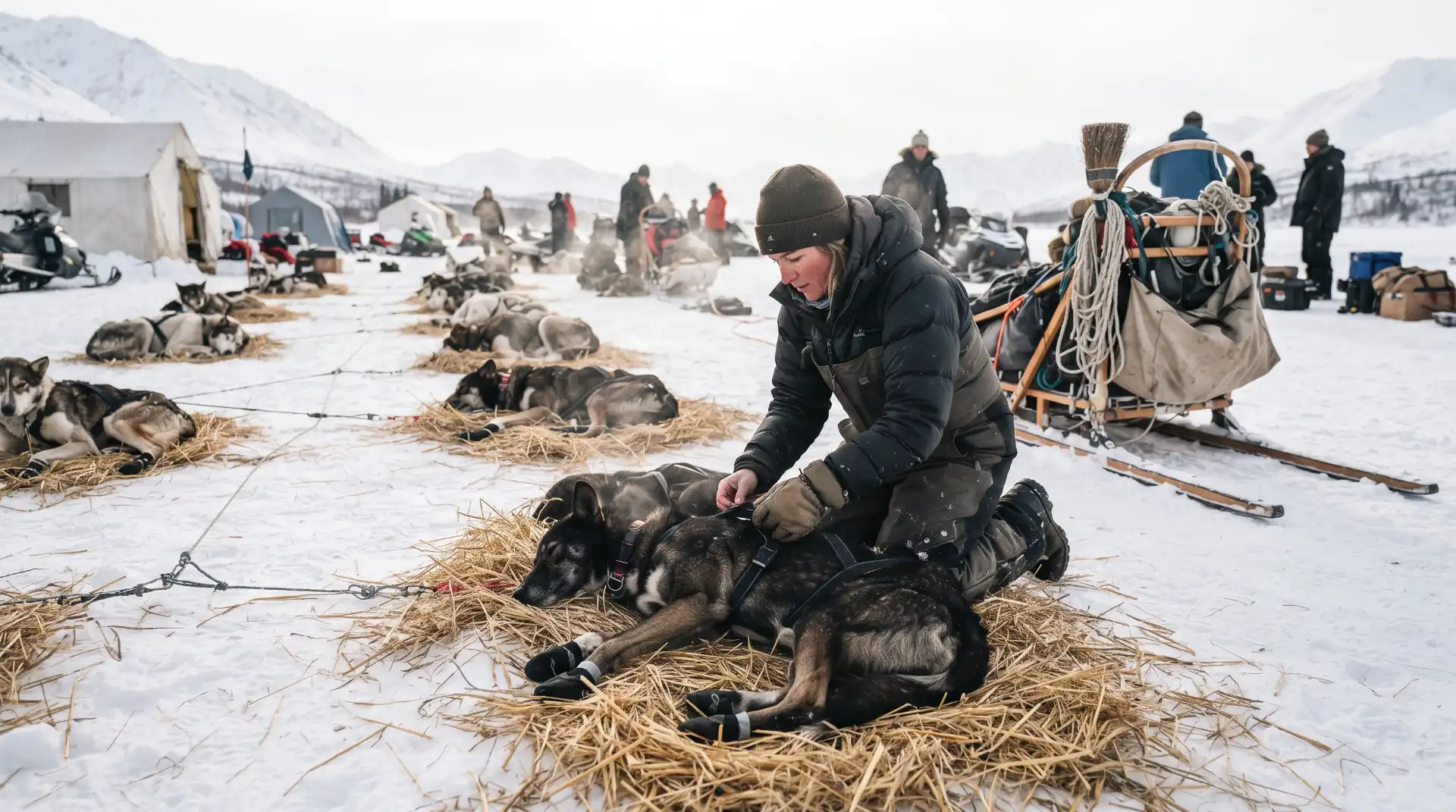
Long-distance sled-dog events usually revolve around measurable competition. Fans follow checkpoints, elapsed time, team position, rest strategies, and movement on the trail.
The Iditarod Expedition Class introduced another narrative.
Instead of focusing on who could reach Nome first, it invited people to follow what happens when completion, exploration, and dog management become the central objectives.
Kjell Inge Røkke became the first Expedition musher to complete the trail to Nome, arriving on March 16, 2026. The Iditarod described his completion as the first successful finish by an Expedition musher and a milestone for the newly created program.
The other two inaugural journeys demonstrated another important side of expedition travel: knowing when not to continue.
Thomas Wærner concluded his expedition at Unalakleet after several dogs showed symptoms of kennel cough. The Iditarod reported that the decision followed consultation with veterinarians and was made with the welfare of the team as the priority.
Steve Curtis ended his expedition after traveling roughly 300 miles. His team had deliberately remained behind the competitive field to avoid interference, and the Iditarod later reported that deteriorating trail conditions and a missed weather window contributed to the decision not to continue into a more isolated section of the route.
Those different outcomes illustrate something fundamental about expedition-style mushing.
Success does not always mean reaching the planned destination.
Sometimes success is recognizing when conditions, dogs, weather, or logistics are telling the musher that continuing is no longer the responsible choice.
How the Expedition Class Differs From Competitive Racing
The most important thing to understand about the Iditarod Expedition Class is that it is not simply another competitive division.
The title of Iditarod champion still belongs to the competitive race. Expedition teams cannot earn an official finishing position in that field, win race prize money, or receive competitive special awards.
They also operate with greater flexibility.
According to the Iditarod Trail Committee, Expedition participants may swap dogs during the journey, receive outside assistance, and use flexible rest schedules. They are not bound by the competitive field’s standard minimum and maximum dog-team requirements. However, dogs participating in the program must still satisfy veterinary requirements, and official veterinarians retain authority over canine health matters.
Those differences would create a major competitive advantage if expedition and race teams were being compared directly.
That is precisely why the two are separated.
An Expedition team’s tracker position should not be interpreted as a race position. A team could appear ahead geographically while having no effect whatsoever on competitive standings.
This separation allows the traditional race to preserve its sporting structure while the expedition participants pursue a different type of challenge.
For fans, understanding that distinction is important. The Expedition Class should be viewed more like a parallel trail journey than an alternative pathway to winning the Iditarod.
The Challenge Is Still Long-Distance Mushing
Removing competition does not remove the physical reality of the trail.
Long-distance mushing depends on sustainable movement rather than maximum speed. A dog team needs to travel efficiently, recover effectively, eat well, remain hydrated, and stay mentally engaged through repeated cycles of running and resting.
The musher must manage the same environment.
Hours on the sled can mean bitter cold, darkness, wind exposure, poor visibility, rough trail, limited sleep, and constant attention to every dog. A small problem that would be easy to address at home can become far more complicated many miles from a road.
Equipment management also becomes essential.
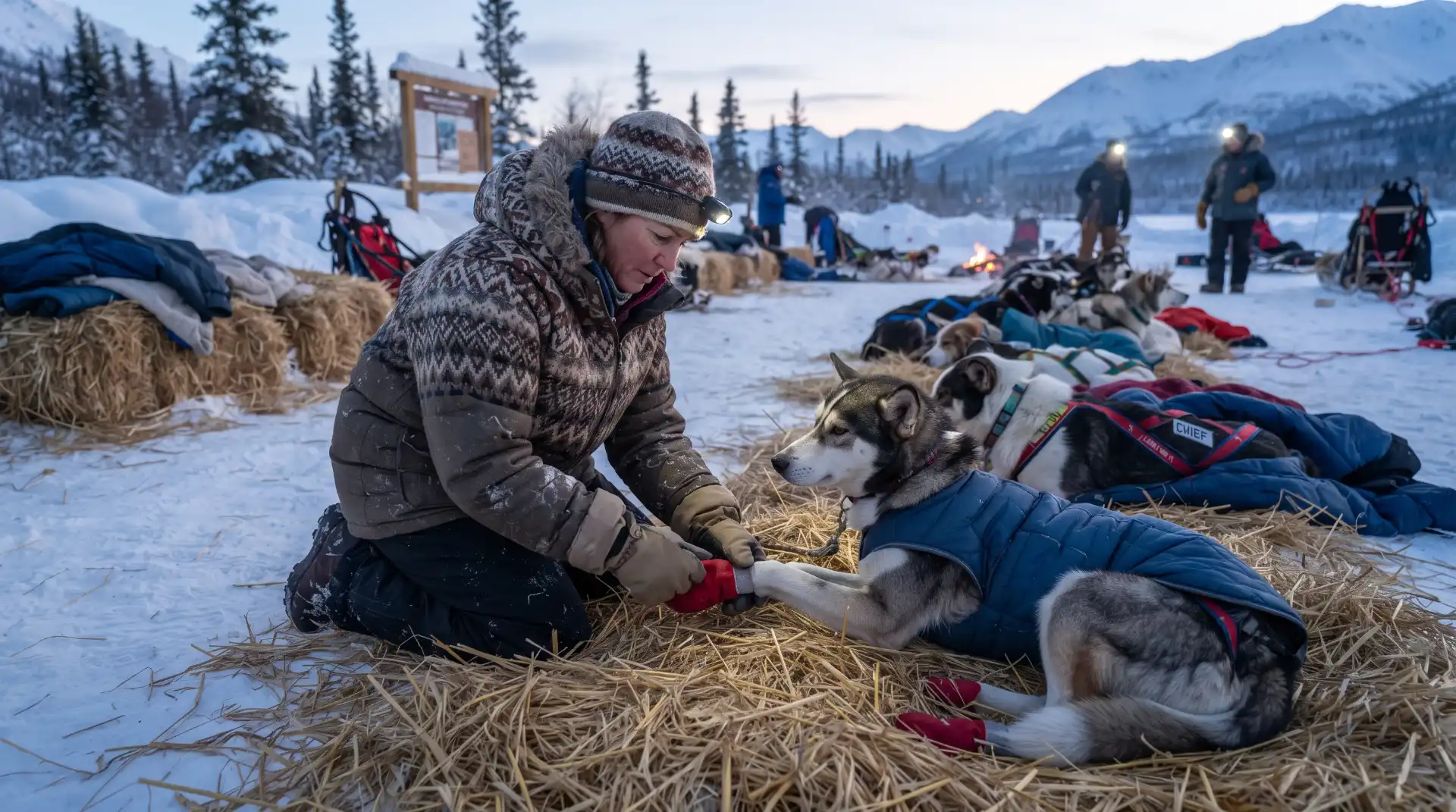
Harnesses must remain comfortable. Ganglines and sled components have to withstand repeated stress. Booties, cold-weather clothing, food, emergency equipment, dog-care supplies, and personal survival gear must remain organized even when the musher is exhausted.
Long-distance mushing is therefore less about one spectacular burst of athletic performance and more about thousands of small decisions made correctly.
Readers interested in how those routines shape everyday life with a working team can also explore Behind the Scenes: A Day in the Life of a Musher.
Dog Care Remains at the Center of the Journey
Perhaps the most important aspect of the Expedition Class is that increased logistical flexibility does not eliminate responsibility for the dogs.
The official program requires Expedition dogs to undergo veterinary screening and meet the Iditarod’s health and safety standards. Race officials can intervene, and official veterinarians hold final authority when questions about canine health arise.
That principle becomes especially important in long-distance travel because sled dogs are not machines.
Each dog responds differently to mileage, trail surface, temperature, appetite, hydration, sleep, and workload. A dog that looks energetic in the morning may need extra attention later in the day. An experienced musher watches gait, attitude, appetite, paws, hydration, breathing, behavior, and enthusiasm constantly.
Rest is not wasted time. It is part of performance.
Feeding is not simply a checkpoint routine. It helps support recovery and the dog’s ability to work again.
Paw inspections are not minor maintenance. Healthy feet are essential for a dog expected to cover mile after mile over snow and ice.
The 2026 Expedition journeys reinforced this philosophy. Wærner’s decision to stop at Unalakleet when dogs showed signs of illness demonstrated that an expedition objective must remain secondary to team welfare. Curtis likewise described ending his journey as a dog-first decision made after considering veterinary guidance and trail conditions.
For anyone involved with working sled dogs, that lesson extends far beyond the Iditarod.
A responsible musher needs to be willing to change the plan.
Expedition Mushing Changes the Meaning of Pace
Competitive racing naturally places value on speed. Even long-distance races built around endurance are ultimately decided by time.
Expedition travel changes the calculation.
A sustainable pace can become more important than the fastest possible pace. Longer rest can be taken when needed. Weather can influence the schedule without automatically creating concern about losing positions. A difficult section can be approached conservatively.
That can produce a different relationship with the trail.
Instead of viewing every mile primarily as distance that must be covered faster than another team, an expedition musher can place more attention on the conditions themselves: snow texture, wind, temperature, dog behavior, visibility, terrain, and the rhythm of travel.
None of this means racing ignores those factors. Elite distance racers may be among the most skilled trail managers in the sport precisely because they must balance them while competing.
The difference is incentive.
Competition rewards teams that can manage all those variables efficiently while still reaching the finish before rivals. Expedition travel can reward caution without imposing the same time penalty.
That makes expedition mushing a distinct challenge rather than merely slow racing.
The Iditarod Trail Is More Than a Racecourse
To understand why an expedition-focused class attracts attention, it helps to understand the landscape behind the race.
The Iditarod name is tied to a much larger historic trail system across Alaska. The Bureau of Land Management describes the Iditarod National Historic Trail as a roughly 2,400-mile system consisting of a main route and numerous connecting trails. Portions follow travel corridors used long before modern racing, including routes associated with Alaska Native communities and later Alaska’s mining and transportation history. Congress designated the Iditarod as a National Historic Trail in 1978.
The modern Iditarod Trail Sled Dog Race uses an approximately 1,000-mile journey to Nome, but the broader trail has a story extending far beyond the annual event.
For authoritative historical information, readers can explore the Bureau of Land Management’s Iditarod National Historic Trail resource.
That history gives expedition travel an additional dimension.
Traveling by dog team is not simply moving through scenic snow. It connects modern mushers with a form of winter transportation that helped shape life across northern environments.
Today’s equipment, veterinary knowledge, communications, navigation systems, training programs, and emergency planning may be far more advanced, but the essential relationship remains recognizable: humans working alongside dogs to cross winter country.
Modern Technology Meets an Old Form of Travel
One of the fascinating contradictions of modern mushing is that it can feel timeless while being supported by increasingly sophisticated technology.
A sled and dog team may appear almost unchanged at a distance. Behind the scenes, however, contemporary mushers can draw on GPS tracking, improved fabrics, lightweight equipment, modern veterinary medicine, sports nutrition, advanced weather forecasting, and systematic athletic conditioning.
This combination is especially relevant to expedition mushing.
A non-competitive long-distance journey provides room to use technology primarily for logistics, safety, communication, and dog care rather than simply for gaining a racing advantage.
That development fits a broader trend within the sport.
Training programs are becoming more structured. Mushers pay closer attention to recovery and individual conditioning. Dryland training makes it possible to maintain fitness when suitable snow is unavailable. Equipment continues to evolve, while better information allows teams to prepare more carefully for changing weather and trail conditions.
Our article on the evolution of modern mushing technology and training explores this transformation in more detail.
The result is not the disappearance of traditional mushing. In many ways, technology can help protect it by giving mushers better tools for keeping dogs healthy and managing remote journeys.
Could Expedition Mushing Attract New Interest to the Sport?
The Iditarod Expedition Class is still extremely new, so it would be premature to predict exactly how it will develop.
Its first season nevertheless demonstrates how different stories can exist around the same trail.
Traditional fans may follow the race because they enjoy competition, strategy, athletic performance, and the question of who will reach Nome first.
Other people may be drawn to the journey itself.
They may want to understand how a musher camps with dogs, handles changing weather, crosses enormous wilderness areas, cares for canine athletes, or develops enough trust in a team to travel hundreds of miles together.
Expedition-style storytelling can emphasize those elements.
That could help introduce long-distance mushing to audiences who previously viewed the sport only through race standings.
It is important, however, not to confuse the new class with an open recreational tourism program. The Iditarod has described the Expedition Musher Program as a special initiative involving distinguished participants and supporters of the race rather than a general public division.
For most people interested in experiencing longer dog-powered travel, professionally organized multi-day mushing trips remain a much more realistic introduction.
Our guide to multi-day sled dog expeditions on the Outlaw Ridge blog explains how longer journeys differ from shorter recreational rides and why preparation becomes increasingly important as time on the trail grows.
A Different Measure of Success
The first year of the Expedition Class also highlighted one of the most valuable ideas in wilderness travel: the destination cannot be the only measure of success.
Røkke reached Nome.
Wærner stopped in Unalakleet after health concerns emerged among his dogs.
Curtis ended his journey earlier after assessing conditions and the safety of continuing.
Those are three different outcomes, but each can teach something about long-distance mushing.
Reaching a distant finish requires persistence.
Stopping for animal welfare requires judgment.
Turning around or ending an expedition because conditions have changed requires discipline.
Outdoor culture sometimes celebrates perseverance so aggressively that turning back can be presented as failure. Experienced wilderness travelers know the reality is more complicated.
The trail does not care about plans.
Weather does not adjust itself to a schedule.
Dogs cannot be expected to continue simply because a human wants to reach a particular destination.
Good decision-making means being able to separate determination from stubbornness.
In that sense, expedition mushing can offer an important lesson for competitive and recreational mushers alike: a responsible team leader must always be prepared to revise the objective.
What the Expedition Class Could Mean for Long-Distance Mushing
The most interesting aspect of the Iditarod Expedition Class may not be what happened in 2026 but what the concept represents.
Long-distance mushing has traditionally been visible to the public primarily through racing. Famous events create heroes, records, rivalries, strategies, and dramatic finishes. That competitive structure has played an enormous role in keeping sled-dog culture visible.
But mushing has never been only a sport.
It is also transportation, exploration, recreation, working-dog partnership, cultural history, wilderness travel, and a way of understanding northern landscapes.
The Expedition Class puts some of those other identities back into the spotlight.
A musher moving toward Nome without competing for a championship still needs dog-handling skill. The team still has to work together. The weather still matters. The wilderness still demands respect.
What changes is the definition of accomplishment.
Instead of measuring the journey only through hours, minutes, and standings, success can also be measured through responsible travel, learning, dog care, adaptability, and completion when conditions allow.
That perspective could encourage broader interest in expedition mushing throughout Alaska and other northern parts of the United States.
It may also help audiences understand why experienced mushers spend so much time developing relationships with their dogs. Commands and equipment matter, but trust is what allows a group of individual animals and one human to operate as a team in remote winter country.
Looking Toward the 2027 Iditarod
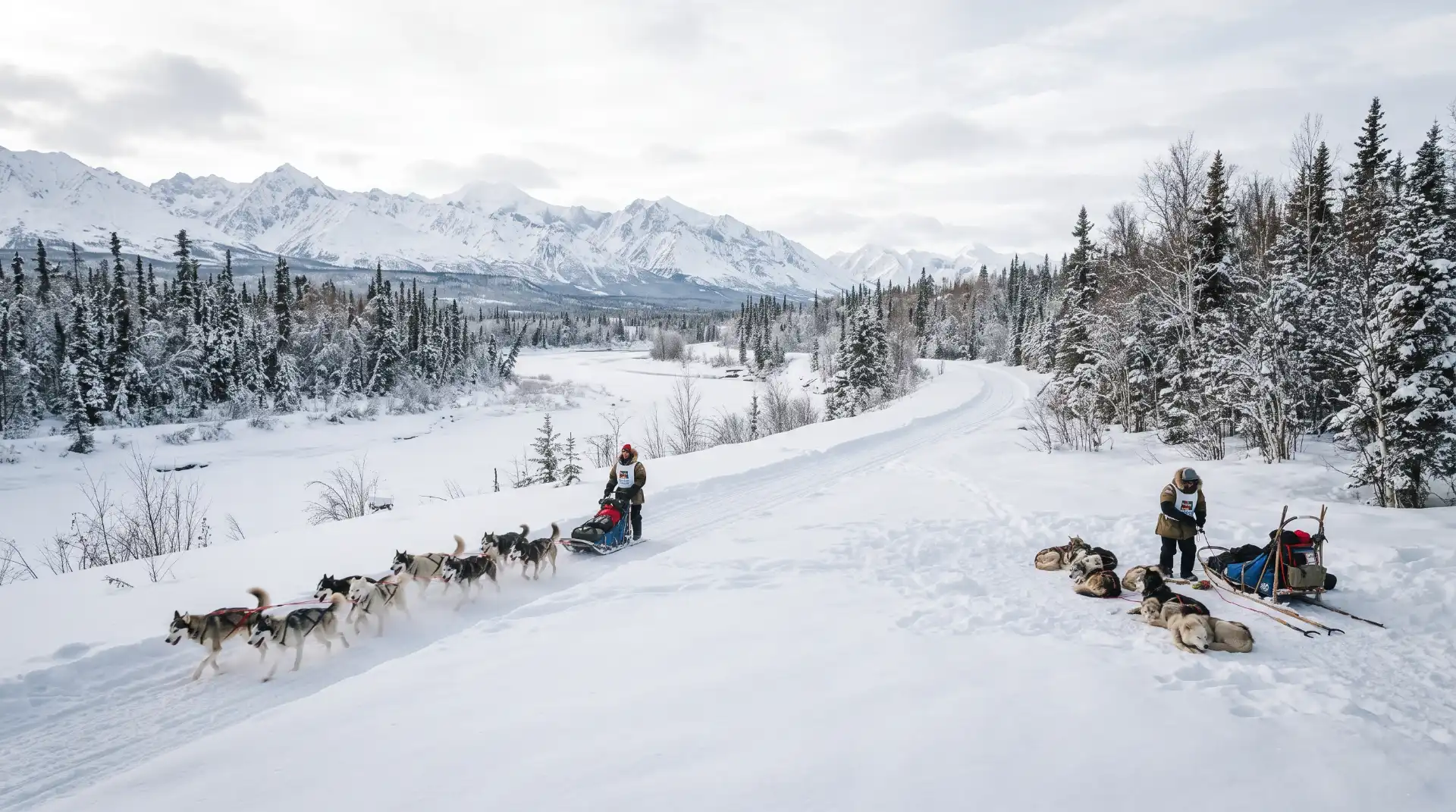
The next Iditarod is scheduled to begin in Anchorage on March 6, 2027. By late June 2026, 22 competitive mushers had already entered, according to the Iditarod Trail Committee.
The organization has also announced continued involvement from members of the inaugural Expedition team. In June, the Iditarod reported that Kjell Inge Røkke, Thomas Wærner, and their team would support 2027 rookie competitors by helping cover 80 percent of their entry fees.
What that means for the future structure or size of the Expedition Class remains something to watch. As of September 2026, the organization has not publicly announced a complete 2027 Expedition field comparable to its competitive entry list.
That uncertainty makes the program worth following.
Will future Expedition participants approach the journey differently after the lessons of 2026? Will dog-care protocols evolve? Will the class become a recurring feature? Could its non-competitive format become an important part of how the Iditarod presents mushing to a wider audience?
Those questions cannot be answered yet.
The first season, however, has already established the basic idea: the Iditarod Trail can support two very different objectives at the same time without making them equivalent.
One group is racing.
The other is undertaking an expedition.
Long-Distance Mushing Is Still About the Dogs
Technology changes. Race formats change. Training methods change. Even winter itself is becoming less predictable in many parts of the United States, forcing mushers to adapt their conditioning schedules and use more dryland training.
Readers interested in that evolution can see our discussion of warmer winters and changing sled-dog training.
Yet the foundation of mushing remains remarkably consistent.
Dogs and humans must trust one another.
The musher has to know when the team is strong enough to continue and when it needs rest. The dogs need clear leadership, consistent care, appropriate conditioning, food, hydration, and an environment in which their health comes first.
No class designation can replace those fundamentals.
In fact, the Expedition Class may make them easier for some spectators to see. When the question of winning is removed, attention naturally shifts toward how the journey is being made.
How are the dogs doing?
How is the musher managing the team?
What are the conditions?
Why did the team stop?
Why did it continue?
Those questions reach the heart of long-distance mushing.
A New Chapter, Not a Replacement for Racing
The Iditarod Expedition Class should not be viewed as a replacement for the competitive Iditarod, nor did the organizers present it that way.
Competition remains central to the race. Champions will still be determined through the demanding combination of speed, strategy, dog care, endurance, and trail management that has defined modern Iditarod racing.
The Expedition Class simply creates another narrative alongside it.
Its 2026 debut showed that the same legendary Alaska trail can be approached with a different objective: not to defeat another musher, but to undertake a demanding journey with dogs while respecting the competitive race unfolding nearby.
Whether the program becomes a permanent fixture or continues to evolve, it has already expanded the conversation surrounding long-distance mushing.
For sled-dog enthusiasts, that may be its most lasting contribution.
The future of mushing does not have to choose between tradition and change. It can preserve the challenge of competitive racing while also creating room to celebrate exploration, responsible wilderness travel, modern dog care, and the extraordinary partnership that makes every mile possible.
Ultimately, whether a team is racing the clock or traveling as an expedition, the most meaningful part of the journey remains the same: a musher, a team of remarkable dogs, and the long winter trail ahead.