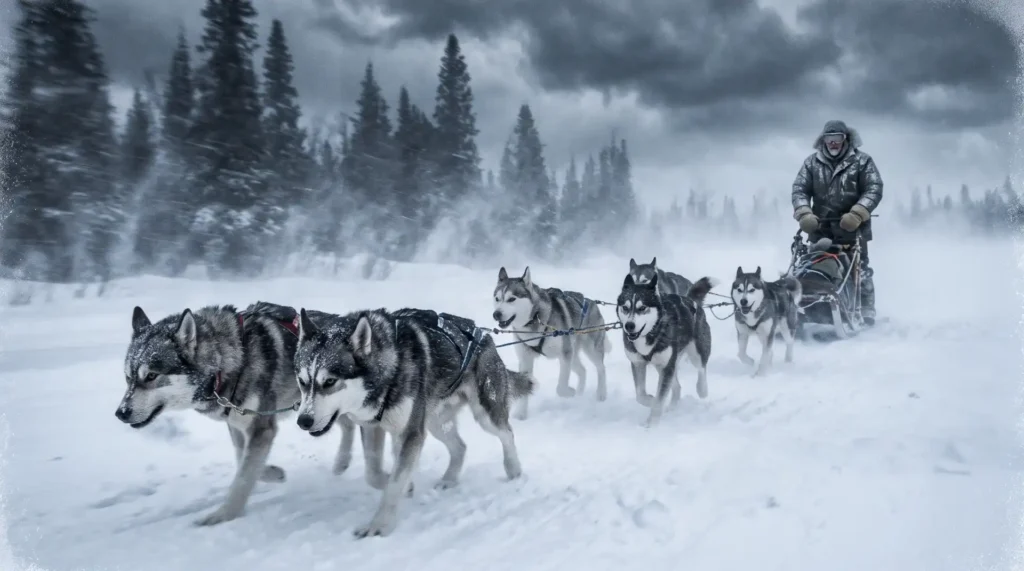
Winter is the heart of the sled dog season across many parts of the United States. From the snowy forests of Minnesota and Wisconsin to the mountains of Colorado and the remote wilderness of Alaska, mushers depend on reliable equipment, healthy dogs, and careful planning to travel safely through winter landscapes. However, even experienced teams can face dangerous conditions when temperatures fall rapidly, winds increase, visibility disappears, or heavy snowfall transforms a familiar trail.
Winter storm safety for sled dog teams begins long before the first snowflake falls. Responsible mushers must understand weather forecasts, recognize changing trail conditions, prepare emergency supplies, and know when to cancel a trip. They must also account for the individual needs of every dog, because a team is only as safe as the decisions made on its behalf.
Cold-weather breeds may have thick coats and remarkable endurance, but no sled dog is immune to every winter hazard. Strong winds, wet fur, exhaustion, ice-covered surfaces, paw injuries, and unexpected delays can create serious problems. A dog that performs comfortably during a routine training run may respond differently when forced to remain stationary in a storm.
This guide explains how American mushers, recreational dog sledders, kennel owners, and winter adventure enthusiasts can prepare for severe weather. It covers storm forecasts, cold-weather protection, equipment inspections, emergency planning, veterinary concerns, and practical strategies for getting a dog team safely off the trail when conditions deteriorate.
Why Winter Storm Safety Matters for Sled Dog Teams
Dog sledding combines physical exertion, outdoor exposure, transportation, and teamwork. Unlike a recreational activity that takes place close to a building or vehicle, backcountry mushing can leave people and dogs several miles from immediate assistance. When severe weather develops, returning to the trailhead may become difficult or impossible.
A winter storm can affect nearly every part of a mushing operation. Heavy snowfall may bury trail markers and increase resistance against the sled. High winds can create drifting snow and make it difficult to see the route ahead. Freezing rain can coat equipment in ice, while extreme cold can increase the consequences of a mechanical failure or prolonged stop.
These hazards often occur together. A musher might initially encounter only moderate snowfall before stronger winds create near-whiteout conditions. A damaged gangline that would be a minor inconvenience on a calm afternoon could become a serious emergency when temperatures plunge and the team cannot move normally.
The dogs also face changing demands as conditions worsen. Running generates body heat, but a team that must stop for an extended period loses some of that benefit. Wind exposure, wet fur, inadequate insulation, injury, and exhaustion can increase the risk of cold-related problems.
Preparation reduces the likelihood that a manageable problem will become a life-threatening emergency. It also gives mushers more options when a route becomes unsafe. The goal is not to prove that a team can withstand the harshest possible conditions. It is to make sound decisions that protect the dogs, the musher, and anyone accompanying the trip.
Understanding Winter Storm Warnings and Weather Forecasts
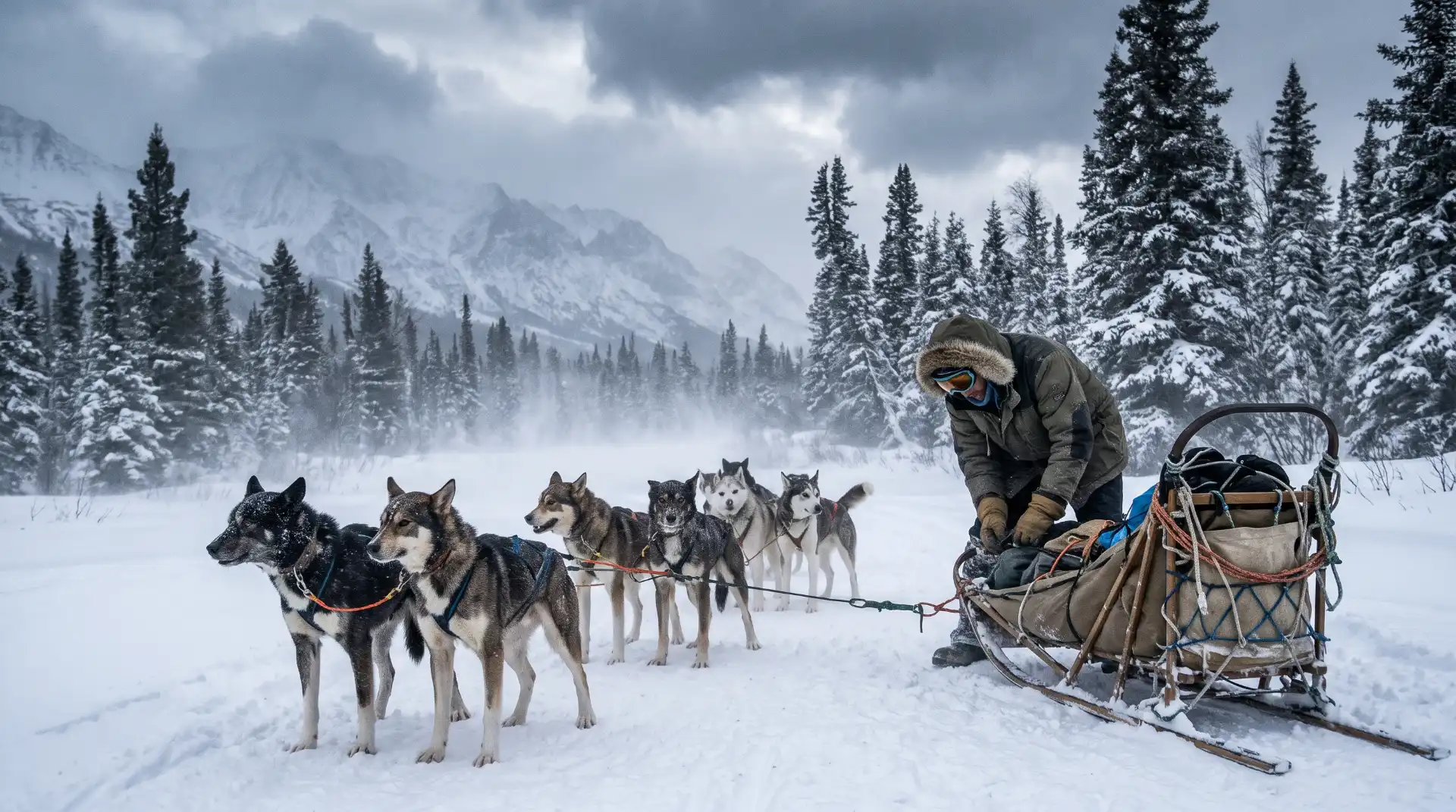
One of the most important habits for winter mushing is checking reliable weather information before leaving home. A forecast should guide the entire trip plan, including the route, departure time, expected return, equipment selection, and decision about whether the outing should happen at all.
The National Weather Service provides official forecasts and alerts through Weather.gov. Its winter weather guidance explains the differences between watches, warnings, and advisories, helping travelers understand when conditions may become dangerous.
A winter storm watch generally means hazardous conditions are possible. It is a signal to prepare, review plans, and consider alternative arrangements. A warning indicates that significant hazardous weather is expected or occurring. An advisory generally indicates less severe conditions that may still create dangerous travel or outdoor exposure.
Mushers should pay particular attention to blizzard warnings, winter storm warnings, and extreme cold or wind chill alerts. A blizzard involves strong winds combined with falling or blowing snow that substantially reduces visibility. Under these conditions, even a familiar trail may become difficult to follow.
Monitor More Than the Temperature
Air temperature is only one part of the safety picture. Wind speed, precipitation, visibility, humidity, terrain exposure, and the expected duration of the storm also matter.
A temperature that seems manageable in a sheltered forest may become much more concerning on an exposed ridge where wind removes heat rapidly. Wet snow or freezing rain can create additional challenges by affecting footing, coat condition, and equipment operation.
Check the forecast for the entire period of the planned outing rather than looking only at conditions at departure. If a storm is expected to arrive in the afternoon, a morning trip may still be unsafe if the route takes several hours and offers limited opportunities to turn around.
Also consider local terrain. Mountain passes, open lakes, valleys, and exposed ridgelines can experience conditions that differ significantly from those at the nearest weather station. Use available local forecasts and trail reports to build a realistic picture of what the team may encounter.
Establish Clear Conditions for Canceling a Trip
Every musher should decide in advance which conditions will cause a trip to be postponed or shortened. These criteria should reflect the team’s experience, the dogs’ health, the route’s remoteness, available shelter, and the forecast.
For example, a short recreational run on a maintained trail near a heated building presents different risks from a multiday expedition through remote mountain terrain. A route with multiple exits may allow a team to return safely when conditions change, while an exposed backcountry route may offer few practical alternatives.
Do not wait until visibility disappears to decide that the weather is too dangerous. If official warnings, deteriorating trail reports, or changing wind conditions indicate that safe travel is becoming unlikely, postpone the outing or choose a more sheltered route.
Turning around early is a responsible decision, not a failure. The ability to recognize when conditions exceed a team’s safe operating limits is an essential part of good mushing.
Preparing Sled Dogs for Extreme Cold
Many sled dogs are adapted to cold weather, but their ability to tolerate winter conditions depends on more than breed. Age, health, coat condition, fitness, nutrition, acclimatization, and individual differences all influence how a dog responds to cold exposure.
An experienced Alaskan Husky that has been gradually conditioned for winter work may handle a particular outing differently from a young dog, an older animal, or one recovering from an illness. Even dogs that regularly run in freezing temperatures can experience problems when weather conditions change abruptly.
Check Every Dog Before Harnessing
Before each trip, examine every dog rather than assuming the entire team is ready because the kennel routine is familiar. Look for changes in walking, posture, alertness, appetite, and willingness to interact. Check paws, nails, legs, skin, and areas where the harness contacts the body.
Pay attention to small differences from each dog’s normal behavior. One dog may become unusually quiet when uncomfortable, while another may repeatedly lift a paw or resist having a harness placed over its head.
Dogs that appear ill, unusually tired, lame, or reluctant to work should not be pushed into a demanding run. A veterinary assessment may be appropriate before the dog returns to training.
A pre-trip inspection is particularly important before a long outing because problems that seem minor at the kennel can become harder to manage several miles into the wilderness.
Protect Dogs From Wind and Moisture
A thick coat helps many sled dogs retain body heat, but it does not eliminate the risks associated with prolonged exposure. Wind increases heat loss, while moisture can compromise insulation and contribute to chilling.
Before departure, inspect the coat for mats, dampness, or debris. Make sure the dog is healthy and that its equipment fits correctly. During the trip, watch for unexpected changes in movement, posture, responsiveness, or willingness to continue.
When a team must stop, look for ways to reduce direct wind exposure. Natural terrain, such as a sheltered area among trees, may provide some protection when it is safe to use. However, avoid areas with unstable branches, dangerous snow loading, avalanche exposure, or other hazards.
Dogs should have an appropriate insulated resting surface when a prolonged stop is necessary. Lying directly on snow for an extended period can increase heat loss, particularly when a dog is tired, wet, injured, or otherwise vulnerable.
Shelter must match the conditions and the length of the outing. A short run near the kennel may require little additional equipment, while a remote expedition needs a much more substantial emergency plan.
Use Dog Booties When Conditions Require Them
Paw injuries are a frequent concern in winter mushing. Sharp ice, crusted snow, abrasive surfaces, frozen debris, and packed snow between the toes can irritate or damage paw pads.
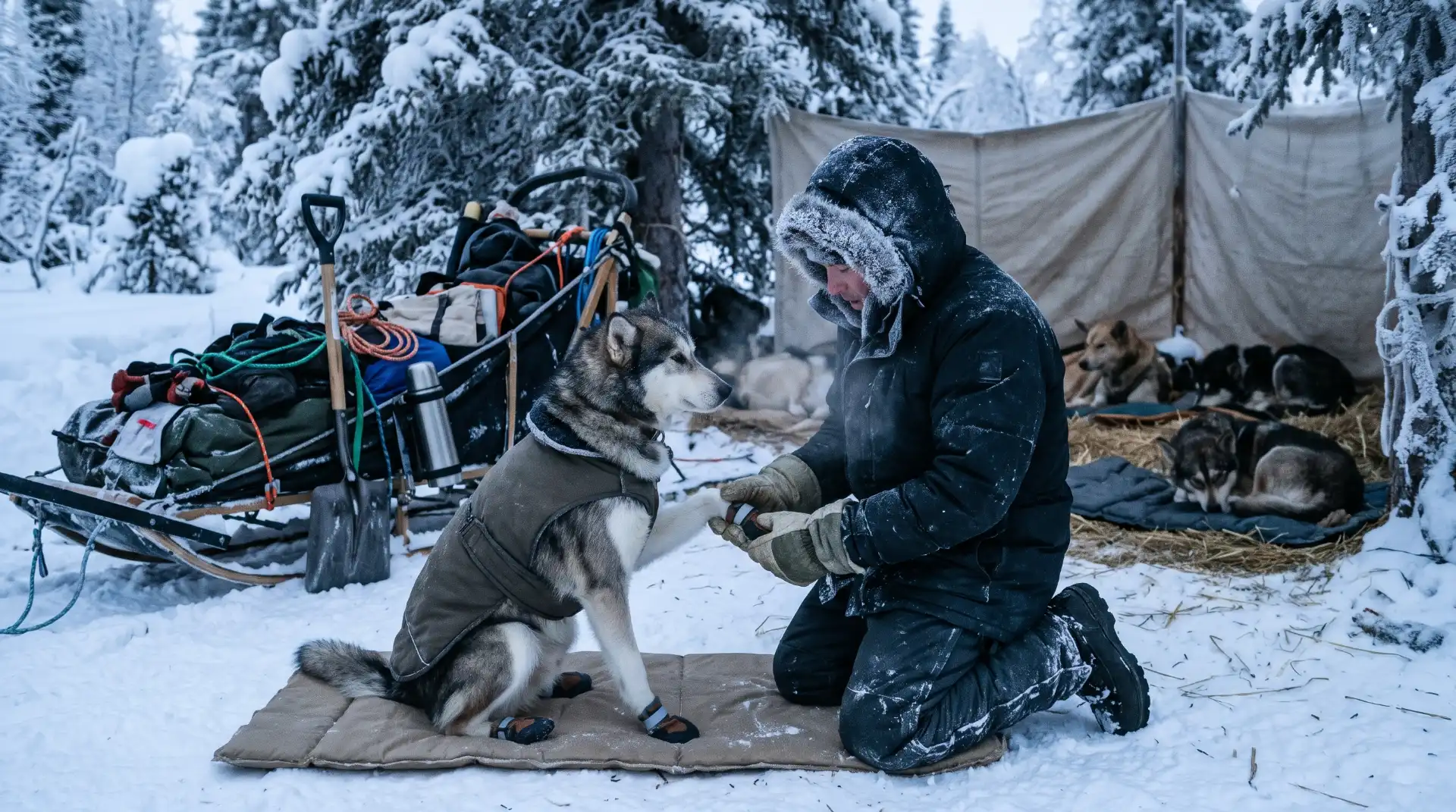
Well-fitted dog booties can help protect paws when the terrain or snow conditions justify their use. They should remain secure without restricting circulation or causing rubbing. Mushers should introduce booties during training so dogs can become accustomed to wearing them before an emergency arises.
Carry spare booties on longer trips because a lost or damaged bootie can leave a dog vulnerable for the remainder of the route. Check the paws regularly during breaks, especially if a dog changes its gait or begins lifting a foot.
Booties are not a substitute for inspection. Remove them when appropriate to check for moisture, rubbing, debris, or injury, and make sure they are properly refitted before continuing.
For additional planning advice, read Outlaw Ridge Sled Dogs’ Emergency Preparedness for Remote Mushing Trips, which covers canine first aid, spare equipment, emergency shelter, and preparation for unexpected delays.
How High Winds Change Conditions on the Trail
High winds can turn an ordinary winter outing into a difficult navigation and survival problem. They can push loose snow across open terrain, create deep drifts, obscure trail markers, and make it harder for a musher to see obstacles. Even when snowfall is light, wind can lift existing snow from the ground and create ground-blizzard conditions.
The danger is especially significant in open country, mountain passes, frozen lakes, and exposed ridgelines. A team traveling through a sheltered forest may experience manageable conditions, only to encounter much stronger winds after emerging into an open area.
Recognize the Signs of Deteriorating Visibility
Mushers should watch for changes in the landscape that indicate the weather is becoming more dangerous. Trail markers may become harder to distinguish. Familiar landmarks may disappear behind blowing snow. The horizon may become indistinct, and snowdrifts can cover sections of the route that were previously easy to follow.
These changes should trigger an immediate reassessment. Continuing simply because the team is still moving forward can be dangerous if the musher is losing the ability to navigate accurately.
When visibility starts deteriorating, evaluate whether the safest option is to return along a known route, move toward a planned shelter, or stop in a location protected from immediate hazards. The correct choice depends on the terrain, distance, available shelter, and severity of the weather.
Do not assume that following existing tracks will always lead back to safety. Wind can cover tracks quickly, and fresh snowfall can make previously traveled sections difficult to identify.
Avoid Exposed Terrain When Storms Approach
Route selection should account for the direction and strength of the wind. A route through a sheltered forest may be more manageable than an exposed ridge, even if both routes cover a similar distance.
However, trees introduce their own hazards during severe weather. Heavy snow and ice can cause branches to break, while strong winds may bring down damaged trees. Mushers should avoid stopping beneath visibly unstable branches or in areas where falling trees could threaten the team.
Mountainous routes require additional caution. Strong winds, heavy snowfall, steep slopes, and changing snowpack conditions can combine to create serious hazards. Before traveling in the backcountry, review local avalanche information and understand the terrain.
Outlaw Ridge’s guide to Understanding Avalanche Awareness for Backcountry Dog Sledding provides additional context on identifying avalanche terrain and making safer winter route decisions.
Building a Winter Storm Emergency Kit for Sled Dog Teams
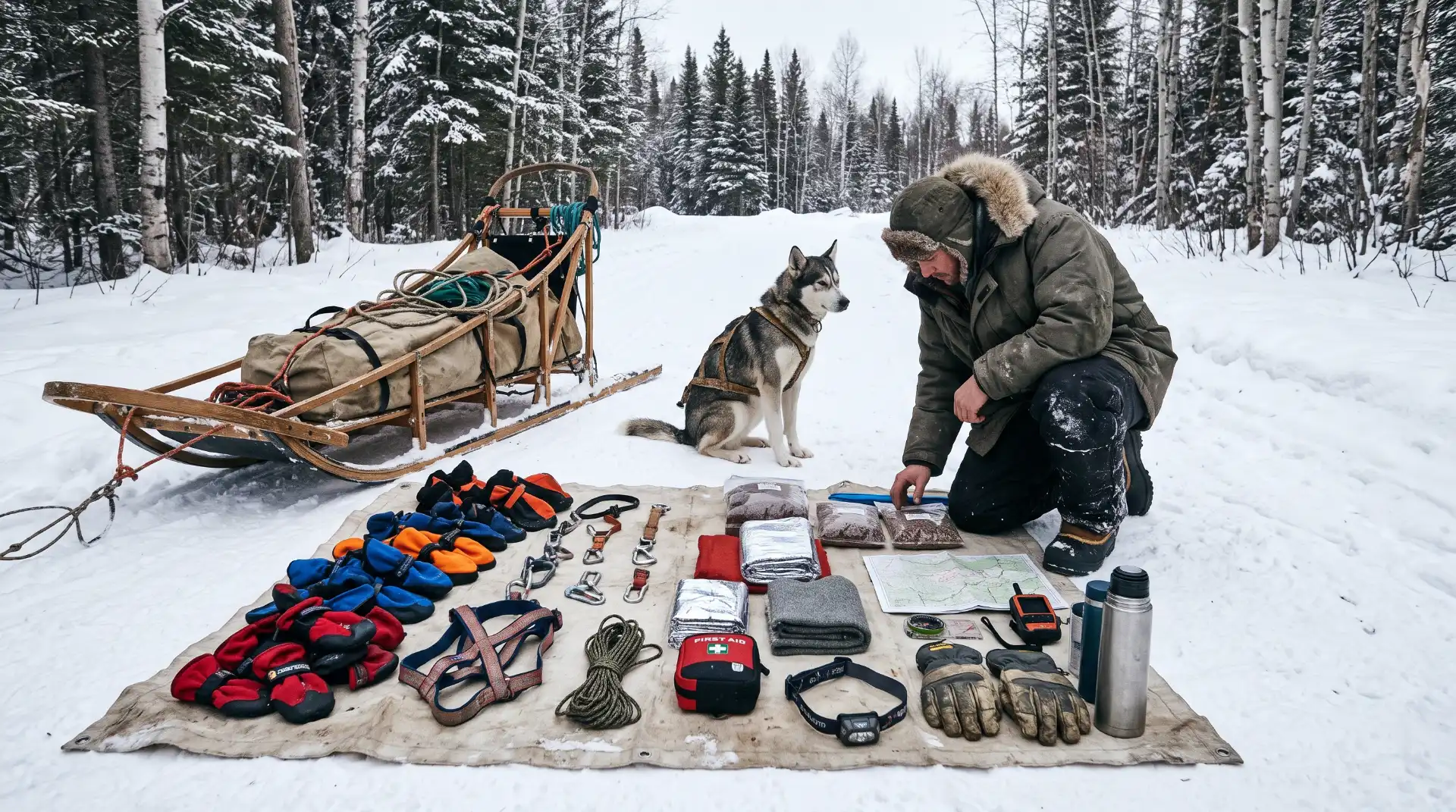
A reliable emergency kit should address the needs of both the musher and every dog on the team. The supplies required for a short trail outing differ from those needed for a remote expedition, but every trip should include equipment appropriate to its risks.
The key principle is to prepare for delays, not just the expected duration of the outing. A musher planning a three-hour run should consider what would happen if a broken sled, injured dog, blocked trail, or sudden storm extended the trip into the evening.
Essential Supplies for the Musher
Human emergency supplies should include insulated clothing, waterproof outer layers, spare gloves, a warm hat, emergency blankets or suitable sleeping insulation, and a method of protecting exposed skin from wind and moisture. Spare socks and dry clothing can become particularly valuable if a musher falls into wet snow or becomes soaked while making repairs.
Carry a first aid kit suitable for the trip, a headlamp with spare batteries, a map, a compass, and a navigation device. Electronic devices should be protected from moisture and cold, and their batteries should be monitored carefully.
For remote travel, consider a satellite messenger or satellite phone that can be used when cellular service is unavailable. Learn how the device works before leaving, understand any subscription requirements, and make sure emergency contacts know how to interpret a distress message.
A whistle, signaling light, and other appropriate signaling equipment can also help attract attention if visibility is poor or the team becomes separated from a planned route.
Food and drinking water should be sufficient for the planned outing plus a reasonable emergency margin. In remote winter conditions, water may need to be insulated against freezing, and a suitable stove or other reliable method may be necessary for longer trips where melting snow is part of the water plan.
Essential Supplies for the Dogs
A canine emergency kit should include clean dressings, gauze, bandaging materials, suitable wound-cleaning supplies, paw booties, towels, and equipment for protecting an injured or chilled dog during transport. Spare harnesses and replacement lines may also be essential when a failure could prevent a dog from working safely.
Carry enough dog food for unexpected delays, with storage that protects it from moisture. For longer outings, plan for the team’s actual energy needs rather than relying on a fixed amount that may be insufficient during demanding travel.
A suitable insulated pad, blanket, or other emergency resting material can help protect a dog from direct contact with snow during an extended stop. The best option depends on the trip’s length, temperature, wind exposure, and available carrying capacity.
Medication requires particular care. Do not assume that a human medication is safe for dogs or that a familiar dose is appropriate under different circumstances. Discuss veterinary first aid, appropriate medications, and individual health concerns with a veterinarian before undertaking remote travel.
Inspect and Repair Equipment Before Leaving
A winter emergency kit is useful only if the primary equipment has also been maintained. Inspect the sled, brake system, runners, gangline, tuglines, necklines, snaps, harnesses, and all important attachment points.
Look for frayed webbing, damaged stitching, cracked components, loose hardware, and signs of wear that could worsen under heavy pulling forces. Check that repairs can be made using the tools and materials carried on the trip.
A small repair kit might include spare snaps, strong cordage, appropriate fasteners, a multitool, and repair materials suited to cold conditions. The exact contents should reflect the sled design and the team’s experience.
Do not wait until the trailhead to discover that a critical part is missing. Inspecting and organizing supplies at home gives the musher more time to identify problems and replace damaged equipment.
Creating a Safe Winter Mushing Trip Plan
An effective emergency plan begins before the team leaves the kennel. It should identify the route, expected travel time, weather risks, available exits, communication options, and procedures for responding to unexpected delays.
For remote outings, provide a trusted person with the planned route, departure location, vehicle information, expected return time, and the number of people and dogs traveling. Establish a clear time by which that person should begin following the agreed check-in procedure if the team has not returned.
This information can help rescuers narrow the search area if the trip goes wrong. Without a reliable itinerary, responders may have little information about which trail or direction to investigate first.
Identify Alternate Routes and Emergency Exits
A route plan should include more than the preferred path. Identify places where the team can safely turn around, return to a road, reach a staffed facility, or move toward a suitable shelter.
Consider how snow accumulation, river crossings, trail closures, fallen trees, or ice conditions might affect those options. A route that is straightforward in good weather may become impassable after a storm.
Estimate travel times conservatively. Deep snow, poor visibility, equipment problems, and a dog requiring rest can slow a team considerably. A schedule that assumes ideal conditions leaves little margin for a safe return.
Do Not Depend on Cell Service Alone
Cellular reception is unreliable in many remote winter environments. Mountains, valleys, forests, and sparsely populated regions may have little or no service.
A smartphone remains useful for downloaded maps, GPS navigation, weather information saved before departure, and emergency contacts. However, it should not be the sole communication option on a remote trip.
A satellite communication device can provide an additional way to request assistance, depending on its capabilities and coverage. Keep it accessible rather than buried beneath food, clothing, or other gear.
Cold temperatures can also reduce battery performance. Store electronics where they are protected from moisture and excessive cold, and carry appropriate backup power when needed.
Review the Plan With Everyone Involved
Anyone accompanying the trip should understand the route, the basic emergency procedures, and the signals or commands that matter if conditions deteriorate.
If multiple mushers are traveling together, agree on regrouping points and procedures for handling a separated team. Make sure participants know who is responsible for navigation, communications, and the care of any injured dog.
A plan should be simple enough to use under stress. Long discussions about possible responses are less helpful than clear decisions established before the storm arrives.
Recognizing Cold-Related Problems in Sled Dogs
One of the musher’s most important responsibilities is recognizing when a dog is no longer coping well with the conditions. Dogs cannot describe numbness, discomfort, or confusion, so handlers must pay close attention to behavior, movement, and physical changes.
Cold-related injury can develop alongside exhaustion, dehydration, or another medical problem. A dog that is moving unusually slowly or refusing to pull may need immediate assessment rather than encouragement to continue.
Warning Signs That Require Attention
Watch for unusual shivering, weakness, reduced responsiveness, poor coordination, abnormal breathing, persistent paw lifting, limping, or a sudden reluctance to move. Pale, grayish, waxy-looking, or unusually firm skin may indicate frostbite, although fur can make visual inspection difficult.
Behavioral changes are also important. A dog that normally responds promptly to commands but becomes confused, unusually quiet, or difficult to engage may be experiencing a serious problem.
These signs are not specific to cold exposure. Injury, pain, exhaustion, and other medical conditions can produce similar changes. When a dog appears significantly unwell, stop the activity and seek veterinary guidance.
What to Do if a Dog Becomes Chilled
Move the affected dog away from wind and precipitation as soon as it is safe to do so. Provide dry insulation, protect the dog from direct contact with snow, and arrange transport to a suitable shelter or veterinary facility.
If the coat is wet, gently remove excess moisture when practical without causing unnecessary handling or stress. Use blankets or other suitable materials to help conserve body heat, and focus on gradual warming rather than exposing the dog to intense direct heat.
Do not rub suspected frostbitten areas, apply very hot water, or place a heating device directly against potentially injured skin. Damaged or numb tissue can be burned or injured further without the dog reacting normally.
A dog showing severe weakness, confusion, collapse, breathing abnormalities, or other signs of a serious cold-related emergency needs urgent veterinary attention. Field warming is a temporary measure, not a substitute for professional assessment.
The National Weather Service’s extreme cold safety guidance explains the dangers of frostbite and hypothermia and emphasizes moving affected individuals to shelter, avoiding direct high heat, and seeking medical attention when necessary. Although that guidance focuses on people, the underlying lesson for mushers is equally important: prolonged cold exposure requires prompt action, not a wait-and-see approach.
National Weather Service+1
Trail Emergencies: What to Do When Conditions Suddenly Change
Even a carefully planned trip can encounter unexpected problems. A dog may injure a paw, a gangline may break, a storm may arrive earlier than forecast, or a fallen tree may block the route. The safest response depends on the nature of the emergency, but the general priority is to protect the team from immediate danger and avoid making the situation worse.
A musher should not assume that every problem can be solved by continuing toward the original destination. Sometimes the safest choice is to return to the trailhead. In other cases, remaining in a protected location until conditions improve may be more appropriate.
If Visibility Drops to Near Zero
When blowing snow makes navigation unreliable, reduce the risk of becoming disoriented. Avoid moving quickly through unfamiliar terrain or attempting to cross exposed areas simply to maintain the schedule.
If the team is near a known safe exit and the return route remains identifiable, turning back may be the best option. If the route is no longer safe to travel, seek an appropriate sheltered location away from hazards such as unstable trees, avalanche terrain, and exposed ice.
Use your map and compass as well as electronic navigation tools. If you have a satellite communicator, send an update to your designated contact when possible, particularly if your expected return time will change substantially.
Do not allow pressure to reach a destination to override the need to make a safe decision. In severe conditions, the ability to remain oriented and protect the dogs is more important than completing the planned distance.
If a Sled or Gangline Breaks
Equipment failure can create a dangerous situation because the musher must control the dogs while also diagnosing the problem.
First, regain control of the team and identify whether any dog or person has been injured. Keep dogs away from broken hardware, sharp edges, and loose lines that could cause entanglement.
Assess the failure before attempting a repair. A damaged snap or line may be replaceable with a spare, but a compromised structural component may make continued travel unsafe.
If a repair is possible, carry it out in a location that provides reasonable protection from wind and other immediate hazards. Keep the dogs secure and monitor their condition while work is underway.
After the repair, inspect related components for damage. A broken line may have placed unusual force on adjacent connections, and replacing only the visibly damaged part may not address the underlying problem.
If the equipment cannot be repaired safely, activate the emergency plan rather than attempting to continue with an unreliable sled.
If a Dog Cannot Continue
A dog that becomes injured or develops signs of serious distress should not be forced to continue pulling. Stop and assess the animal, paying attention to breathing, coordination, gait, visible injuries, and responsiveness.
If the dog can be moved safely, determine whether the sled has enough capacity to transport it without compromising the stability or control of the remaining team. A small team may need a different response from a large expedition team, so these arrangements should be considered before departure.
Do not attempt a complicated evacuation without considering the safety of the other dogs and the musher. A poorly balanced sled, uncontrolled team, or improvised restraint can create additional injuries.
If the dog cannot be transported safely, seek professional emergency assistance and follow the trip’s contingency plan. The objective is to get the injured dog appropriate care without exposing the rest of the team to unnecessary danger.
If the Team Becomes Stranded
A stranded team needs a clear assessment of shelter, insulation, food, water, equipment, and communication options.
Determine whether the team can safely return under its own power or whether it is better to remain in place. Avoid exhausting the dogs by repeatedly attempting to move through conditions that are no longer manageable.
Use emergency insulation to protect resting dogs from snow and wind. Keep essential equipment accessible and protect the musher from moisture and cold so that sound decisions remain possible.
If assistance is required, provide the most useful information available: location, route, number of dogs, number of people, injuries, equipment failures, and immediate hazards. Follow the directions of emergency responders whenever communication is possible.
An emergency can take longer to resolve than expected. Conserving supplies and keeping the team organized may become more important than attempting another difficult movement through the storm.
Feeding, Hydration, and Recovery During Severe Weather
Nutrition and hydration remain important when the weather turns dangerous. Working sled dogs expend energy during travel, and prolonged delays may change their needs. However, feeding and watering routines should be adapted to the situation rather than applied mechanically.
Cold conditions can make water difficult to carry or keep unfrozen. Mushers should plan for access to drinkable water, especially on remote routes where natural sources may be frozen or unsafe to use without appropriate treatment.
Plan for Water Before the Trip
Do not assume that snow alone will meet a dog’s hydration needs. Eating snow is not always an efficient way to obtain sufficient water, and melting it requires time and equipment.
Carry water in suitable containers and protect it from freezing as much as practical. On longer trips, plan how additional water will be obtained, melted, or treated safely.
Offer water during appropriate breaks and monitor whether individual dogs are drinking normally. Changes in drinking behavior can be useful clues about a dog’s condition, although they should not be interpreted in isolation.
Bring Enough Food for Delays
Carry enough food for the planned journey and an appropriate reserve for unexpected delays. The amount depends on team size, trip duration, workload, weather, and the individual dogs’ feeding plans.
Keep food dry and protected from contamination. Portioning meals before departure can make feeding easier when conditions are difficult.
If a storm delays the return, follow a practical feeding plan appropriate to the dogs’ circumstances. Avoid sudden changes in diet or giving unfamiliar foods during an emergency unless advised by a veterinarian.
Allow Time for Recovery
After returning from a difficult winter outing, inspect every dog carefully. Look for paw injuries, cuts, harness irritation, unusual stiffness, and changes in behavior.
Provide access to water, appropriate food, and a comfortable resting area. Dogs that have been exposed to severe weather or have worked harder than usual may need additional monitoring.
If a dog remains unusually tired, lame, unwilling to eat, or otherwise abnormal, contact a veterinarian. Do not assume that every symptom will disappear after a night’s rest.
Recovery is part of responsible conditioning. The aim is to maintain a healthy team across the entire season, not simply to complete one demanding run.
Winter Kennel and Property Safety
Winter storm preparation should extend beyond the trail. A severe storm can disrupt a kennel’s normal routine by blocking access roads, damaging fencing, interrupting electricity, or limiting access to veterinary services and supplies.
Kennel owners should prepare for the possibility that dogs may need to remain on the property for an extended period without normal deliveries or easy access to outside assistance.
Inspect Shelters, Fencing, and Drainage
Before winter weather arrives, inspect kennel buildings, dog houses, roofs, fencing, gates, and drainage. Repair loose panels, damaged latches, and structural problems that could worsen under snow or wind loads.
Ensure that dogs have access to suitable dry resting areas protected from wind and precipitation. The appropriate arrangement depends on the facility, the dogs, and the local climate.
Remove hazards that could become dangerous when covered by snow, including loose wire, sharp debris, and unstable equipment. Check that gates remain functional even when snow accumulates around their bases.
Prepare for Power and Water Disruptions
A winter storm may interrupt power or freeze water lines. Develop a backup plan for drinking water, food preparation, lighting, heating systems where applicable, and communication.
If generators are used, operate them according to manufacturer instructions and well away from enclosed spaces to prevent carbon monoxide exposure. Never use outdoor combustion equipment inside a kennel building or other enclosed area unless it is specifically designed and safely installed for that purpose.
Store essential supplies where they can be reached even if the driveway or access road becomes blocked. Keep a reserve of dog food, clean water, bedding, cleaning materials, and veterinary supplies appropriate for the number of animals in your care.
Maintain a Storm Monitoring Routine
During a prolonged storm, check dogs regularly and inspect shelters for damage, drifting snow, blocked entrances, and water problems. Make sure each animal can reach a dry resting area and is not trapped by snow accumulation or damaged fencing.
Avoid unnecessary exposure when conditions are dangerous, but do not allow safety concerns for staff to result in dogs being left without essential care. Plan in advance for how routine feeding, water checks, and emergency access will be maintained if roads become impassable.
A written kennel emergency plan helps ensure that another trained person can take over if the primary caretaker cannot reach the property.
Training Your Team for Winter Emergencies
Emergency preparedness is not just about supplies. It also involves training dogs and mushers to respond calmly when ordinary routines change.
Dogs that have practiced basic commands, controlled stops, and regrouping procedures may be easier to manage when weather or equipment problems interrupt a run. These skills should be developed gradually under safe conditions, rather than introduced for the first time during a crisis.
Practice Turning Around and Returning Home
Some dogs become highly motivated when they recognize a familiar route or anticipate reaching a destination. That enthusiasm can make it challenging to change direction when the musher decides to return early.
Practice controlled turnarounds during routine training. Use consistent commands and reward calm responses when appropriate. The objective is to help the team understand that changing direction is a normal part of working with the musher.
Also practice stopping in safe locations and waiting while the musher checks equipment. These brief exercises can make an unexpected trail-side repair less chaotic.
Familiarize Dogs With Emergency Equipment
If your team may need to travel with a dog secured in the sled, introduce that experience gradually and safely before it becomes necessary. Dogs should be accustomed to the relevant equipment and handling procedures.
Likewise, become familiar with the repair tools, communication devices, and emergency shelter you carry. Practice using them in manageable conditions so that their operation is not a new challenge during a storm.
Emergency training cannot eliminate every risk, but it can reduce confusion when a decision must be made quickly.
Learn From Every Outing
After each trip, review what worked and what could be improved. Did the forecast match the conditions on the trail? Was the emergency kit accessible? Did the team return comfortably within the planned time? Were there signs that the route or workload should have been adjusted?
Record useful observations, particularly when conditions were unusual. Over time, these records can help identify patterns in trail difficulty, equipment wear, and individual dog performance.
For additional information about adapting training schedules to changing seasonal conditions, see How U.S. Sled Dog Teams Adapt When Winter Snow Arrives Late. Understanding how weather changes affect training can help mushers build more flexible plans for the winter season.
Winter Storm Safety Checklist for Mushers
Before leaving the kennel, complete a final review of the weather, route, equipment, and team condition. The following checklist is a practical starting point for recreational mushers and experienced teams alike.
This checklist should be adapted to the trip. A short run near a maintained trailhead will not require the same equipment as a remote expedition, and a route through mountainous terrain may require additional avalanche preparation.
Understanding Winter Weather Across the United States
Winter storm safety is relevant to mushers throughout the country, but the hazards vary by region.
In Alaska, long distances, remote trails, and severe cold can make access to emergency assistance difficult. Mushers traveling in the Interior or other isolated areas should plan carefully for navigation, communication, shelter, and extended delays.
Minnesota, Wisconsin, and Michigan can experience heavy snowfall, lake-effect snow, freezing temperatures, and strong winds. Trail conditions may change quickly, especially when blowing snow covers tracks or when thawing and refreezing create ice.
In Colorado and other mountainous parts of the West, elevation, steep terrain, wind exposure, and avalanche conditions require particular attention. A forecast for a nearby town may not fully represent conditions on an exposed mountain route.
Northeastern states such as Maine and New Hampshire can experience substantial snowfall, icy surfaces, and rapidly changing conditions. Even established trails may become hazardous when storms reduce visibility or bring down trees.
Mushers in all these regions should use local weather forecasts, trail reports, land-management guidance, and relevant emergency information. National guidance provides a foundation, but local conditions ultimately determine whether a specific route is appropriate.
Frequently Asked Questions About Winter Storm Safety for Sled Dog Teams
How cold is too cold for sled dogs to run?
There is no single temperature that determines whether every sled dog can safely run. Tolerance varies with the dog’s health, age, conditioning, coat, acclimatization, wind exposure, moisture, workload, and the length of the outing. A temperature that is manageable for one experienced dog may be unsuitable for another. Consult a veterinarian familiar with working dogs to establish individual limits, and postpone travel when the combination of cold, wind, and trail conditions creates unacceptable risk.
Can sled dogs get frostbite?
Yes. Although many sled dogs have thick coats and are adapted to cold environments, exposed tissue can still be injured by freezing conditions. The ears, tail, paws, and other vulnerable areas deserve particular attention. Watch for unusual discoloration, swelling, pain, numbness, or changes in tissue texture. Suspected frostbite requires veterinary assessment, especially when the injury is extensive or the dog is also weak or lethargic.
What should I do if a winter storm begins during a sled dog run?
Assess the severity of the weather, visibility, route conditions, and the team’s physical condition immediately. If a safe return route is still available, consider turning around before conditions deteriorate further. If travel becomes unsafe, move to an appropriate sheltered location when possible, protect the dogs from wind and snow, and use your emergency communication plan if assistance is required. Avoid continuing merely to finish the planned route.
Should sled dogs wear coats during winter storms?
Not every sled dog needs an additional coat during every winter outing. The appropriate protection depends on the dog, its health, activity level, coat condition, weather exposure, and the circumstances. During an extended stop, an insulated resting surface and suitable wind protection may be more important than an extra garment alone. Ask a veterinarian for guidance if an individual dog has difficulty maintaining body temperature or has a health condition that changes its cold-weather needs.
What emergency supplies are most important for a remote mushing trip?
Priorities include suitable insulation for people and dogs, food, water, a canine first aid kit, spare booties, essential repair materials, navigation tools, lighting, and a reliable way to request assistance. The exact list depends on trip length, terrain, expected weather, and access to shelter. Plan for the possibility that the team will need to stop for several hours or remain out longer than expected.
Is it safe to continue mushing during a blizzard warning?
A blizzard warning indicates potentially dangerous conditions involving strong winds and severely reduced visibility. The National Weather Service advises against travel under blizzard conditions. For recreational mushing, the safest decision is generally to postpone the outing. If a team is already in the backcountry when a warning takes effect, its response should prioritize immediate safety, shelter, communication, and a realistic assessment of whether movement is possible without increasing danger.
Conclusion: Preparation Is the Foundation of Safe Winter Mushing
Winter storms are an unavoidable part of life for many sled dog teams, but dangerous exposure can often be reduced through preparation and sound judgment. Understanding weather alerts, inspecting equipment, monitoring each dog’s condition, planning for delays, and carrying appropriate emergency supplies all contribute to safer outings.
The most important responsibility is recognizing that the dogs depend on the musher to make decisions they cannot make for themselves. Enthusiasm, fitness, and experience do not remove the need for caution. Even a highly conditioned team can encounter conditions that make continued travel unsafe.
Build an emergency plan before the season begins, review it before every trip, and adjust it to the specific route and forecast. Practice essential commands, learn to recognize signs of distress, and establish clear criteria for turning around or canceling an outing.
Above all, do not measure a successful mushing trip only by distance traveled or hours spent on the trail. A successful trip is one in which the dogs and people return safely, even when the original plan has to change.
With careful planning, suitable equipment, and a willingness to respect changing conditions, mushers can protect their teams and enjoy winter adventures more responsibly throughout the United States.