Winter transforms America’s wilderness into a completely different world. Snow-covered forests, frozen mountain valleys, quiet trails, and wide-open landscapes create opportunities for outdoor experiences that are difficult to enjoy during other seasons. For families, couples, adventure travelers, and outdoor enthusiasts, winter offers an opportunity to escape busy routines and experience nature in a more memorable way.
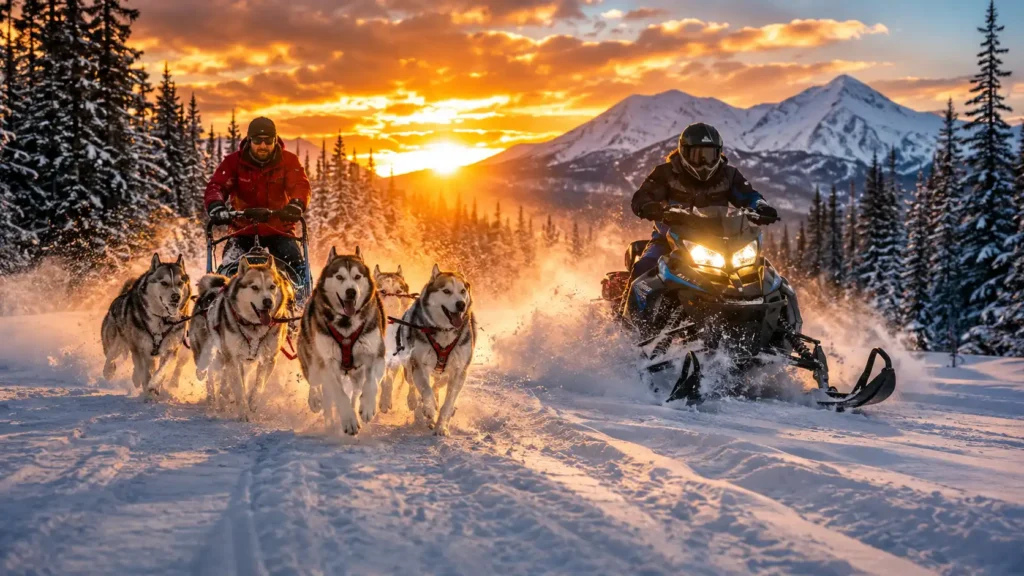
Among the most popular ways to explore snowy wilderness areas are dog sledding and snowmobiling. Both activities provide access to beautiful winter landscapes, but they deliver very different experiences. Dog sledding combines traditional transportation, working dogs, outdoor adventure, and a connection with a historic winter tradition. Snowmobiling offers speed, mechanical power, longer-distance exploration, and the excitement of traveling across extensive snow-covered trail systems.
Choosing between them is not simply a question of which activity is more exciting. Families must consider children’s ages, safety, physical comfort, accessibility, and overall costs. Outdoor enthusiasts may prioritize wilderness access, independence, environmental impact, technical challenges, or opportunities to experience remote landscapes. Travelers interested in animals may find dog sledding particularly appealing, while those who enjoy operating recreational vehicles may prefer snowmobiling.
The best choice depends on what participants want from their winter vacation. Some travelers want a peaceful experience surrounded by working sled dogs, while others want the freedom to explore miles of snowy terrain on a powerful machine. Understanding the differences makes it easier to select an adventure that fits the group, the destination, and the available winter conditions.
This guide compares dog sledding and snowmobiling across several important categories, including family suitability, safety, cost, environmental considerations, physical demands, wildlife encounters, and overall enjoyment. It also explains what travelers should know before booking a winter adventure in the United States.
1. Understanding the Difference Between Dog Sledding and Snowmobiling
Although both activities involve traveling across snow-covered landscapes, dog sledding and snowmobiling are built around different approaches to winter transportation and recreation.
What Makes Dog Sledding Unique?
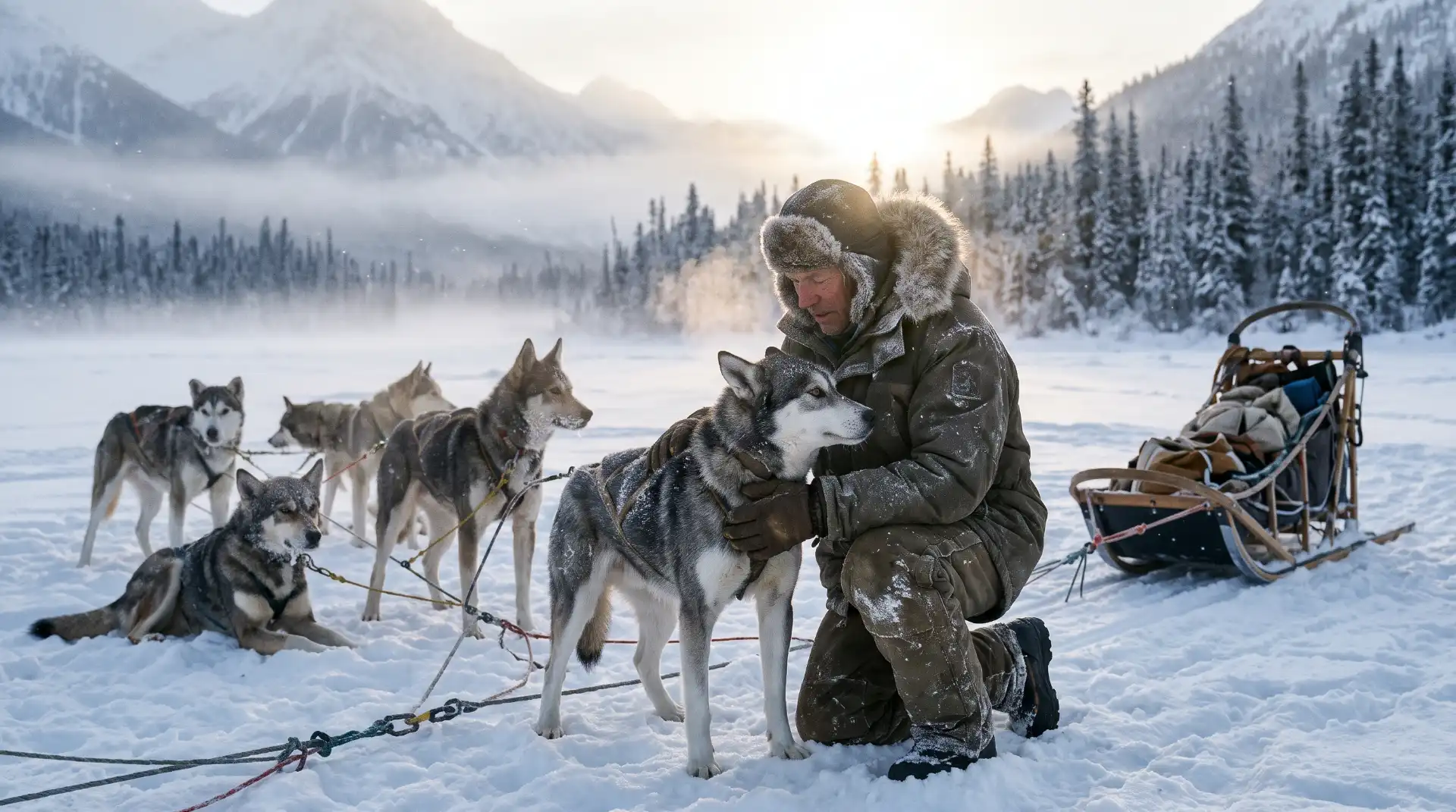
Dog sledding, also known as dog mushing, is a traditional winter activity in which a trained team of dogs pulls a sled across snow and ice. A person known as a musher guides the team using verbal commands, body positioning, and specialized equipment. Depending on the experience, passengers may sit inside the sled while the musher controls the dogs, or they may receive instruction and participate in driving the team themselves.
The dogs are the central part of the experience. They are not simply transportation equipment but athletic working animals that require conditioning, nutrition, veterinary attention, and daily care. Successful mushing depends on cooperation between the dogs and the musher. Lead dogs respond to directional commands, while the other team members maintain their positions and contribute to the pulling effort.
For visitors, this creates an experience that combines outdoor recreation with animal interaction. Before a tour begins, guests may have an opportunity to meet the dogs, learn their names, understand their personalities, and hear how the musher prepares the team. These interactions can make dog sledding especially memorable for people who enjoy animals.
The experience is also relatively quiet compared with motorized recreation. Once the team begins moving, visitors can hear the dogs running, the runners gliding across the snow, and the sounds of the surrounding wilderness. This natural atmosphere is one of the reasons dog sledding appeals to travelers who want to experience winter landscapes without the constant noise of an engine.
What Makes Snowmobiling Different?
Snowmobiling uses a motorized vehicle designed to travel over snow. Modern snowmobiles typically have powerful engines, specialized tracks, skis, suspension systems, and steering controls that allow riders to travel across designated winter trails and certain permitted backcountry areas.
Unlike dog sledding, snowmobiling gives riders direct control over acceleration, braking, and steering. Experienced operators can travel considerable distances in a relatively short period, making the activity attractive to people who want to explore large winter recreation areas.
Snowmobiling also offers several styles of riding. Families may choose guided recreational tours along groomed trails, while experienced riders may prefer more challenging routes, mountain riding, or designated backcountry terrain where permitted.
However, operating a snowmobile requires attention, judgment, and familiarity with the machine. Riders must understand how to handle changing snow conditions, negotiate turns, control speed, and recognize hazards. Passengers must also be comfortable holding on throughout the ride.
The two activities therefore appeal to different interests. Dog sledding emphasizes teamwork, animal interaction, and traditional wilderness travel, while snowmobiling emphasizes mechanical control, speed, and independent exploration.
2. Which Winter Adventure Is Better for Families?
For many parents, the most important consideration is whether an activity provides a memorable experience without exposing children to unnecessary risks. Dog sledding and snowmobiling can both be family activities, but their suitability depends on children’s ages, the tour operator, and the specific experience being offered.
Why Families Often Prefer Dog Sledding
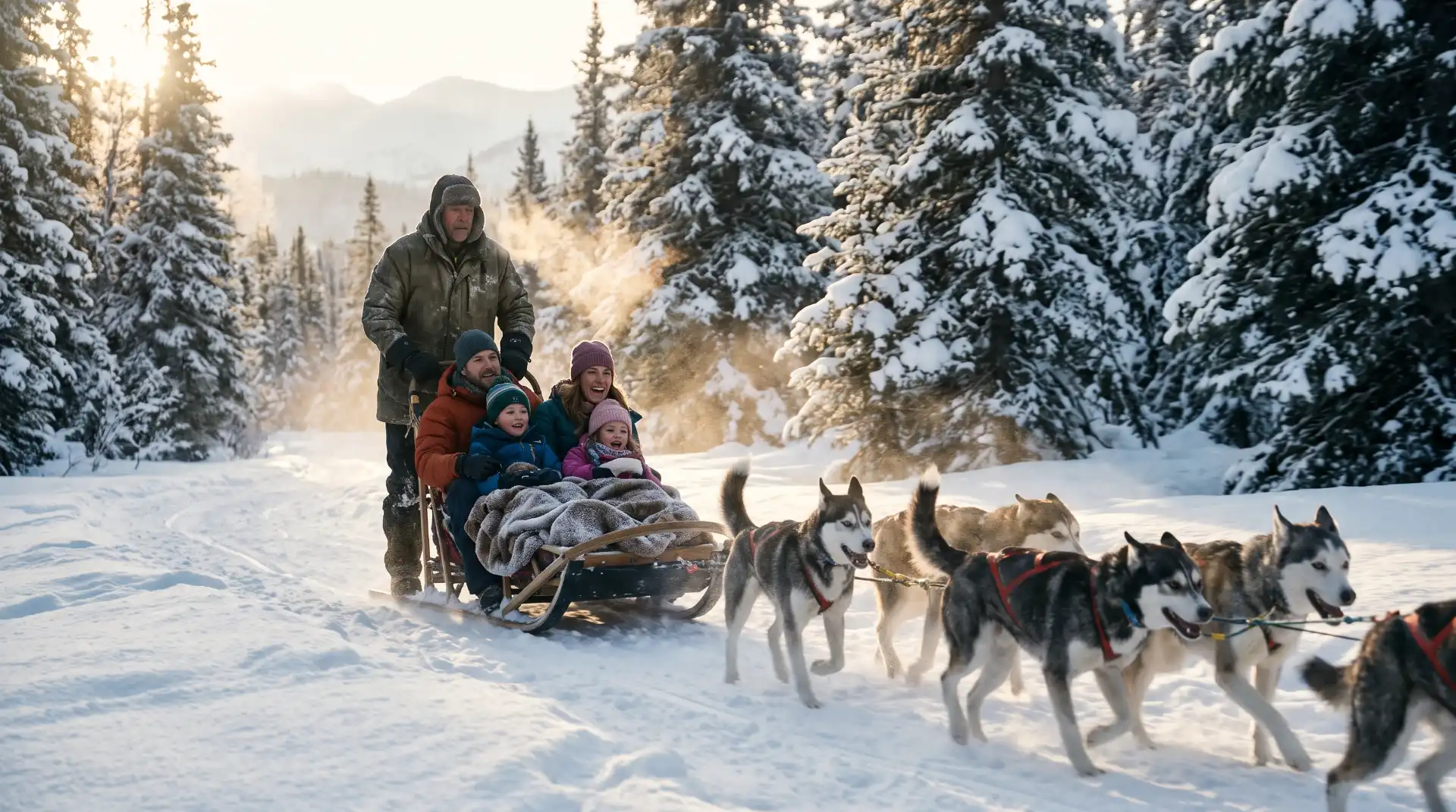
Dog sledding can be particularly appealing to families because it combines outdoor adventure with an educational experience. Children are introduced to working dogs, learn how a sled team operates, and discover how people historically traveled through snowy environments.
A guided dog sled tour also allows children to participate without necessarily having to operate equipment themselves. They can enjoy the scenery, observe the dogs, and listen to the musher explain how the team works.
For younger children, this can be a more manageable introduction to winter wilderness activities than operating or riding on a motorized vehicle. However, parents should never assume that every dog sled tour is automatically suitable for every age group.
Some operators have minimum age requirements, passenger weight restrictions, or rules about how children must be positioned inside the sled. Families should confirm these details before booking.
A good family-oriented experience should also provide opportunities for children to interact with the dogs safely under staff supervision. Children should understand that working dogs need space, rest, and respectful handling. They should not chase the animals, pull their tails, interrupt feeding, or approach individual dogs without permission.
Is Snowmobiling Suitable for Children?
Snowmobiling can also be an exciting family experience, particularly for families with teenagers and older children who enjoy outdoor sports.
Many winter destinations offer guided snowmobile tours with experienced instructors. Depending on local laws, vehicle design, operator policies, and age requirements, children may be permitted to ride as passengers or operate approved youth-sized machines in controlled environments.
However, passenger comfort and safety deserve serious consideration. Snowmobiles can accelerate quickly, produce significant vibration, and expose riders to wind and cold. Young children may struggle to maintain a secure position during a longer ride, particularly when the trail becomes uneven.
Parents should ask about the minimum passenger age, helmet requirements, vehicle capacity, seat design, and whether children can ride comfortably for the entire planned duration.
It is also important to understand that operating-age requirements vary between states. Some states require safety education or certification for younger operators, while others have additional restrictions on where and when minors can operate snowmobiles.
Families should check the applicable state regulations rather than relying entirely on a rental company’s general description of its tours.
Choosing the Better Option for Different Age Groups
For families with preschool-age children, a short, professionally guided dog sled experience may be more appropriate than a snowmobile ride, provided the operator specifically permits children of that age.
Elementary-age children may enjoy either activity, but parents should prioritize comfortable seating, suitable clothing, tour duration, and the operator’s safety procedures.
Teenagers who enjoy outdoor sports, machinery, and speed may find snowmobiling particularly exciting. However, they should only operate a vehicle when legally permitted, properly trained, and approved by the tour provider.
Families with children of different ages may find that dog sledding offers a more consistent shared experience because everyone can participate as passengers while the musher handles the team.
For additional family planning advice, Outlaw Ridge Sled Dogs has a related guide on planning a family-friendly dog sledding vacation. It provides another useful starting point for understanding how to organize a winter trip around children’s needs and the practical requirements of a dog sledding experience.
3. Safety Comparison: Dog Sledding vs. Snowmobiling
Safety should be one of the first considerations when comparing winter wilderness activities. Both dog sledding and snowmobiling involve cold temperatures, slippery surfaces, changing weather, and potentially remote locations. However, the types of risks involved are different.
Safety Considerations for Dog Sledding
Dog sledding is generally a guided activity when offered to tourists. Passengers usually depend on the musher to manage the dogs, control the sled, choose appropriate trails, and respond to changing conditions.
This reduces the amount of technical responsibility placed on visitors, particularly during introductory tours.
Nevertheless, dog sledding is not completely risk-free. Sleds can tip on uneven terrain, runners can behave differently on icy surfaces, and unexpected obstacles may require the musher to make quick decisions.
Passengers should listen carefully to instructions before departure. They should understand where to sit, how to hold on, what to do when the sled slows down, and how to respond if the musher asks them to shift their weight.
Proper clothing is equally important. Even when the dogs are generating enough power to maintain a steady pace, passengers remain exposed to cold air and wind. Insulated boots, thermal layers, waterproof outer clothing, warm gloves, and appropriate head protection can make a significant difference.
Responsible operators should also evaluate the condition of their dogs before every trip. Dogs that appear injured, unusually tired, or uncomfortable should not be expected to continue working simply because a tour has been scheduled.
The musher’s ability to recognize animal fatigue and respond appropriately is an important part of responsible dog sledding.
Safety Considerations for Snowmobiling
Snowmobiling involves a different set of risks because the operator controls a motorized vehicle that can reach considerable speeds.
Collisions, rollovers, poor visibility, unfamiliar terrain, and unsafe ice conditions are among the hazards riders must consider.
The Minnesota Department of Natural Resources emphasizes the importance of checking weather and trail conditions, wearing appropriate protective equipment, staying on designated trails, and avoiding impaired riding. It also advises riders to avoid traveling over lakes and rivers when possible.
Minnesota DNR+1
Unlike passengers on a guided dog sled, snowmobile operators must continuously make decisions about speed, steering, braking, and distance from other riders.
A rider who approaches a blind corner too quickly may not have enough time to respond to an oncoming snowmobile or an unexpected obstruction. Similarly, excessive speed can make it difficult to control a vehicle when snow conditions change suddenly.
Protective equipment is essential. Riders should wear properly fitted helmets, goggles or face protection, insulated gloves, appropriate boots, and clothing designed to protect against wind and moisture.
The Importance of Professional Guides
A professional guide can improve the safety of either experience, especially for first-time visitors.
Dog sledding guides should explain basic passenger procedures, assess weather conditions, inspect equipment, and monitor the condition of their dogs. They should also be prepared to shorten or cancel a trip when conditions become unsuitable.
Snowmobile guides should explain vehicle controls, demonstrate safe riding techniques, establish group spacing, and make sure participants understand trail rules.
Before booking either activity, ask whether guides are trained in first aid, what emergency equipment is available, and how the company responds to mechanical problems or unexpected weather.
The National Park Service’s Winter Backcountry Safety guidance is also useful for anyone planning a winter wilderness outing. It emphasizes preparation, awareness, appropriate equipment, and sharing a detailed itinerary with someone before entering remote terrain.
nps.gov
4. Comparing the Cost of Dog Sledding and Snowmobiling
The price of a winter adventure can influence whether families choose a short excursion, a full-day activity, or a multi-day vacation.
Dog sledding and snowmobiling have different cost structures, and the actual price depends on the location, duration, season, equipment, and services included.
How Much Does Dog Sledding Cost?
Commercial dog sled tours commonly offer several experience levels. A short introductory ride may cost considerably less than a private expedition or a full-day wilderness adventure.
Pricing may be calculated per person, per sled, or per group. Some companies include winter clothing, transportation, refreshments, and time with the dogs, while others charge separately for these services.
A private dog sledding experience may cost more because it requires dedicated staff, equipment, and a team reserved for one group.
Families should compare what is included rather than focusing exclusively on the advertised price.
For example, a lower-priced tour may provide a brief ride with limited interaction, while a more expensive experience may include an introduction to mushing, opportunities to meet the dogs, photography stops, and additional time outdoors.
Travelers should also account for transportation, accommodation, meals, and any additional winter equipment they need to purchase.
How Much Does Snowmobiling Cost?
Snowmobiling expenses can be more complicated, particularly when visitors do not own a vehicle.
Rental packages may include the snowmobile, helmet, basic protective equipment, fuel, and access to a guided trail experience. However, some providers charge additional fees for fuel, insurance options, trail permits, passenger seats, or extended rental periods.
A family booking multiple snowmobiles may spend considerably more than a family booking one guided dog sled tour.
Ownership introduces additional expenses. Snowmobile owners must budget for maintenance, repairs, storage, insurance, registration where required, transportation, fuel, and replacement equipment.
For people who ride frequently, ownership may eventually make sense. For occasional winter visitors, renting is often more practical.
Which Activity Offers Better Value?
Dog sledding may offer better value for visitors who want a unique experience without purchasing or operating specialized equipment.
Snowmobiling may provide better value for experienced enthusiasts who want several hours of riding, access to extensive trail networks, and the freedom to explore at their own pace.
However, value should not be measured only by the number of miles traveled.
A short dog sled excursion can provide an experience that visitors remember for years because of the connection with the animals and the unusual atmosphere of traditional mushing.
Likewise, a snowmobile tour can be worthwhile because it allows participants to explore landscapes that would otherwise require considerable time and physical effort to reach.
Before making a reservation, request a complete price breakdown. Confirm whether taxes, equipment, fuel, guides, trail fees, and optional services are included.
5. The Experience: Speed, Excitement, and Connection With Nature
One of the biggest differences between dog sledding and snowmobiling is the atmosphere each activity creates.
Although both can be exciting, they offer different ways to experience the wilderness.
Dog Sledding Provides a More Traditional Wilderness Experience
Dog sledding has a strong connection with northern transportation traditions. For generations, communities in cold regions have relied on working dogs to move people and supplies across snow-covered landscapes.
Today, recreational mushing allows visitors to experience aspects of this tradition while learning about the dogs, the equipment, and the teamwork involved.
The atmosphere is often one of the most appealing parts of the activity. Instead of hearing an engine, passengers experience the rhythmic movement of the team and the natural sounds of winter.
A dog sled tour may pass through pine forests, open meadows, mountain valleys, and other scenic areas. Depending on the location, visitors may also encounter tracks left by deer, foxes, or other wildlife.
The experience can feel peaceful even when the dogs are moving energetically.
For outdoor enthusiasts who appreciate traditional skills and animal partnerships, this connection can be more meaningful than simply traveling quickly through the landscape.
Snowmobiling Offers More Speed and Exploration
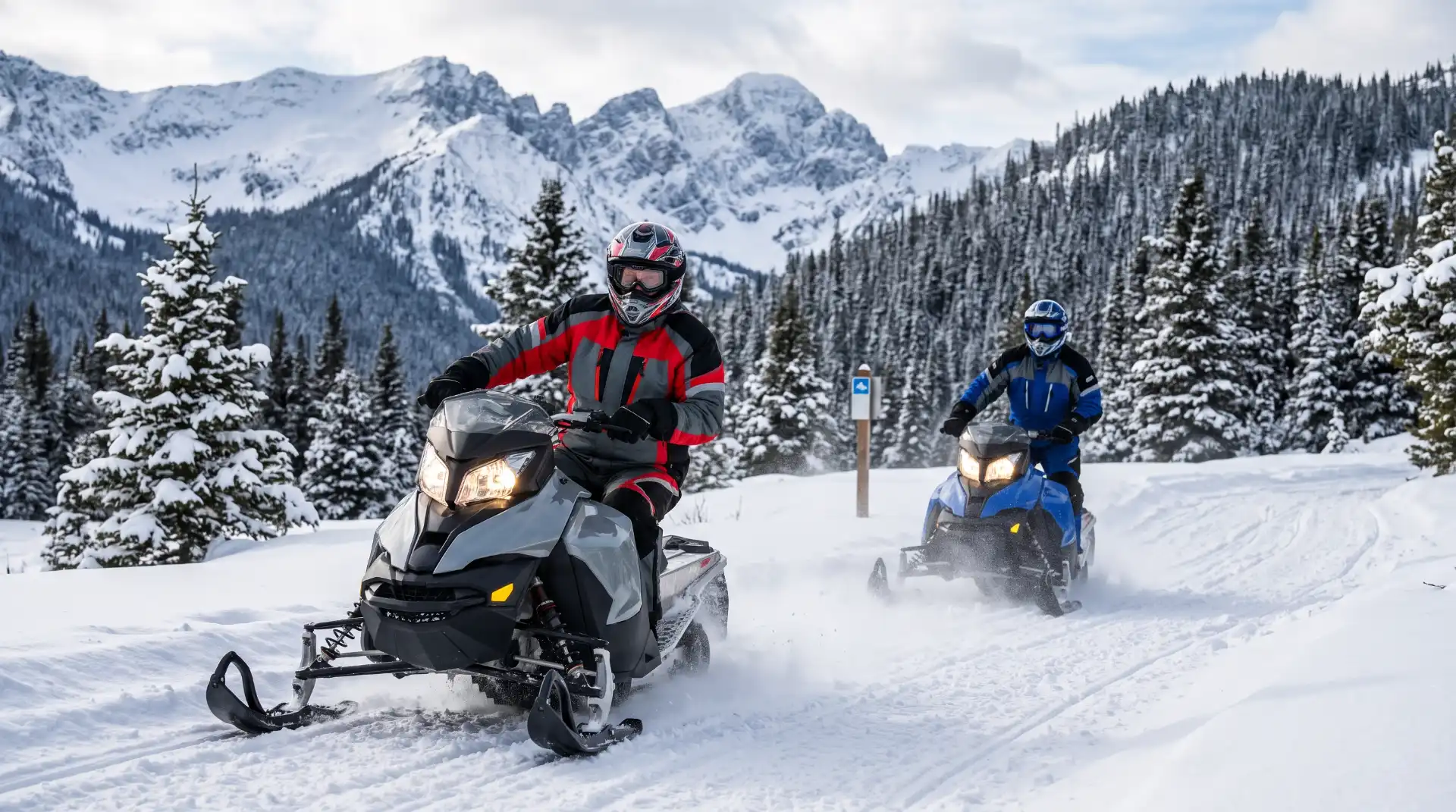
Snowmobiling appeals to people who enjoy the excitement of operating a powerful recreational vehicle.
The ability to accelerate, steer, and cover longer distances can make the activity feel more adventurous, particularly on wide groomed trails or permitted open terrain.
Experienced riders may enjoy learning how different snow conditions affect traction, braking, and handling.
Mountain snowmobiling can also provide access to spectacular viewpoints, although mountain routes require additional knowledge and preparation. Riders must understand terrain hazards, changing visibility, and avalanche conditions where relevant.
For someone who enjoys motor sports, snowmobiling offers an experience that combines winter scenery with the technical challenge of controlling a vehicle.
Which Experience Feels More Immersive?
The answer depends on what immersion means to the traveler.
Dog sledding often feels more connected to nature because the activity depends on living animals, traditional equipment, and the musher’s understanding of the team.
Snowmobiling offers a different kind of immersion. Riders become directly involved in navigating the landscape and responding to changes in terrain.
Neither experience is automatically more meaningful. Someone who loves animals may find dog sledding unforgettable, while someone who enjoys outdoor machinery may feel more engaged on a snowmobile.
6. Environmental Impact: Which Activity Is More Sustainable?
Environmental responsibility is becoming an increasingly important part of outdoor tourism in the United States. Travelers want to enjoy winter landscapes while minimizing damage to natural habitats and wildlife.
Dog sledding and snowmobiling have different environmental effects, and neither should be described as completely impact-free.
Environmental Considerations for Dog Sledding
Dog sledding does not require a gasoline-powered engine to move the sled. This means the actual movement of a traditional dog team does not produce the direct exhaust emissions associated with a conventional snowmobile.
However, responsible dog sledding still requires resources.
Working dogs need food, veterinary care, shelter, transportation, and equipment. Commercial operations may use vehicles to transport dogs and passengers, maintain trails, and move supplies.
A poorly managed operation can also create environmental problems through waste disposal, inappropriate trail use, or disturbance of wildlife.
The sustainability of a dog sledding business therefore depends on its overall management practices rather than simply the absence of an engine.
Responsible operators should maintain healthy dogs, manage waste properly, respect protected habitats, and avoid overcrowding sensitive trails.
Environmental Considerations for Snowmobiling
Traditional gasoline-powered snowmobiles produce exhaust emissions and engine noise. Their environmental effects depend on the machine, maintenance, fuel consumption, riding frequency, and the sensitivity of the area being visited.
Noise can disturb wildlife and affect other visitors seeking a quiet wilderness experience. Riding outside permitted areas can damage vegetation, disturb wintering animals, or create conflicts with other recreational users.
However, snowmobiling is not necessarily incompatible with environmental responsibility.
Many organized trail systems establish routes, seasonal restrictions, and maintenance practices designed to reduce damage and manage recreational access.
Some manufacturers also offer electric snowmobile technology, although availability, range, charging infrastructure, and cold-weather performance vary.
Wildlife Disturbance Matters
Winter is a particularly important period for many wild animals. Deep snow and cold temperatures can make it difficult for wildlife to find food and conserve energy.
Disturbing animals may force them to move unnecessarily and use energy that would otherwise support survival.
Montana Fish, Wildlife and Parks advises winter recreationists to respect wildlife, avoid closed winter ranges, and refrain from chasing or harassing animals.
Montana FWP
Dog sledders and snowmobilers should both maintain appropriate distances from wildlife.
The quieter nature of dog sledding may reduce some forms of disturbance, but a team of excited dogs can still affect nearby animals. Snowmobiles may create more noise, but responsible route selection and compliance with seasonal restrictions can help reduce their impact.
Which Is the More Environmentally Friendly Choice?
In terms of direct propulsion emissions, traditional dog sledding generally has an advantage over gasoline-powered snowmobiling.
However, a fair comparison should consider the entire operation, including transportation, animal care, fuel, trail management, and waste.
For travelers who prioritize a quieter experience with fewer direct engine emissions, dog sledding may be the more attractive choice.
For snowmobile enthusiasts, selecting well-maintained equipment, remaining on permitted trails, avoiding sensitive wildlife habitat, and following local restrictions are important ways to reduce environmental impact.
7. Physical Requirements and Accessibility
Another important difference involves the amount of physical effort required from participants.
Is Dog Sledding Physically Demanding?
A guided dog sled ride can be relatively accessible because passengers usually sit inside the sled while the musher manages the team.
This makes introductory tours attractive to people who want a winter adventure without needing advanced athletic skills.
However, not every dog sled experience is passive.
Some operators offer hands-on mushing lessons where participants learn how to stand on the runners, steer, brake, and assist the team. These activities may require balance, coordination, leg strength, and the ability to respond quickly to instructions.
Driving a sled across uneven terrain can also be physically demanding. Mushers sometimes need to push, run beside the sled, or help the team move through difficult sections.
Visitors with mobility limitations should ask about seating, boarding arrangements, accessibility, and whether the operator can accommodate specific needs.
Is Snowmobiling Physically Demanding?
Snowmobiling does not necessarily require extensive cardiovascular fitness, but operating a snowmobile can be physically tiring.
Riders must maintain their balance, hold the handlebars, shift their weight, and respond to changing terrain. Long rides can place stress on the arms, shoulders, back, and legs.
Mountain riding may require even more physical involvement because riders frequently adjust their position to maintain control.
Passengers also experience vibration and movement throughout the trip.
For beginners, a short guided ride on a groomed trail is generally a more manageable introduction than an extended backcountry excursion.
Accessibility for Different Travelers
Dog sledding may be a good option for people who prefer guided transportation and a quieter pace. Snowmobiling may appeal more to those who are comfortable operating or riding on a motorized vehicle.
Neither activity should be assumed to be universally accessible.
Travelers with disabilities, balance limitations, back problems, or other mobility concerns should contact operators directly and explain their requirements before paying for a reservation.
A reputable business should be willing to discuss practical limitations rather than making broad promises about accessibility.
8. Wildlife Encounters and the Beauty of Winter Wilderness
For many outdoor enthusiasts, the opportunity to experience wildlife is one of the most rewarding parts of a winter adventure.
Snow-covered landscapes provide a different perspective on animal activity. Tracks become easier to recognize, forests appear quieter, and some wildlife becomes more visible against the snow.
Wildlife Viewing During Dog Sledding
Dog sledding can provide opportunities to observe wildlife without the constant sound of a motor.
Traveling through forests and open wilderness may allow visitors to notice animal tracks, birds, and distant movement that could be overlooked during noisier activities.
However, wildlife sightings are never guaranteed. Animals may avoid trails, move through protected habitat, or remain hidden during periods of poor weather.
Passengers should avoid asking mushers to approach wild animals for photographs. Dogs should also remain under control because sudden encounters with moose, deer, or other wildlife can create dangerous situations.
Wildlife Viewing During Snowmobiling
Snowmobiling can cover a larger area, potentially increasing opportunities to encounter different habitats.
However, riders should understand that speed and noise can make wildlife observation more difficult.
Snowmobilers should slow down when wildlife is present and avoid chasing animals or leaving designated routes to get closer.
In many regions, winter wildlife closures exist to protect animals during vulnerable periods. Checking these restrictions before riding is an important part of responsible outdoor recreation.
Respecting Wildlife in Both Activities
Whether traveling by dog sled or snowmobile, visitors should remember that winter landscapes are living ecosystems rather than recreational playgrounds created exclusively for people.
Keep a safe distance, avoid feeding wild animals, follow local regulations, and respect seasonal closures.
The best wildlife encounter is one that allows visitors to observe animals behaving naturally without causing unnecessary stress.
9. Where Can You Enjoy These Adventures in the United States?
The United States offers several regions where winter conditions support dog sledding and snowmobiling.
However, availability varies considerably. Some destinations have established commercial dog sled operators, while others primarily offer extensive snowmobile trail networks.
Alaska: The Traditional Home of American Mushing
Alaska is one of the most recognizable destinations for dog sledding in the United States.
Its history, northern landscapes, and long-distance mushing traditions make it an attractive destination for visitors interested in experiencing working sled dogs.
Travelers can find recreational dog sledding experiences in different parts of the state, depending on the season and local operating conditions.
Snowmobiling is also popular in Alaska, particularly in areas with extensive winter terrain and access to designated routes.
Visitors should research local weather, daylight hours, trail conditions, and transportation arrangements before booking.
Maine: Winter Adventures in the Northeast
Maine is another important destination for winter recreation.
Its forests, rural landscapes, and northern communities provide opportunities for traditional mushing and snowmobiling.
The state is especially attractive to travelers who enjoy quieter outdoor destinations and a strong connection to local winter recreation traditions.
Visitors should check current snow conditions and trail availability because winter weather can vary significantly between regions.
Minnesota and Wisconsin: Extensive Snowmobile Trail Networks
Minnesota and Wisconsin are well known for organized snowmobile recreation.
These states offer established trail systems, local clubs, winter events, and access to a range of recreational landscapes.
For travelers who want to cover considerable distances on a snowmobile, these destinations can be appealing.
Minnesota’s Department of Natural Resources provides useful information about trail conditions, safety, and riding regulations.
Dog sledding opportunities may also be available in selected areas, although visitors should research individual operators rather than assume every winter recreation destination offers commercial mushing.
Michigan’s Upper Peninsula
Michigan’s Upper Peninsula attracts winter travelers with its forests, lakes, snowfall, and outdoor recreation opportunities.
Snowmobiling is a major winter attraction, with extensive trail systems connecting different communities and recreation areas.
Visitors may also find dog sledding experiences and other winter activities depending on location and seasonal conditions.
Colorado and Wyoming: Mountain Winter Adventures
Colorado and Wyoming are popular destinations for winter wilderness recreation.
Mountain scenery, deep snow in suitable areas, and extensive outdoor tourism infrastructure attract snowmobilers and other winter sports enthusiasts.
However, mountain environments introduce additional hazards, including avalanche terrain, changing weather, steep slopes, and limited visibility.
Dog sledding experiences may also be available through specialized operators in certain mountain communities.
Travelers should check whether an activity takes place on groomed trails, private land, or backcountry terrain because the safety requirements can differ considerably.
10. How Weather and Changing Snow Conditions Affect Both Activities
Winter recreation depends on more than the calendar. A destination may advertise winter adventures throughout the season, but actual conditions determine whether activities can operate safely.
Dog Sledding Depends on Suitable Snow and Healthy Dogs
Dog sledding requires appropriate trail conditions. Snow depth, ice, temperature, and surface quality all influence whether a team can travel comfortably.
Insufficient snow can expose rocks, roots, and other obstacles that may damage equipment or injure dogs.
Heavy snowfall can also create problems by increasing resistance and making trail navigation more difficult.
Warmer temperatures deserve particular attention because working dogs generate substantial body heat during exercise.
Mushers must evaluate conditions rather than assuming that colder weather is always better or that a particular month guarantees safe running temperatures.
For a closer look at this challenge, read How Sled Dog Teams Train When Snow Arrives Late. The article explains how mushers use conditioning, alternative equipment, and careful scheduling when dependable snow is delayed.
Snowmobiling Also Depends on Reliable Trail Conditions
Snowmobiles can travel across a range of snow conditions, but they still require suitable surfaces and safe routes.
Insufficient snow cover can expose rocks, vegetation, and other obstacles. Thin snow may also reduce protection for trails and surrounding landscapes.
Ice presents another significant concern. Frozen lakes may appear solid while hiding areas of weak ice caused by currents, springs, or changing temperatures.
Riders should never assume that a route is safe simply because other snowmobiles have crossed it.
Local authorities, snowmobile clubs, and trail managers can provide useful information about closures and current conditions.
Planning Around Unpredictable Winter Weather
Families should avoid scheduling their entire vacation around a single outdoor activity without considering backup options.
A storm, sudden thaw, strong winds, or trail closure may prevent a planned excursion from taking place.
Before booking, ask the operator about cancellation policies, rescheduling options, and weather-related refunds.
It is also wise to choose accommodation and destinations that offer other winter activities, such as snowshoeing, scenic drives, wildlife observation, or indoor attractions.
This makes the overall vacation more flexible if weather conditions change.
11. What Should You Wear for Each Adventure?
Appropriate clothing can determine whether a winter excursion becomes an enjoyable memory or an uncomfortable experience.
Even a relatively short activity can become unpleasant when visitors underestimate wind chill or arrive without adequate insulation.
Clothing for Dog Sledding
Passengers should dress in warm layers.
A practical clothing system begins with a moisture-managing base layer, followed by an insulating layer and a wind-resistant outer shell.
Insulated winter boots are important because feet can become cold quickly when sitting in a sled.
Warm gloves or mittens, a winter hat, neck protection, and appropriate socks should also be included.
Some operators provide insulated outerwear, boots, or blankets, but visitors should confirm this before departure.
Passengers should avoid wearing clothing that becomes uncomfortable when exposed to moisture or wind.
Clothing for Snowmobiling
Snowmobilers need clothing designed for movement, protection, and wind resistance.
A properly fitted helmet is essential, along with goggles or a suitable face shield.
Insulated gloves, waterproof boots, thermal layers, and a snowmobile suit can improve comfort considerably.
Clothing should allow the rider to move naturally without interfering with steering or other controls.
Passengers should also receive protective equipment appropriate to the vehicle and the operator’s requirements.
Why Layering Matters
Both activities expose participants to changing levels of physical activity.
A person may feel warm while helping prepare a dog sled team but become cold once seated inside the sled.
Similarly, snowmobile riders may generate heat while operating their vehicles but become uncomfortable when traveling at higher speeds in cold wind.
Layering allows visitors to adjust insulation according to conditions.
Always carry additional gloves and warm clothing, particularly when traveling in remote areas.
12. Responsible Tourism: Choosing an Ethical Dog Sledding Experience
For animal lovers, the welfare of the dogs should be one of the most important factors when selecting a dog sledding company.
Not every business operates with the same standards, and visitors should take time to understand how the dogs are treated.
Look Beyond the Appearance of the Dogs
Healthy working dogs should have access to appropriate food, clean water, veterinary attention, suitable shelter, and opportunities for rest.
Their physical condition should be monitored throughout the season.
Visitors should be cautious of operators who cannot explain their animal care practices or who appear unwilling to answer questions about veterinary treatment, workload, or retirement arrangements.
The excitement of seeing a powerful dog team should never overshadow the responsibility of caring for the animals.
Ask About Training and Workload
A professional musher should understand that different dogs have different fitness levels and personalities.
Young dogs need gradual development. Older dogs may require modified workloads. Dogs recovering from illness or injury should not be expected to perform as though nothing has happened.
The musher should also be able to explain how the team is monitored during a tour and what happens if a dog becomes uncomfortable.
Understand Retirement and Long-Term Care
Working dogs eventually reach a stage when they can no longer maintain the same level of activity.
Responsible operators should have plans for dogs that retire from active pulling.
This may involve continued care at the kennel, adoption into suitable homes, or another arrangement that protects the dog’s long-term welfare.
Visitors who want to learn more about the daily responsibilities involved in managing a working team can explore Outlaw Ridge’s article on emergency preparedness for remote mushing trips. It explains how responsible mushers prepare for equipment failures, dog injuries, changing weather, and unexpected wilderness situations.
Responsible Snowmobiling Also Matters
Snowmobilers have environmental and community responsibilities.
They should respect private property, obey trail closures, avoid wildlife harassment, follow speed restrictions, and maintain their machines properly.
Noise, careless riding, and trespassing can damage relationships between recreational users, landowners, and local communities.
Responsible snowmobiling means recognizing that winter trails are shared environments.
13. Tips for Booking Your First Winter Wilderness Adventure
First-time visitors should approach both activities with realistic expectations.
A little research can help prevent unnecessary expenses and make the experience more enjoyable.
Research the Operator Before Making a Reservation
Look for established businesses with clear descriptions of their tours, safety requirements, equipment, and cancellation policies.
Read recent customer reviews, but pay attention to more than the overall rating.
Look for comments about guide experience, communication, equipment condition, animal care, and how the company responds to changing weather.
For dog sledding, ask how much time is included for meeting the dogs and learning about the team.
For snowmobiling, ask whether the tour is suitable for beginners and whether participants receive an operating demonstration.
Choose the Right Tour Length
A short tour is often the best introduction for families and first-time visitors.
Longer experiences can be rewarding, but they may become uncomfortable for people who are unfamiliar with cold-weather recreation.
A half-day or full-day trip should only be considered after evaluating the group’s experience, fitness, and tolerance for cold.
Understand the Cancellation Policy
Winter weather is unpredictable.
Ask what happens when the operator cancels because of unsafe conditions. Determine whether you can reschedule, receive a refund, or choose another activity.
Do not pressure a guide to operate when conditions are dangerous simply because you have traveled a long distance.
Arrive Prepared
Follow the operator’s clothing and equipment instructions.
Eat before departure, stay hydrated, and arrive early enough to complete the safety briefing.
Families should also bring snacks, water, spare gloves, and any personal items needed by children.
Most importantly, listen to the guide. Instructions about boarding, riding position, equipment, and trail behavior are there to protect everyone involved.
14. Can You Enjoy Both Dog Sledding and Snowmobiling on the Same Winter Vacation?
Absolutely. In fact, experiencing both activities can provide a more complete understanding of winter wilderness recreation.
A family vacation could begin with a guided dog sled tour, followed by a snowmobile excursion on another day.
The first activity would introduce visitors to the traditional partnership between mushers and working dogs. The second would provide an opportunity to experience the speed, mechanical control, and extensive trail access associated with motorized winter recreation.
Combining the two activities also helps travelers understand how different forms of transportation interact with snowy environments.
However, scheduling matters.
Dog sledding and snowmobiling may operate from different locations and require different clothing, transportation, and preparation. Families should allow sufficient time between activities rather than attempting to fit everything into a single day.
For a more relaxed vacation, consider combining outdoor excursions with other seasonal experiences.
Depending on the destination, these might include:
-
Snowshoeing through designated forest trails.
-
Visiting winter wildlife viewing areas.
-
Exploring local mountain towns.
-
Photographing snowy landscapes.
-
Learning about regional mushing history.
-
Enjoying scenic winter drives.
-
Visiting local outdoor recreation centers.
A balanced itinerary gives every family member an opportunity to enjoy the winter environment, even if not everyone has the same interest in adventure sports.
15. Dog Sledding vs. Snowmobiling: Which Is the Better Choice?
After comparing the two activities, it becomes clear that there is no universal winner.
Dog sledding is particularly attractive for people who want an experience built around animals, tradition, natural scenery, and guided wilderness exploration.
Snowmobiling is more suitable for travelers who enjoy motorized recreation, speed, vehicle handling, and the ability to cover extensive winter trail systems.
Families with younger children may find a guided dog sled excursion easier to organize, depending on age restrictions and passenger arrangements. Families with older children and teenagers may enjoy snowmobiling if everyone meets the operator’s requirements.
Outdoor enthusiasts who value quiet landscapes and traditional winter skills may prefer mushing. Those who enjoy machinery and technical challenges may prefer snowmobiles.
The environmental comparison also depends on individual operations. Dog sledding generally avoids direct engine exhaust during the ride, while snowmobiling requires more attention to fuel consumption, noise, and trail management. Both activities need responsible operators and respect for wildlife.
Cost is another deciding factor. A short guided dog sled tour may be a convenient way to experience winter wilderness without purchasing equipment. Snowmobiling may offer better value for frequent riders who already own the necessary equipment or plan to spend several days exploring organized trail systems.
Ultimately, the best winter adventure is the one that matches your interests, experience, budget, and comfort level.
16. Final Checklist: Making the Right Decision for Your Family
Before choosing between dog sledding and snowmobiling, consider the experience you want rather than selecting an activity simply because it looks exciting in photographs.
A family looking for an educational, animal-centered adventure may appreciate the opportunity to meet sled dogs, learn about their training, and travel through winter scenery with an experienced musher.
A group of friends interested in speed, machinery, and longer wilderness routes may find snowmobiling more rewarding.
There are also practical considerations that deserve attention. Check the forecast, confirm trail conditions, understand age restrictions, and make sure everyone has appropriate winter clothing. If you are traveling with children, ask the operator about passenger requirements and whether the activity is appropriate for their ages.
For dog sledding, investigate the kennel’s animal welfare standards and make sure the dogs receive appropriate care and rest. For snowmobiling, confirm that vehicles are properly maintained and that the tour follows local regulations.
Most importantly, do not allow the excitement of a vacation to override safety. Both activities are most enjoyable when participants are comfortable, prepared, and guided by knowledgeable professionals.
Conclusion: Two Different Ways to Experience America’s Winter Wilderness
Dog sledding and snowmobiling offer two unforgettable ways to explore America’s winter landscapes, but they create very different connections with the outdoors.
Dog sledding combines traditional mushing, athletic working dogs, teamwork, and the natural beauty of snowy wilderness. It is particularly appealing to families, animal lovers, and travelers who want something more personal than a conventional motorized excursion.
Snowmobiling provides speed, mechanical excitement, and access to extensive winter trail networks. It is an excellent choice for people who enjoy motor sports and want to explore larger areas of snowy terrain.
Neither activity needs to replace the other. Both can become part of a memorable winter vacation when approached responsibly.
For families planning their first winter wilderness experience, a guided dog sled tour can be a wonderful introduction to the world of mushing. Visitors can meet the dogs, learn about their athletic abilities, and discover why the relationship between a musher and a working team is so important.
For experienced outdoor enthusiasts, snowmobiling can provide another level of adventure through organized trails and suitable wilderness areas.
At Outlaw Ridge Sled Dogs, the spirit of winter adventure is about more than traveling across snow. It is about appreciating the animals, respecting the wilderness, understanding traditional outdoor skills, and creating experiences that bring people closer to nature.
Whether you choose a traditional dog sled ride, a snowmobile excursion, or both, the best adventure is one that leaves you with lasting memories while respecting the people, animals, and landscapes that make winter recreation possible.